


An exit intent popup is an offer or form shown when a site infers that a visitor may leave. The nine brand designs below illustrate email capture, product guidance, preference questions, and cart incentives. Published outcomes describe the brands’ wider popup programs unless a source isolates an exit-trigger test. Use the layouts as ideas, then verify the trigger, offer, consent, and results for your own store.
Most examples use Alia, which combines Smart Triggering, Smart Testing, and Advanced Targeting. See plans or book a demo for your traffic.
What Is an Exit Intent Popup?
An exit intent popup is an overlay shown when interaction signals suggest a visitor may leave a website. It can ask for email or SMS permission, answer a question, or remind a shopper about a cart. Detection is predictive and can misfire; an exit-popup view is not proof that a visitor would otherwise have left.
How Do Exit Intent Popups Work?
On desktop, JavaScript can observe a cursor moving upward out of the viewport toward browser controls. Mobile devices do not provide that same pointer signal. Learn how exit intent detection works.
- Desktop: qualify an upward mouse exit with engagement and frequency rules.
- Mobile: use engagement context, such as scrolling or inactivity, and keep normal navigation usable. Back or tab changes may happen too late to display an offer.
Do Exit Intent Popups Actually Work?
They can provide a relevant final offer, but results depend on the audience, incentive, and implementation. Batch CBD reports 10% to 36% email signup rates and ZQuiet reports 2.5% to 19% for their broader programs. Those are opt-in rates, not percentages of abandoning visitors recovered. Use an experiment or holdout to estimate incremental recovery.
For a deeper dive into mobile-specific strategies, see our mobile popup best practices guide.
Exit Intent Popup Examples by Goal
9 Exit Intent Popup Examples and Reported Results
These designs show approaches you can adapt to an exit-triggered campaign. Screenshots illustrate the content and format; they do not confirm a live trigger configuration. Treat each case study’s outcome as a campaign result, and do not attribute it to exit intent alone.
| # | Brand | Goal | Offer / format | Reported program outcome |
|---|---|---|---|---|
| 1 | Hostage Tape | Email / SMS value | Free tape offer pictured | +245% email welcome-flow revenue |
| 2 | Patrick Ta Beauty | Premium email capture | 15% offer pictured | 12% opt-in; $600K sales reported |
| 3 | Batch CBD | Intent question and email | $25 reward pictured | 10% → 36% email signup |
| 4 | mindbodygreen | Brand-led email / SMS | See pictured campaign | 6% → 14% email; +178% SMS opt-ins |
| 5 | ZQuiet | Product guidance | Product recommendation | 2.5% → 19% email; $120K in 30 days |
| 6 | Bibado | Cart-value incentive | Tiered offer pictured | 28% signup; +17% AOV reported |
| 7 | Essence Vault | Preference collection | See pictured campaign | 33% email; 26% SMS |
| 8 | Create Wellness | Landing-page relevance | See pictured campaign | 18% email; +200% landing-page signups |
| 9 | Firebelly Tea | Education | Progressive 5–15% reward in education study | 79% MoM sales in education study |
Trigger: verify the campaign configuration for each design. The cited case studies do not establish one exit-only trigger or its incremental effect for every example.
Exit Intent Popup Examples for Email Capture and Discounts
The most common use case for exit intent popups is offering a discount to capture emails from abandoning visitors.
1. Hostage Tape: Exit-Intent with Sign-Up and Discount
Industry: Sleep and breathing optimization
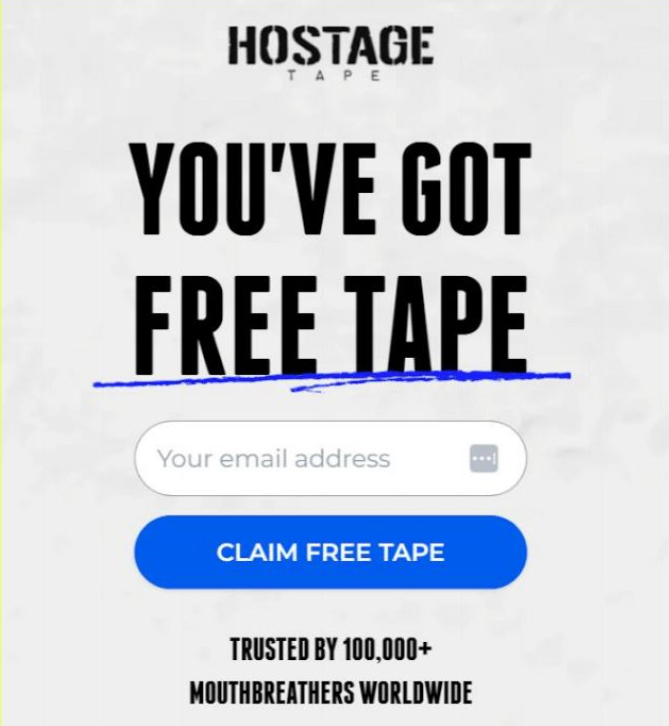
Hostage Tape combines a clear offer with ongoing design and testing support. Hostage Tape reports a 25% email opt-in rate, 20% SMS opt-in rate, 245% higher email welcome-flow revenue, and $86K in additional revenue over two months.
Rather than a generic discount, the popup leads with a high-value offer: "YOU'VE GOT FREE TAPE." The design incorporates the founder’s story and educational content regarding the benefits of mouth taping for sleep. While the headline captures immediate attention, the supporting copy builds long-term value by inviting users to join a community of over 100,000 "mouthbreathers" for exclusive updates.
Suggested exit use: offer a clear reason to stay after relevant engagement. The case-study result covers the program as a whole, not an exit-trigger-only test.
For products that require explanation, this approach builds trust before asking for the email. Learn more about this strategy in the ultimate guide to customer education.
As the brand's head of growth noted: "When you look at the ROI, it's a no-brainer. Alia paid for itself almost immediately."
Read the full Hostage Tape case study →
2. Patrick Ta Beauty: Discount Popup
Industry: Beauty and cosmetics
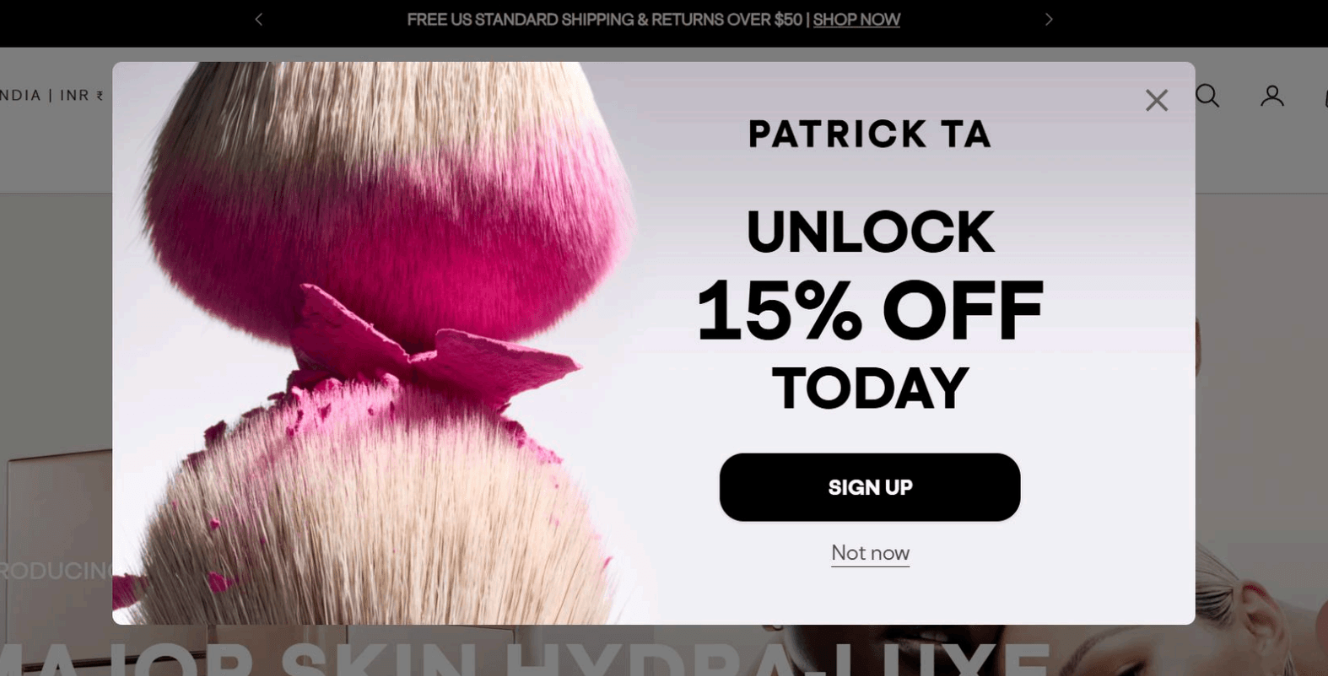
The pictured Patrick Ta design illustrates a premium aesthetic: concise copy, ample space, and consistent typography. If used at exit, qualify the trigger and avoid repeating the same dismissed offer.
A clear 15% discount offer is highlighted upfront, with minimal form fields (email only) for frictionless signup. Unique coupon codes are automatically delivered and applied at checkout through Alia's auto-apply feature—removing the friction that causes many visitors to abandon before redeeming.
Patrick Ta’s published story reports a 12% opt-in rate and $600K in sales. For a luxury store, keep the offer focused and match the site’s typography instead of stacking incentives.
Suggested exit use: a restrained final offer for a shopper who has already engaged with the products. Validate the exact reward conditions and mobile layout before adapting the screenshot.
Read the full Patrick Ta case study →
3. Batch CBD: Wellness Segmentation
Industry: CBD wellness
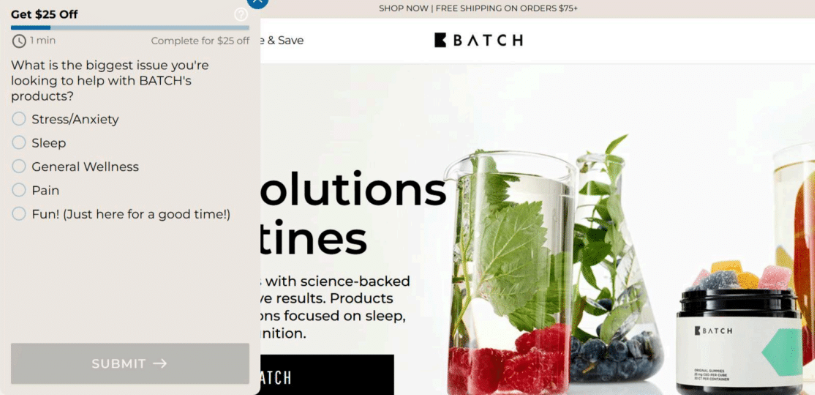
Batch CBD uses preference questions to connect a shopper’s goal with the follow-up journey. An exit-triggered variation could ask a relevant question before requesting contact details; do not treat that suggested placement as proof of the case study’s trigger configuration.
The slim, vertical sidebar design maximizes screen space without obstruction. A progress bar format ("Get $25 Off") visually tracks completion, motivating visitors to finish the signup process. This two-step approach is one of the most effective popup survey techniques for capturing both emails and valuable customer data.
Batch CBD reports email signups rising from 10% to 36%, a 43% purchase rate after signup, and 92% learning-flow completion. These are different funnel measures; the 36% figure is not an SMS opt-in benchmark.
What to test: one useful question, readable answer choices, and a clear next step. Save the declared interest for relevant follow-up rather than assuming that an extra question always improves conversion.
Read the full Batch CBD case study→
Looking for more discount inspiration? Check out our 13 discount popup examples and 20 discount code ideas for additional strategies.
Exit Intent Popup Examples for Education and Quizzes
Some shoppers need product information before they want an incentive. The following designs illustrate educational content and product guidance that could support a relevant exit offer.
For more on this approach, see our guide on customer education for Shopify stores.
4. mindbodygreen: Sign-Up Pop-Up
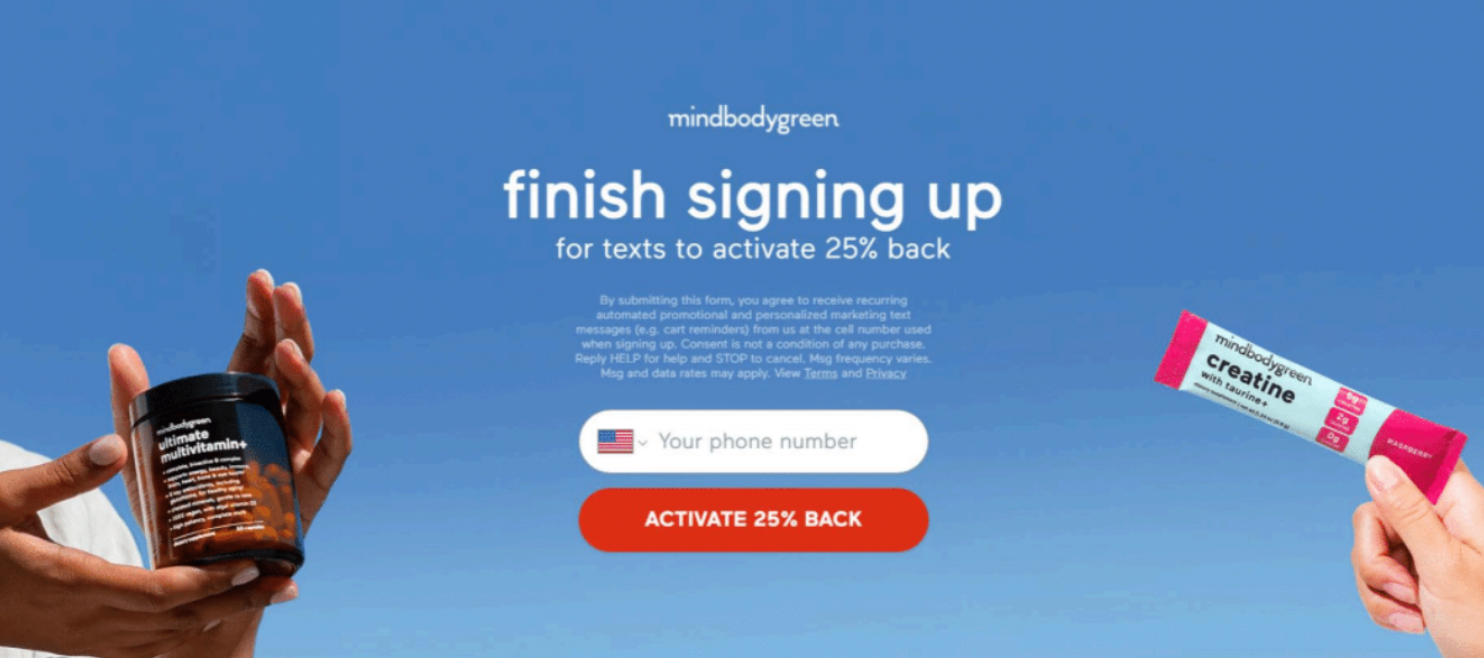
Industry: Health and wellness
Alia provided a fully-managed approach to popup optimization, replacing mindbodygreen's small-box forms with a bold, fullscreen experience.
Alia’s managed work covered styling and testing. The mindbodygreen case study reports email opt-ins rising from 6% to 14% and 178% more SMS opt-ins. These are program outcomes, not an isolated fullscreen or exit-trigger lift.
What to test: whether focused visuals and relevant information improve qualified subscribers. A fullscreen promotional overlay can still obstruct content; do not copy that format to mobile without reviewing the experience.
Read the full mindbodygreen case study→
5. ZQuiet: Product Recommendation Quiz
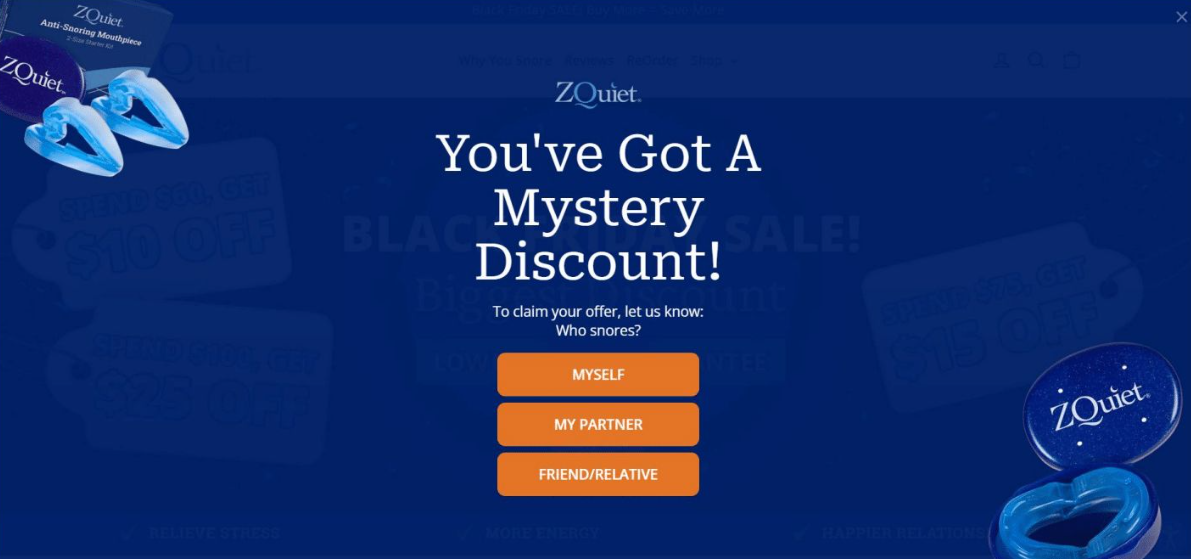
Industry: Sleep wellness (anti-snoring solutions)
ZQuiet’s product-guidance example helps explain a complex choice before asking for contact details. Keep recommendations within the product information the brand actually supports; this popup is a marketing example rather than health advice.
Suggested exit use: offer product help when an engaged shopper appears undecided, while preserving an easy dismissal and normal navigation.
ZQuiet reports email opt-ins rising from 2.5% to 19% and $120K in sales over 30 days. Its case study reports that 32% of signups purchased within 30 minutes; that purchase metric is separate from the opt-in rate.
Read the full ZQuiet case study→
Also read our guide on creating effective quizzes for product recommendations for implementation tips.
How Can Exit Intent Popups Reduce Cart Abandonment?
A cart-targeted popup can answer a shipping question, show a genuine threshold incentive, or offer help before the shopper leaves. Advanced Targeting supports different experiences for cart visitors and browsers. Avoid assuming every cart needs a larger discount; test margin and completed orders as well as signups. Compare cart-abandonment popup tools.
6. Bibado: Exit-Intent with Cart Value Threshold
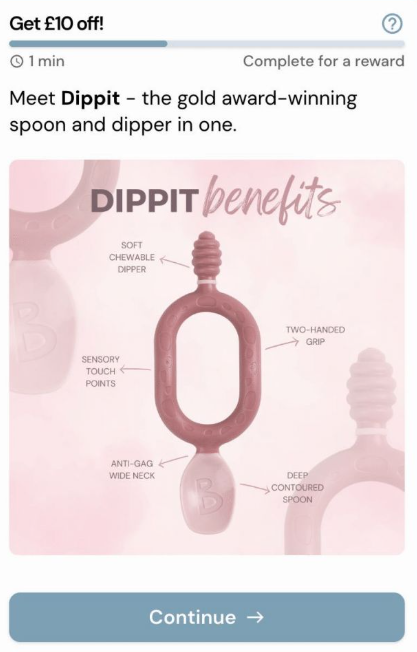
Industry: Baby products
Bibado uses cart value thresholds on their exit-intent popups. When a visitor with items in their cart moves to leave, the popup shows how close they are to unlocking a better discount by adding more items. Understanding why AOV matters helps explain why this strategy is so powerful.
The popup also promises first access to limited designs and special offers, adding exclusivity appeal beyond the immediate discount.
Bibado’s published case study reports a 28% signup rate and 17% higher average order value. These describe the full popup program rather than the incremental impact of the pictured cart threshold alone.
What to test: a truthful cart threshold and a clear explanation of what the shopper receives. Track completed purchases and margin; an increase in cart value is not automatically incremental profit.
Read the full Bibado case study→
How Do Exit Intent Popups Collect Zero-Party Data?
Ask one useful question, such as what the shopper wants to buy, then save that voluntary answer for relevant follow-up. With Alia, quiz and survey answers can sync to Klaviyo as custom properties. Keep questions necessary and explain their purpose; collecting more fields is not itself a better outcome.
7. Essence Vault: Gender Segmentation
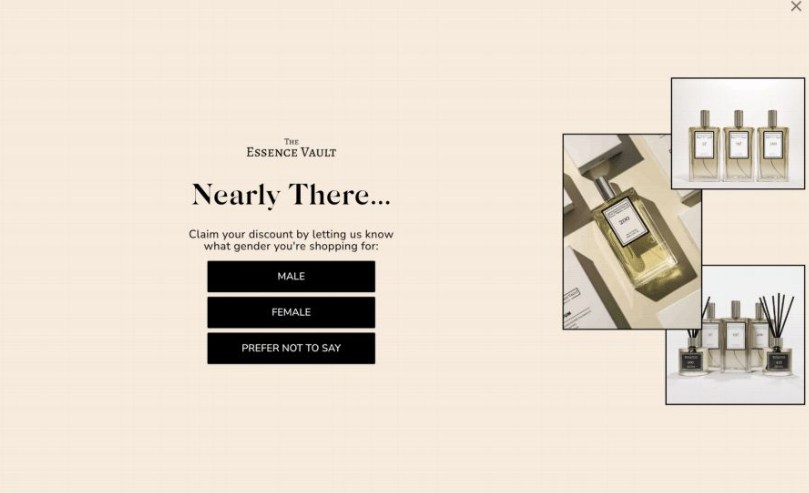
Industry: Fragrance
Essence Vault’s pictured campaign asks who the shopper is buying for. That preference can guide later recommendations instead of assuming the visitor’s interests from browsing alone.
The minimalist, elegant design aligns with their luxury fragrance positioning. A "Nearly There..." headline acknowledges visitors have already engaged, leveraging commitment psychology to increase completion rates.
Essence Vault reports 33% email and 26% SMS opt-in rates, with 360,000 emails and 285,000 phone numbers collected in one month. Three-month totals were 514,000 emails and 403,000 phone numbers; those totals are channel records, not deduplicated people.
Read the full Essence Vault case study→
Exit Intent Popups for Landing Pages and Paid Traffic
Landing-page visitors arrive with context from an ad or referral. Match the offer to that context and test when to show it. The next examples illustrate targeted capture and an educational journey, rather than two fullscreen formats.
8. Create Wellness: Landing Page Recovery
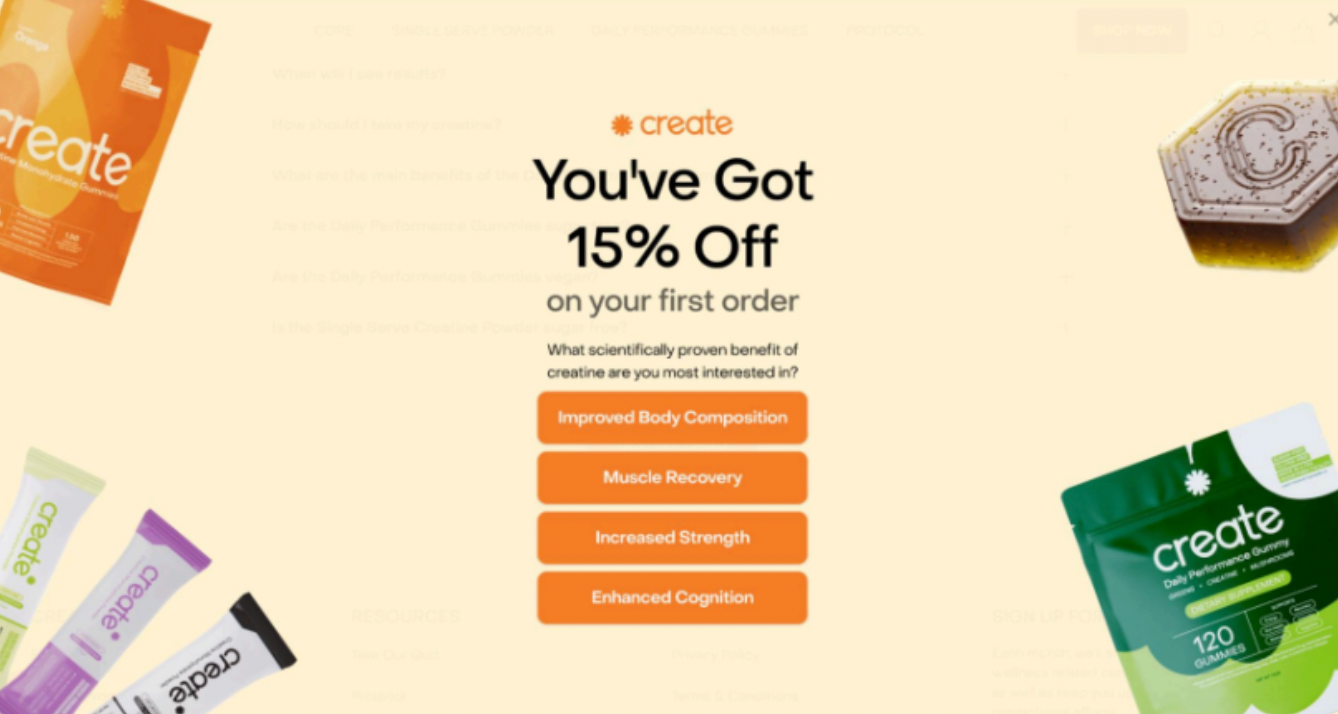
Industry: Wellness (creatine gummies)
Create Wellness reintroduced popup capture on landing pages after its prior strategy had been disruptive. Create Wellness reports an 18% email signup rate and 200% more signups from landing pages after reintroducing targeted popups. These are reported program results rather than proof that any one trigger caused the lift.
Advanced Targeting can vary experiences by source and page, while Prism AI adapts content using performance data. Verify which targeting rules and trigger are active in your campaign.
What to test: the message and offer that match the landing page. Create’s result is reported for its broader strategy and does not establish an exit-only lift.
Read the full Create Wellness case study→
For more examples of high-impact designs, browse our 18 email popup examples and 9 killer eCommerce popup examples.
9. Firebelly Tea: Exit-Intent Educational Journey
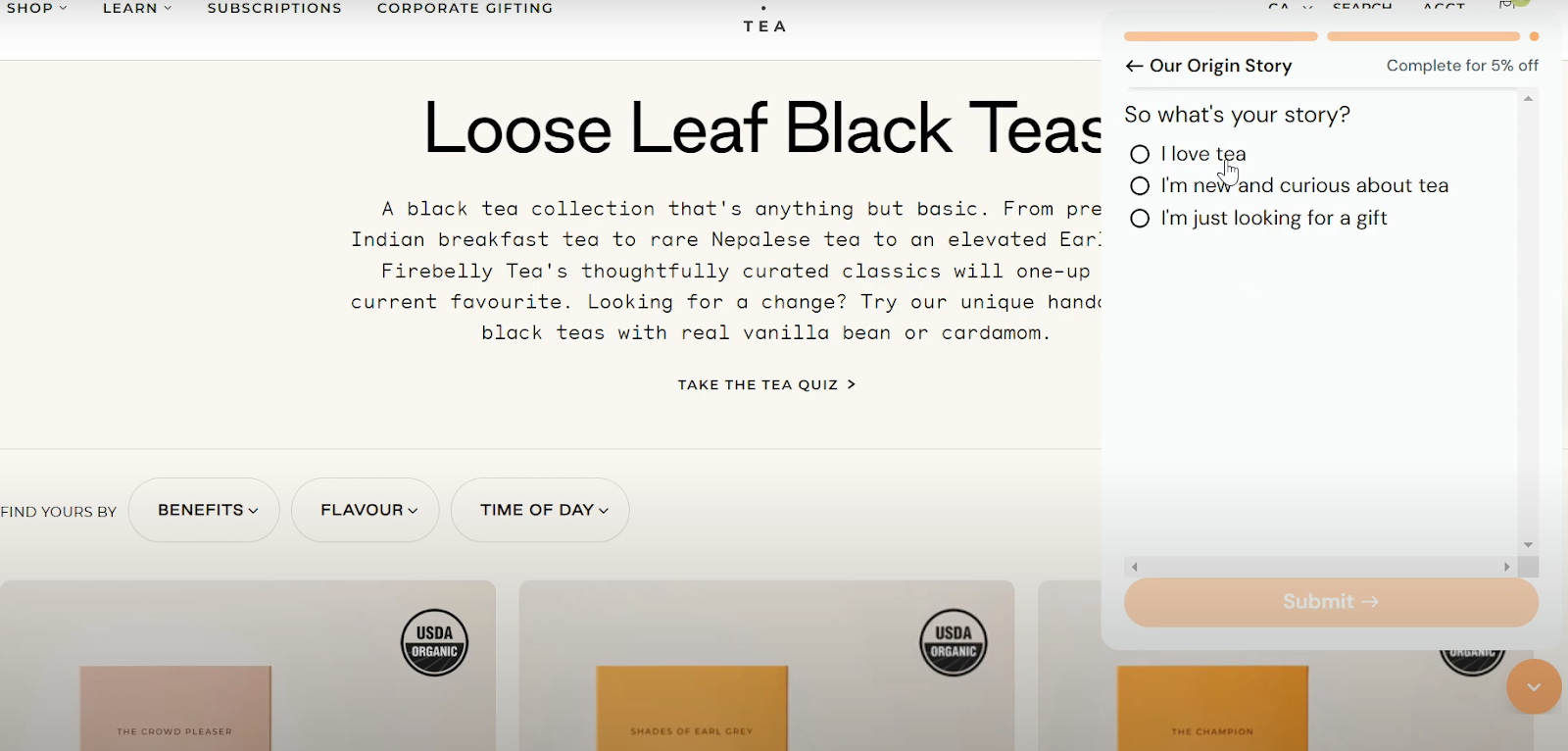
Industry: Premium tea
Firebelly Tea, co-founded by David Segal and Harley Finkelstein, used an educational flow about its story and products. In the education case study, shoppers could earn 5–15% rewards by completing lessons and providing an email. A floating entry point let them engage with the experience.
The education study reports 79% month-over-month sales growth, 13% more email signups, and 650 survey responses. A separate mystery-discount study reports 2.2× more signups and $13K+ incremental revenue. Keep the two programs and measurement periods distinct.
What to test: whether optional product education helps a visitor decide. This is a discount-backed educational example, not evidence that no-discount acquisition always performs better.
Read the full Firebelly Tea case study→
Mobile Exit Intent Popup Examples: What to Adapt on a Phone
Phones have no cursor, so desktop mouse-out detection does not apply. Scroll changes and inactivity can inform a mobile trigger, but they also occur during normal browsing. Back navigation and tab visibility changes may be observed only after the visitor has left; they cannot reliably display a visible popup before departure. Keep navigation working normally and test engagement-based triggers earlier in the session.
Adapt the pictured Batch CBD preference flow or Hostage Tape value proposition into a compact mobile card with one clear action. The images above are campaign examples, not verified mobile-only experiments. Use mobile popup best practices and the mobile exit intent guide before implementation. Google recommends keeping the main content accessible and using banners that occupy a small fraction of the screen instead of full-page promotional interstitials. A delay, scroll trigger, exit trigger, or particular height percentage does not guarantee acceptable search performance. Legally mandatory notices have separate treatment. Read Google’s guidance.
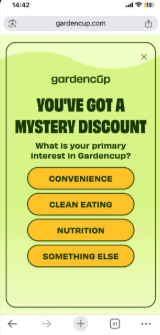
Gardencup’s published mobile flow: the first screen asks one preference question; the next asks for email. These screenshots show phone layouts from the Gardencup case study. They do not establish an exit-only trigger or a mobile-only conversion lift.

What Are the Best Practices for Exit Intent Popups?
Use a relevant trigger, a sustainable offer, an obvious close control, conservative repeat exposure, and an experiment that measures purchases. Do not repeat a dismissed offer immediately or assume the deepest discount is always the best response. Smart Testing can run an approved plan while your team reviews results.
For a comprehensive approach to your entire funnel, see our 7 steps to building a killer website conversion funnel.
Quick Optimization Checklist
| Strategy | What to do | Why it matters |
|---|---|---|
| Trigger | Qualify desktop exit; test engagement rules on mobile | Reduce accidental interruptions |
| Offer | Match the value to the page and cart context | Avoid unnecessary discounts |
| Design | Compact, readable, easy to close | Keep content accessible |
| Copy | Learn how to write clear popup messages | Explain the real benefit |
| Urgency | Only show a genuine deadline; never reset it on reload | Preserve trust |
| Testing | Compare timing and offer with a control | Separate correlation from lift |
| Metrics | Track valid signups, purchases, margin, and repeat exposure | Avoid optimizing form rate alone |
How Can AI Improve Exit Intent Campaigns?
AI tools can support behavior-based re-engagement and ongoing experimentation. Alia combines Smart Triggering, Smart Testing, Prism AI, and Advanced Targeting. Compare the result against your baseline; neither a generic “3×” claim nor a fixed incremental signup range establishes the impact for your store.
Predictive vs. Reactive Triggering
A simple exit rule waits for a configured event. Behavior-based re-engagement can consider context at other points in the session. Test whether that earlier or later offer improves the full customer journey.
After dismissal, use a cooldown and meaningful behavior before another prompt. Smart Triggering supports re-engagement, but do not assume it always changes the offer or removes the need for campaign frequency controls.
Separate Mobile and Desktop Behavior
Phones have no cursor, so desktop mouse-out detection does not apply. Scroll changes and inactivity can inform a mobile trigger, but they also occur during normal browsing. Back navigation and tab visibility changes may be observed only after the visitor has left; they cannot reliably display a visible popup before departure. Keep navigation working normally and test engagement-based triggers earlier in the session.
Review the phone layout and triggers and report outcomes by device.
Continuous Optimization
Traditional exit-intent settings are static—you set the trigger sensitivity and leave it. AI-powered systems continuously learn from your specific traffic patterns, automatically adjusting timing based on what's actually converting.
This matters because optimal exit-intent timing varies by traffic source, device type, page type, and even time of day. Manual optimization can't keep pace with these variables.
Prism AI adapts experiences using performance data and Smart Testing runs an approved plan. Review new creative, offers, and economics as traffic changes.
Shopify Integration and ESP Sync
Alia installs through the Shopify App Store and integrates with email and SMS providers. Custom storefronts require an implementation scoped to the architecture; general embed instructions explain the starting process.
Use the Shopify tool checklist or compare the exit popup software options for installation, testing, and integration tradeoffs.
How Do You Start Recovering Abandoning Visitors?
Choose one relevant offer, keep the form readable and dismissible, and test the trigger against your existing campaign. The case-study opt-in figures in this guide are not exit-recovery rates.
Track people who see the offer, those who consent, and those who later buy. Use a holdout or randomized test where possible to estimate incremental impact.
Keep the offer financially sustainable and review whether new subscribers remain engaged.
Here's what sets the highest-converting exit-intent popups apart:
- Behavior-based re-engagement and frequency controls.
- An approved testing plan for timing and creative.
- Shopify installation and connected email/SMS tools.
- Useful preference questions and profile sync.
- Attributed revenue, with a separate method for estimating incremental lift.
Use your own baseline instead of an arbitrary conversion cutoff. Check device, source, offer, and measurement window before comparing rates.
Configure and test the complete flow before launch. Alia offers:
- 14-day free trial (30 days on Fully Managed plans)
- White-glove onboarding to get you set up properly
- No auto-upgrades, month-to-month pricing, cancel anytime
- Live chat support plus personal Slack channels for managed plans
See What Fits Your Exit Campaign
Basic plans start at $100/month for up to 20,000 monthly visitors; Fully Managed starts at $400/month for up to 50,000. Compare plans for your traffic.
Compare Alia’s plans or book a demo to explore your store’s setup.
Exit Intent Popup FAQs
What is an exit intent popup?
It is a website overlay shown when configured interaction signals suggest the visitor may leave. A popup may ask for contact permission, offer product help, or remind a shopper about a cart. The inference can be wrong. See how exit intent detection works.
How do I set up an exit intent popup on Shopify?
Install the app, configure a relevant offer, set audience and frequency rules, connect the marketing provider, and test the complete journey. Desktop and mobile need separate trigger strategies. Follow the Shopify setup guide and current product labels.
Which offer works best for exit intent?
There is no universal winner. Match the offer to the page, cart, traffic source, and margin. Shipping information, product help, early access, and a sustainable discount are different hypotheses to test. Avoid using a larger discount simply because the visitor moved toward the exit.
What is the difference between exit intent and other triggers?
Exit intent infers departure. Other triggers respond to time, scroll, clicks, or page views. Alia’s Smart Triggering supports behavior-based re-engagement rather than relying only on one fixed event. Compare triggers while keeping the offer stable when you want to isolate timing.
Do exit intent popups work on mobile?
Phones have no cursor, so desktop mouse-out detection does not apply. Scroll changes and inactivity can inform a mobile trigger, but they also occur during normal browsing. Back navigation and tab visibility changes may be observed only after the visitor has left; they cannot reliably display a visible popup before departure. Keep navigation working normally and test engagement-based triggers earlier in the session.
Should the exit offer differ from an entry popup?
It can, but use the visitor’s context and economics rather than automatically increasing the discount. Someone who dismissed an offer may need product information, shipping clarity, or no further prompt. Set a frequency cap and compare outcomes.
How do I make an exit popup that does not feel spammy?
Use one relevant offer, readable copy, an obvious close control, and conservative repetition. Avoid fake deadlines, obstructive navigation, or repeating a dismissed prompt on every page. Recognize known subscribers using available cookies and campaign UTMs, then suppress repeat signup requests where identification works. Cleared cookies, blocked tracking, and another device can prevent recognition; suppression is not guaranteed across devices.
Can exit intent popups hurt SEO?
Google recommends keeping the main content accessible and using banners that occupy a small fraction of the screen instead of full-page promotional interstitials. A delay, scroll trigger, exit trigger, or particular height percentage does not guarantee acceptable search performance. Legally mandatory notices have separate treatment. Read Google’s guidance.
What are the best exit intent popup tools?
Compare mobile behavior, targeting, test approvals, managed support, integration, and reporting. Alia supports ongoing optimization, while other tools offer different AI, editor, and service workflows. The exit popup software comparison covers ten options.
How well do exit intent popups recover abandoning visitors?
It depends on offer, timing, and audience. Published opt-in or welcome-flow revenue figures do not establish the percentage of abandoners recovered. Define recovery, measure purchases and margin, and use a control or holdout to estimate incremental effect.