

Quick answer
A BFCM welcome flow is a 4-email sequence sent over a new subscriber's first 7 days: deliver the offer instantly (Day 0), remind and add proof (Day 1–2), sell the brand beyond the discount (Day 3–4), then send a last call and move buyers into a post-purchase flow (Day 5–7). Its job is to turn discount-driven Black Friday signups into first orders, and first orders into repeat customers.
| Day | Goal | |
|---|---|---|
| 0 | Welcome + offer, sent instantly | First click while intent is highest |
| 1–2 | Reminder + bestsellers and reviews | Build trust |
| 3–4 | Brand story and product value | A reason to buy beyond the discount |
| 5–7 | Last call, then split buyers from non-buyers | Close the offer, set up January |
Black Friday and Cyber Monday can bring more new subscribers in a few weeks than many brands collect in a quarter. The catch: many of them signed up for one reason, the discount, and they will forget your brand by mid-December unless the first week gives them a reason to stay.
That first week is where the welcome flow does its work. A generic "Welcome! Here's 10% off" sequence built in March was not designed for a shopper who is comparing five brands on the same day, already has a full inbox, and plans to buy within 48 hours.
Below is the 7-day welcome flow we build for BFCM subscribers at eCommerce Today, where we've run Klaviyo flows for Shopify brands since 2016. It goes day by day, then covers the settings that keep it from colliding with your Black Friday campaigns. If you're starting from zero, our guide to the welcome email series covers the year-round version first.
Before the flow: capture more than an email address
A welcome flow can only be as relevant as the data it starts with. If all you collect is an email, every subscriber gets the same seven emails.
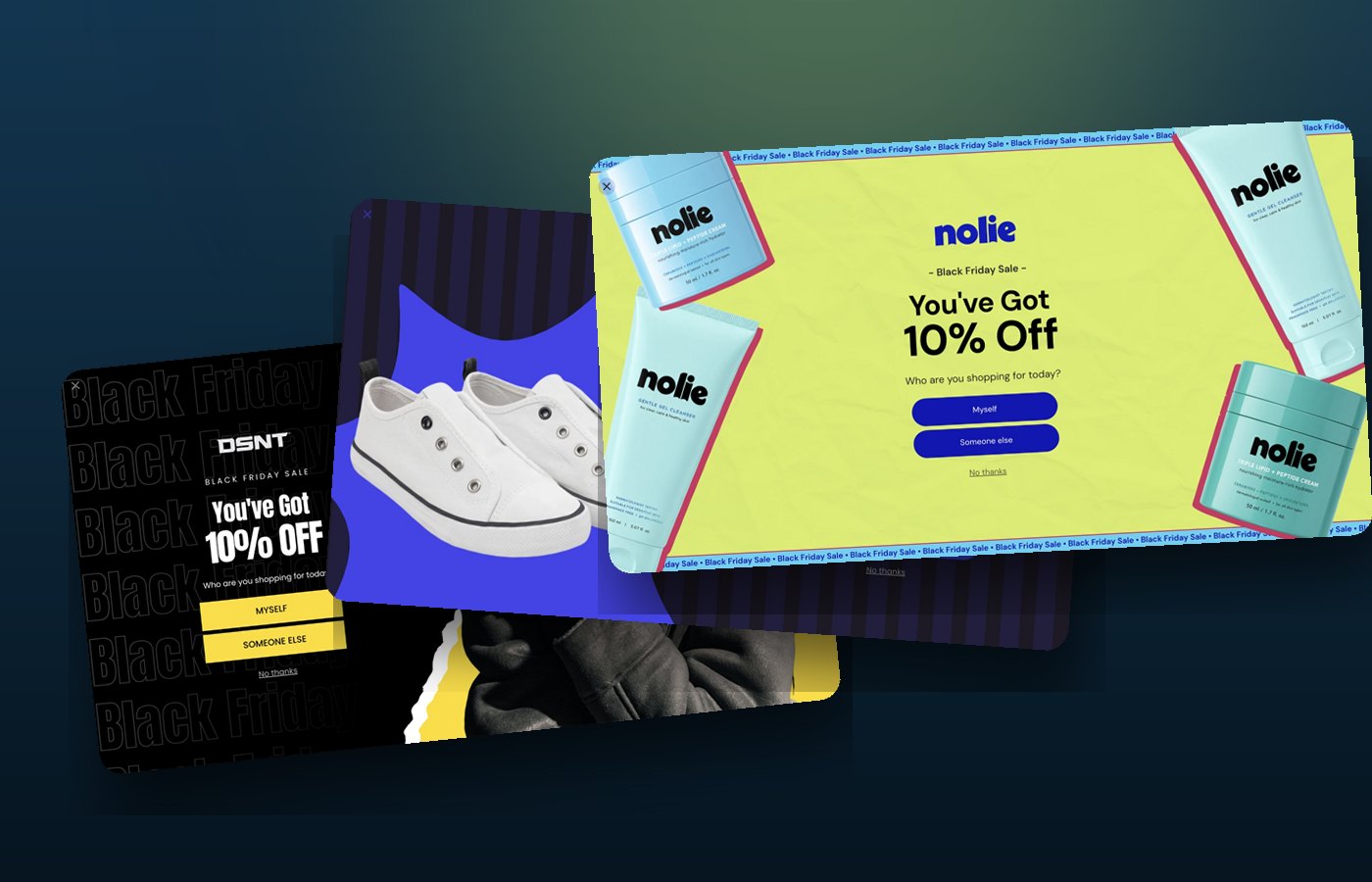
During BFCM, your popup does two jobs. It turns traffic into subscribers, and it tells you who they are. A good BFCM popup:
- Leads with the offer people came for. Early access to the sale, a stackable code or a free gift with the first order converts better than a vague "join our newsletter".
- Asks one question. "Shopping for yourself or for a gift?" or "Which category are you browsing?" is enough to branch the flow later.
- Captures SMS as a second step, not on the same screen, so the phone number field doesn't compete with the email signup.
- Tags the signup source. Mark these profiles as BFCM signups (a property or list) so you can treat them differently in January.
This is where a tool like Alia helps: it can test offers and questions on the popup while traffic is high, so the profiles entering your flow already carry the signals you need. Each answer is saved as a profile property in Klaviyo, so you can split the welcome flow on it from Day 0 (Alia's guide to personalizing a Klaviyo welcome flow with quiz responses shows how). HexClad, for example, saw a 68% lift in welcome and education flow revenue with Alia.
Day 0: deliver the offer, instantly
The first email goes out the moment someone subscribes, with no delay. During BFCM, a shopper who signs up for a code usually wants to use it within minutes. If the code arrives an hour later, they have already bought somewhere else.
What to include:
- The code or offer in the subject line and at the top of the email. "Your 15% off is inside" beats "Welcome to the family".
- One clear button to the collection they were browsing, or to bestsellers if you don't know yet.
- The deadline. If the offer expires, say exactly when.
- A short line on who you are. One or two sentences, not the founder's full story. That comes later.
Keep it short. This email has one job: get the first click while intent is highest.
Day 1–2: reminder plus proof
Around 24 hours later, send a reminder to everyone who hasn't ordered yet. Most BFCM subscribers didn't ignore the first email. It got buried under forty other sale emails.
This email repeats the offer, then gives subscribers a few reasons to trust you:
- Your bestsellers, with real review counts or star ratings.
- Customer photos or short reviews, ideally for the category they picked in the popup.
- The practical questions people ask before a first order: shipping times before the holidays, free shipping threshold, returns and exchanges for gifts.
If you asked "for yourself or a gift?" at signup, this is the first place to use it. Gift shoppers want gift guides, price ranges and delivery cut-off dates. Self-shoppers want bestsellers and reviews.
Day 3–4: give them a reason beyond the discount
By day 3, a subscriber who still hasn't bought has already seen your offer twice, so another reminder about their code won't do much. This is the moment to show what makes your brand different from the other tabs they have open.
Good angles for this email:
- Why the product exists: the problem it solves, how it's made, what you refused to compromise on.
- A comparison with the obvious alternative, told honestly.
- A how-to or use case that makes the product easier to picture in their life.
Keep the offer visible in a small banner or a P.S., but don't make it the headline. Subscribers who buy because they understand the product are the ones who come back in January without a code.
Day 5–7: last call, then split the path
The last part of the week does two things: it closes the offer, and it decides what each subscriber gets next.
For subscribers who haven't purchased: send a last call 24 hours before the code expires, with the exact end time in the subject line. If they still don't buy, don't keep discounting. Move them to your regular newsletter and let your BFCM campaigns and post-holiday content do the work.
For subscribers who bought: take them out of the welcome flow as soon as the order comes in. A buyer who keeps getting "your code expires soon" emails feels the brand isn't paying attention. Send them to a post-purchase flow instead:
- Order confirmation and what to expect with holiday shipping.
- How to use or care for the product, sent around delivery.
- A review request once they've had time to use it.
- A non-discount reason to come back in January, such as a restock, a new collection or a loyalty program.
This split is the main reason the first week matters. It sorts a large, mixed BFCM list into buyers you can grow and browsers you shouldn't keep paying to email with discounts. The welcome flow is only one of the automations that matter during BFCM; we cover others in 4 advanced email marketing automation flows.
BFCM settings that keep the flow from fighting your campaigns
During BFCM, the welcome flow runs alongside daily campaign sends. Without a few rules, a new subscriber can get four emails from you in one day.
- Compress the timing for signups during the sale week. If the offer ends on Cyber Monday, a 7-day flow that starts on Saturday has to fit into three days. Build a shorter BFCM branch, or end the flow when the sale ends.
- Use smart sending or a frequency cap, so a profile that got a campaign in the last few hours skips the flow email, or the other way around.
- Exclude flow recipients from some campaigns. Someone in their first 48 hours doesn't need your generic "Sale starts now" email on top of their welcome offer.
- Make sure codes don't stack by accident. Decide whether the welcome code works on sale prices, and say so clearly in the email.
- Exit buyers right away. Use "placed order" as the flow filter, so it applies to every email, not just the next one.
What to measure, and a checklist before Black Friday
Open rates tell you little about a BFCM welcome flow. Look at these instead:
| Metric | Why it matters |
|---|---|
| Signup-to-first-order rate within 7 days | Shows whether the offer and timing work |
| Revenue per recipient, per email | Shows which day earns its place and which to cut |
| Unsubscribe rate on days 3–7 | Shows whether you're sending too much during the sale |
| Second-order rate by end of January | Shows whether BFCM signups became real customers |
Before the sale starts, check that:
- The popup offer, the Day 0 email and the discount code all match.
- Day 0 sends with no delay.
- Buyers exit the flow on "placed order".
- Smart sending or a frequency cap is on.
- Every code expiry date in the emails is correct.
- BFCM signups are tagged, so you can follow them into January.
Need this set up before Black Friday?
If your welcome flow still sends the same emails it did in March, there's still time to fix it before the sale starts. Two places to start:
- Capture better signups: Alia builds AI-powered popups for Shopify that test offers and signup questions for you, and more than 5,000 brands already use it.
- Build the flow behind them: eCommerce Today sets up, audits and runs Klaviyo flows for Shopify brands. Talk to our email marketing team →
The takeaway
A BFCM welcome flow has a narrow job: turn discount-driven signups into first orders, and give the people who don't buy a reason to stay subscribed into January. If your current flow was written for regular traffic, the checklist above is the fastest way to see where it falls short before the sale starts.
FAQ
How many emails should a BFCM welcome flow have?
Four emails over 7 days is enough. During BFCM, subscribers already get daily campaign emails, so a longer welcome flow mostly adds unsubscribes.
When should the first welcome email be sent?
Immediately after signup, with no delay. BFCM shoppers often want to use their code within minutes, so a delayed first email can cost the sale.
Should BFCM subscribers get the same welcome flow as regular subscribers?
No. BFCM signups need a shorter, offer-led flow that ends when the sale ends. Tag them as BFCM signups so you can follow their behavior into January.
What happens after the first 7 days?
Buyers move to a post-purchase flow focused on delivery, product use and reviews. Non-buyers move to your regular newsletter without further welcome discounts.
How do I stop the welcome flow from clashing with Black Friday campaigns?
Turn on smart sending or a frequency cap, exit buyers on "placed order", and exclude subscribers in their first 48 hours from generic sale-launch campaigns.
How can one popup collect both email and phone numbers?
Use a two-step popup: ask for the email first, then show the SMS opt-in on the next step with its own consent text. Shoppers who only want email still sign up, and anyone who adds a number goes into both flows.
About the author
eCommerce Today is a full-service eCommerce agency for Shopify brands, a Shopify Plus Partner and a Klaviyo Master Platinum Partner. We've built on Klaviyo since 2016, and in 2025 our clients generated more than $44M in revenue from email marketing.