



If you're currently using (or considering) Trustoo and wondering if there's a better option to supercharge your social proof and conversions, you're in the right place.
Here's what we'll cover:
- The top Trustoo alternatives and their standout features.
- Key benefits and pricing options for each tool.
- Which platform works best for your business type and needs.
Since we have a horse in this race, we made sure to do the homework. We've analyzed thousands of real user reviews across G2, Capterra, Reddit, and beyond to lay out where each popup conversion tool genuinely shines - and falls short.
Ready? Let's go.
TL;DR: Trustoo Alternatives at a Glance
Note: The features, pricing, and details mentioned for each product are as of January 2026, and may have changed since then.
Where Trustoo falls short, according to reviewers
While Trustoo serves many Shopify businesses as part of the Channelwill ecosystem, several recurring user complaints have become hard to ignore.
After analyzing online reviews, here were the most common issues that kept coming up:
- Reliability and stability issues – Multiple users report core features not working as expected, including review widgets failing, apps showing errors, or breaking product page layouts after installation
- SEO and review snippet problems – Some merchants note Google Review Snippets not displaying correctly, with reports of SEO score drops and schema fluctuations even on higher-tier plans, which can undermine results typically expected from SEO Services
- Widget conflicts with store themes – Reviews mention widgets disrupting page structure, affecting add-to-cart buttons, inventory status, or causing sections to render incorrectly
- Import and integration friction – Importing reviews (Etsy, Amazon, AliExpress, CSV) can be complex, error-prone, or stop working altogether, sometimes remaining unresolved for months
- Email system limitations – Outgoing review-request emails lack advanced controls (e.g., custom sending domains), with some users reporting unreliable delivery despite plan inclusion
- Support response inconsistency – While support is often responsive, several users report delayed help during critical issues or repeated handoffs without resolution
- Unexpected billing and translation charges – Some merchants warn of extra costs tied to auto-translation of inactive comments or pressure to upgrade plans
- Localization gaps – Parts of the interface and documentation remain untranslated or partially localized, creating friction for non-English users
- Initial setup complexity for advanced use – More complex review imports or configurations require specific steps (e.g., bookmarking, CSV formatting), increasing setup time despite support assistance
1) Alia - The #1 Trustoo Alternative in the Market Right Now
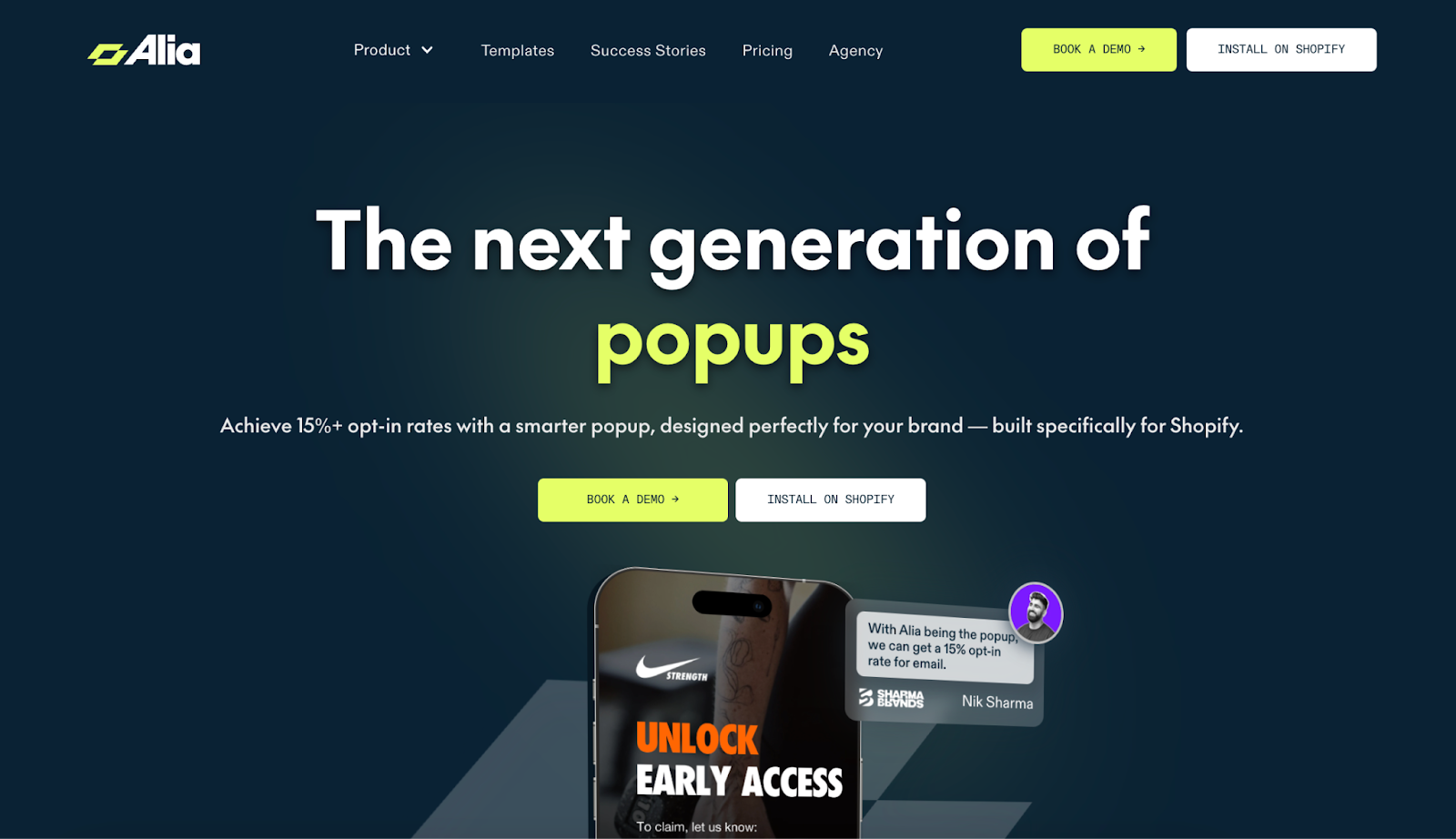
Rating: 4.9/5 (100+ reviews)
Alia stands out as the most sophisticated popup platform we've reviewed, specifically built for Shopify stores that demand exceptional performance.
Unlike traditional review collection tools, Alia transforms the entire customer acquisition experience through AI-powered optimization and brand storytelling capabilities that turn casual visitors into engaged customers.
Trustoo’s top user critiques | Alia Popups
Key Features:
- Included A/B testing to compare popup variants and optimize performance, with emphasis on downstream metrics beyond signups
- Multi-step, interactive popups including quiz-style flows that help educate users before conversion
- Advanced targeting options across pages, traffic sources, location, device type, and UTMs to fine-tune popup visibility
- Zero-party data capture through quizzes and custom inputs to support richer segmentation
- Shopify-first integration provides native user experience and optimized performance
Try Alia for 14 days free, pricing starts at $100/mo
Considerations before selecting Alia
Alia is made specifically for Shopify, so it’s not a fit for merchants using platforms like WooCommerce or Magento. Pricing is handled on a custom basis rather than through transparent tiers, which may involve contacting sales.
While the results are notable, brands that want only basic popup functionality may feel the multi-step format is more than needed.
What else can you do with Alia?
More than an email capture tool, Alia supports customer education and audience segmentation. Merchants can use it to launch interactive product explainers, collect zero-party data for better targeting, and trigger purchases with strategically timed offers.
The platform has delivered millions in attributed revenue, with some brands seeing over $5.8M in attributed sales from Alia-driven email flows and onsite conversions.

More:
2) Wisepops - Multi-Channel Engagement Beyond Basic Reviews
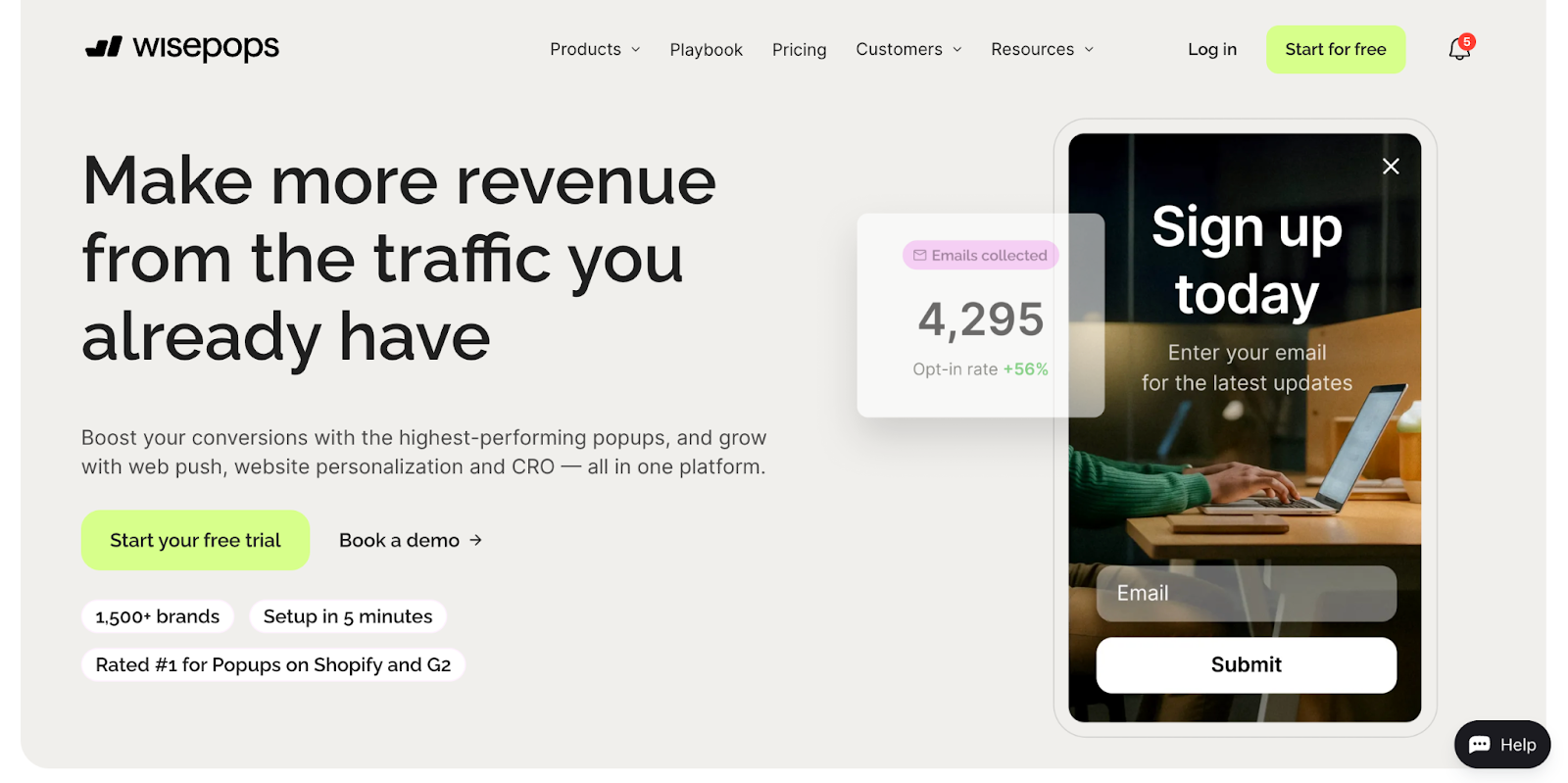
Rating: 4.8/5 (200+ reviews)
Wisepops positions itself as a comprehensive website engagement platform that goes far beyond traditional review collection.
The platform offers a unified approach with popups, web push notifications, notification feeds, and in-page embeds all working together to maximize conversions and customer engagement.
Key Features:
- Multi-channel onsite messaging — Popups, notification feeds, embeds, and web push in a single platform
- AI product recommendations — Built-in AI helps predict intent and highlight relevant products
- Experiments platform — Run structured experiments to measure true impact across the funnel
- A/B testing — Compare campaign variations using statistical rigor, not vanity metrics
- Advanced personalization — Content updates dynamically based on visitor actions and stage
- Deep integrations — Works with ecommerce, email, SMS, and analytics platforms
- Revenue tracking & analytics — Track conversions and revenue back to individual onsite campaigns
Pricing starts at $49/month
Considerations before going with Wisepops:
The Essential plan supports only two websites, with enterprise features like SSO, SOC 2 compliance, and dedicated success management available through custom plans.
Although the platform is powerful, setting up advanced experiments and personalization may take longer than with simpler popup-focused tools.
More:
- Read our in-depth buyer guide: Alia or Wisepops?
- We Reviewed 12 Top Wisepops Alternatives - Here's #1
3) OptiMonk - Revenue-Focused Popup Optimization
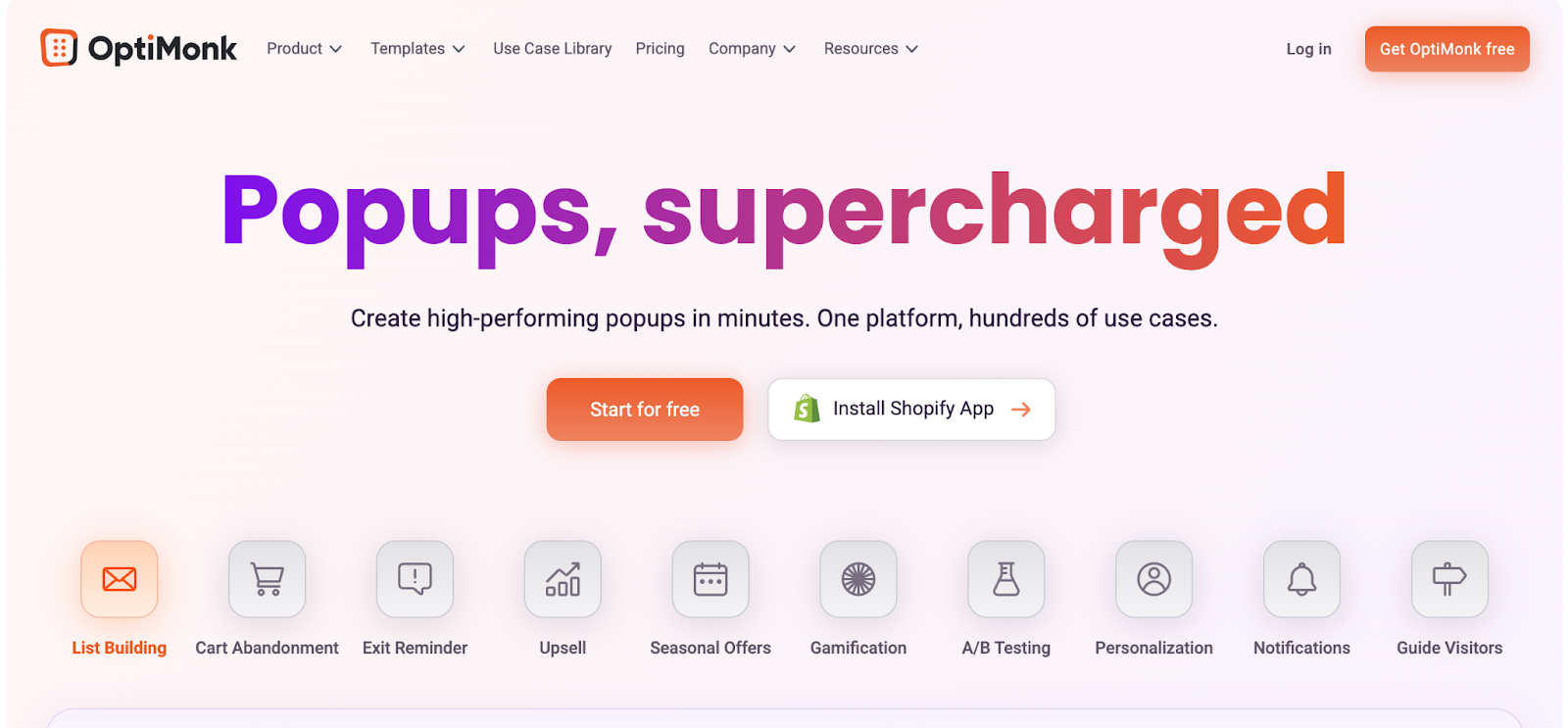
Rating: 4.8/5 (500+ reviews)
OptiMonk differentiates itself through industry-leading popup load speeds and comprehensive revenue tracking.
The platform focuses on true sales lift measurement and offers advanced personalization features that adapt to different audience segments within the same campaign.
Key Features:
- AI-powered CRO & personalization — Smart Popups, Smart Personalization, and Smart A/B Testing designed to drive conversions across the funnel
- Advanced experimentation — Run structured A/B tests and experiments focused on measurable business results, not surface metrics
- Revenue-focused analytics — Track campaign performance with clear conversion and revenue attribution
- High-performance delivery — Popup delivery optimized for speed and scale
- Template-driven execution — Ready-made templates and use-case playbooks for quick campaign setup
OptiMonk offers a free plan, pricing starts at 29/mo
Considerations before going with OptiMonk:
OptiMonk is strong for CRO, testing, and personalization, but it may feel more complex than basic popup tools for teams that only need simple opt-ins.
Advanced AI and enterprise features require higher-tier or custom plans.
More:
4) WooHoo - Gamified Popup Experiences That Drive Engagement
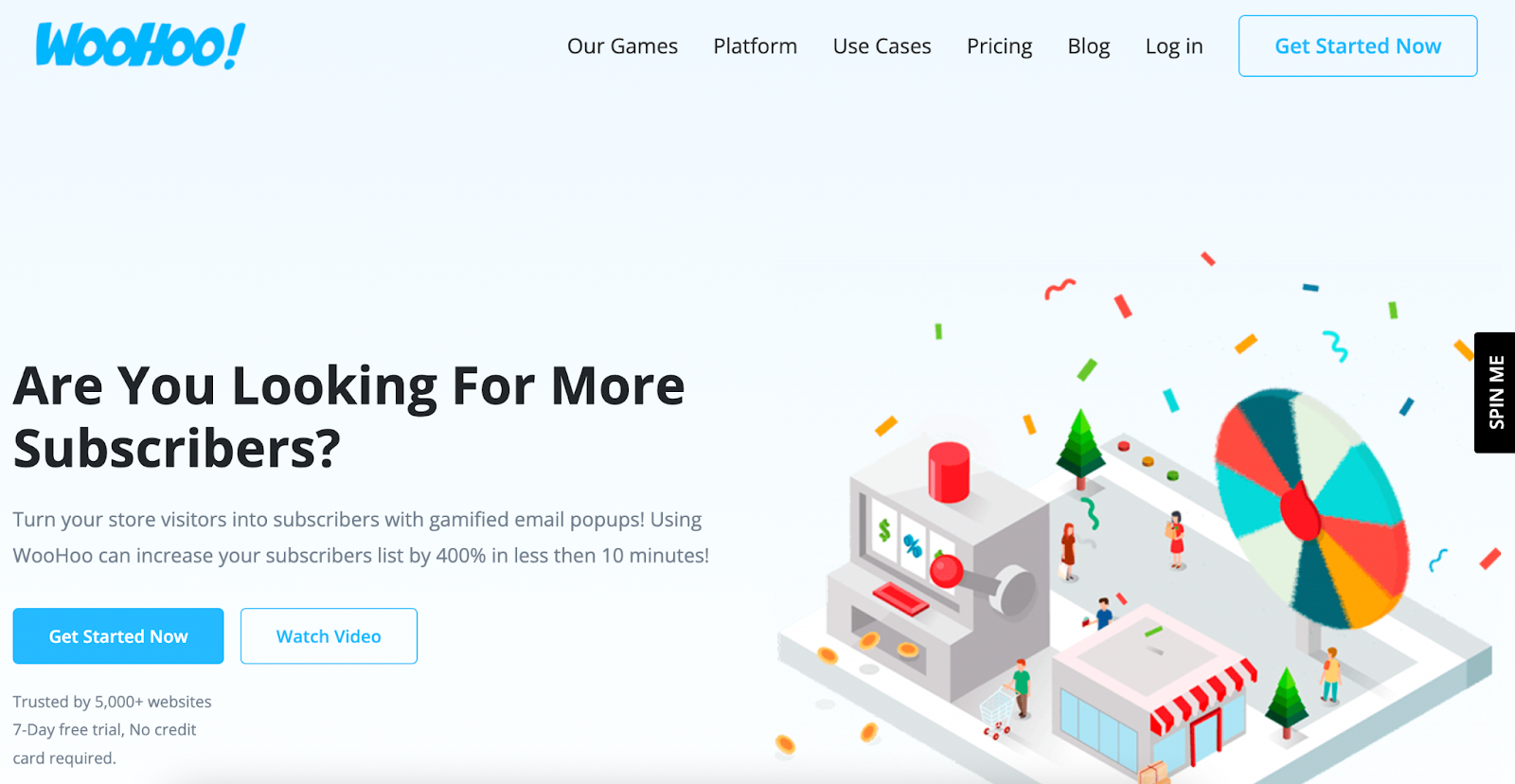
Rating: 4.7/5 (200+ reviews)
WooHoo takes a completely different approach by turning email capture into interactive games.
The platform's gamification strategy has proven to increase subscriber list growth by up to 400% by making the opt-in process engaging and rewarding rather than transactional.
Key Features:
- Gamified email popups (4 games) — Wheel of Coupons, Card Dance, Pick a Gift, and Reel of Coupons to make opt-ins more interactive.
- “Win” mechanics you can control — Set coupon options and configure the probability of each discount outcome.
- Smart targeting + behavior controls — Use triggers like time/scroll, exit-intent, and scheduling to control when widgets appear.
- Mobile-responsive by design — Widgets adapt to smaller screens and are designed to comply with Google’s mobile guidelines.
- Built-in autoresponder + integrations — Send coupon emails via WooHoo’s autoresponder and connect subscriber lists to other tools (including via Zapier).
Pricing starts at $29
WooHoo offers straightforward monthly pricing for gamified email list-building popups, with a free full-access trial and no card required.
Considerations before going with WooHoo:
WooHoo is built primarily for gamified email list growth (not a full onsite messaging/CRO suite). If you need broader flows (multi-step education, onsite personalization beyond games, or deeper experimentation across the funnel), you may want a more comprehensive platform.
Bibado achieved 28% sign-up rate and 17% AOV increase through education
POPUP SIGN-UP RATE
PURCHASE RATE AFTER SIGNUP
INCREASE IN AOV

"We added about £10 to our AOV…The long-term benefits of customer education and brand engagement have been significant.”
Install Alia
Launch first popup in 5 minutes
10x your list

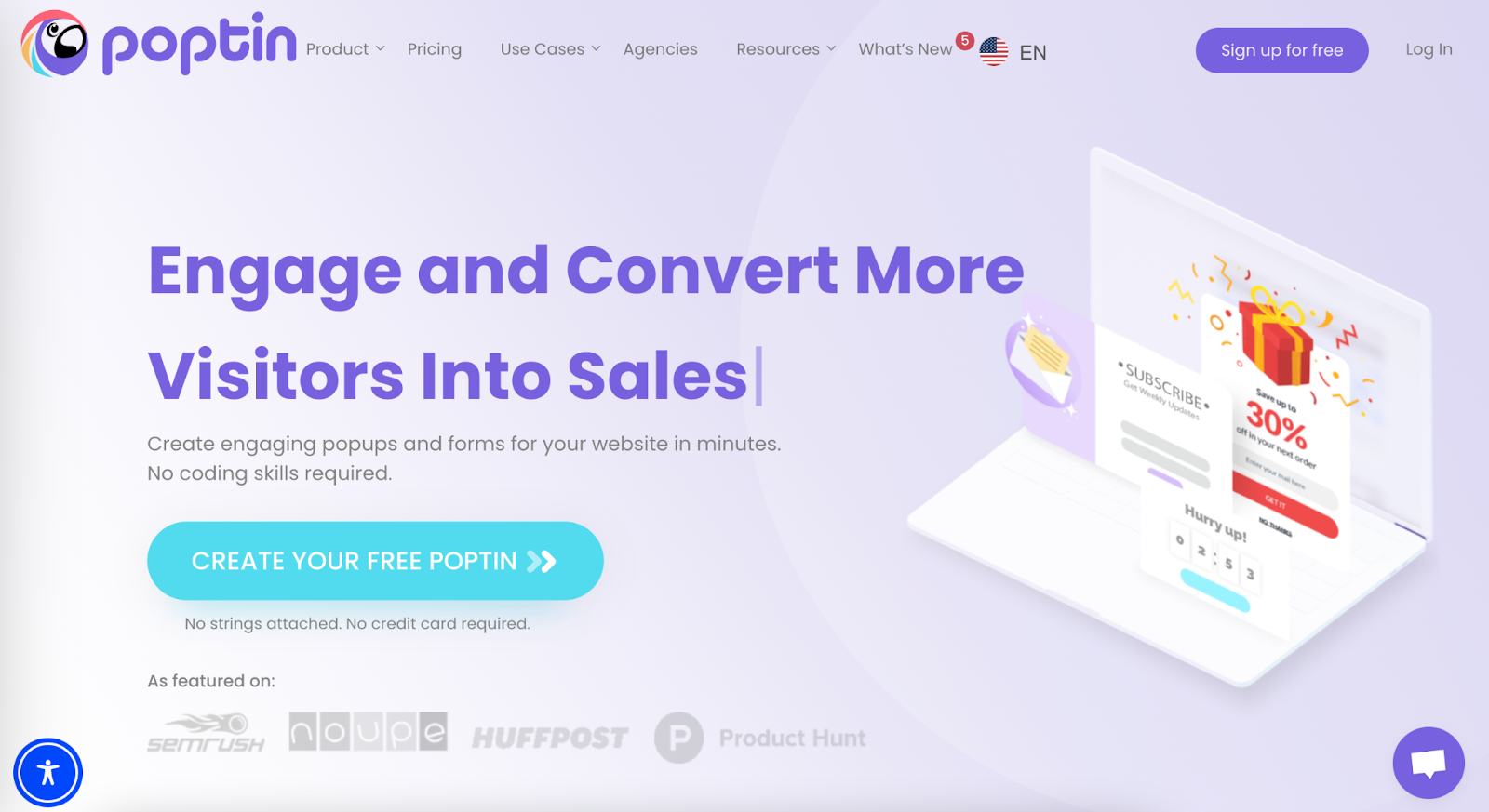
5) Poptin - Agency-Friendly Popup Builder with Extensive Integrations
Rating: 4.9/5 (1.2k+ reviews)
Poptin caters to agencies and marketers managing multiple client accounts, streamlining campaign setup across many sites.
With 1,500+ app connections via Zapier and Integromat, it supports robust data sync and automated workflows for complex stacks.
Key Features:
- Native integrations + Zapier — Integrate Poptin with common email and CRM platforms through native connections, with Zapier support for broader automation.
- Advanced targeting & triggers — Offers exit-intent targeting and advanced display rules, including geo-location targeting.
- Built-in autoresponder — Sends automated follow-up emails, including coupon codes, after popup or form submissions.
- A/B testing — Test popup variations through split testing to improve conversion results.
- Gamified popups — Enables interactive lead capture formats such as “Spin the Wheel.”
Poptin offers a free plan; pricing starts at $25/mo
Considerations before going with Poptin:
The Free plan is limited to 1,000 visitors per month, which may be restrictive at scale. Higher-tier plans mainly expand visitor, domain, and autoresponder limits rather than introducing major feature differences.
More:
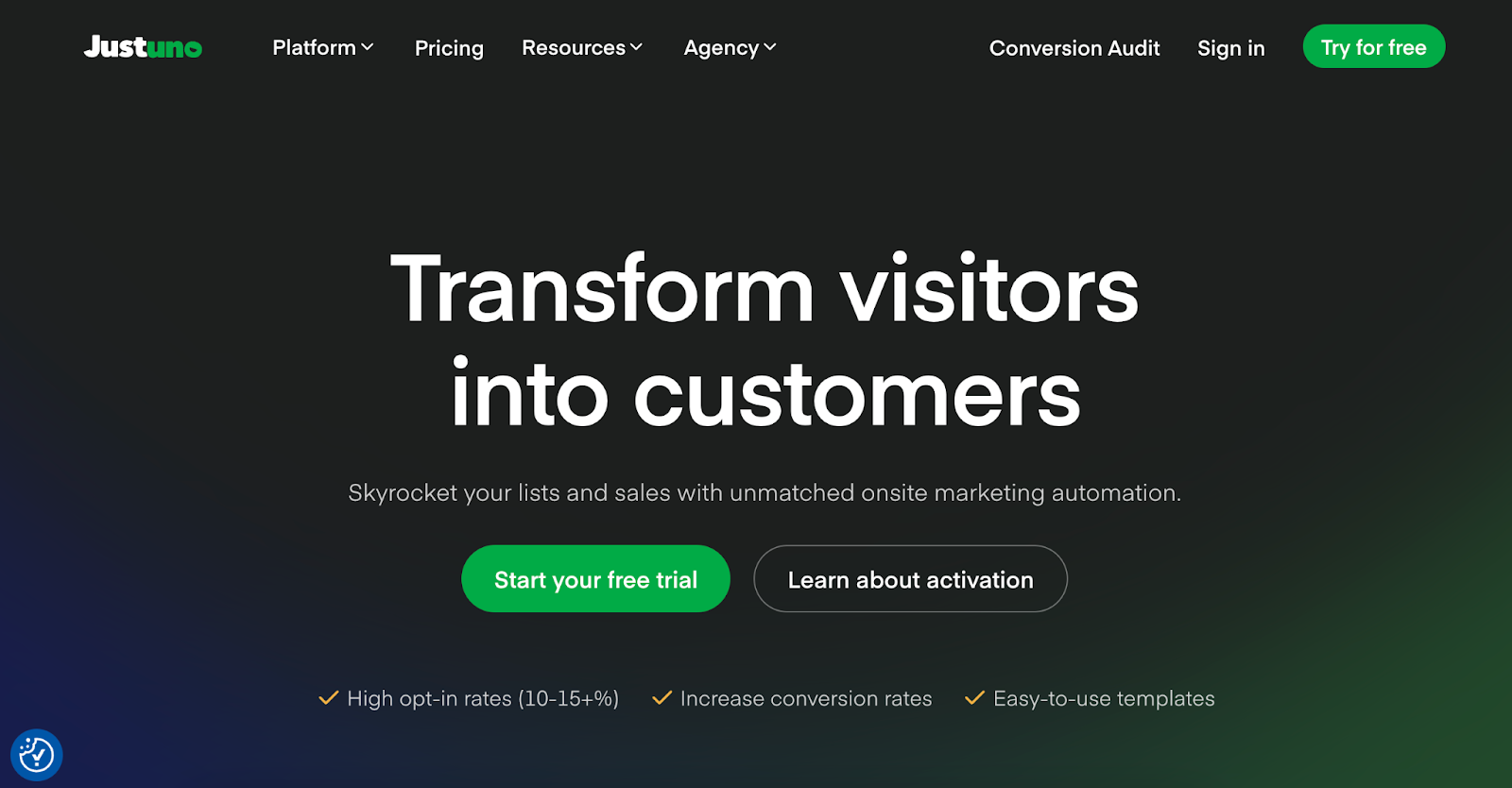
6) Justuno - Enterprise-Grade Marketing Automation Platform
Rating: 4.5/5 (800+ reviews)
Justuno goes beyond simple popup creation to offer a comprehensive onsite marketing automation platform.
The platform provides sophisticated workflow builders, AI product recommendations, and real-time visitor segmentation for complex customer journeys.
Key Features:
- Pop-ups & workflow automation — Build highly personalized pop-ups and multi-step workflows that adapt messaging based on visitor behavior and campaign logic.
- Segmentation & targeting — Target visitors using profile details, real-time behavior, and advanced rule sets to deliver personalized messages.
- AI product recommendations — Provide personalized upsell and cross-sell recommendations powered by algorithms.
- Email & SMS lead capture — Collect and grow email and SMS subscribers through optimized pop-ups, embedded forms, and two-step flows.
- Multivariate & A/B testing — Go beyond simple A/B testing to find the best-performing experiences and improve conversion results.
- Email/SMS verification — Use real-time checks to catch typos and low-quality leads during capture and improve list quality.
JustUno offers a free plan; pricing starts at $39/mo
Justuno pricing is based on monthly website visitors and includes a 14-day free trial (no credit card required).
Considerations before going with Justuno:
Plans are primarily differentiated by visitor tiers and access to advanced segmentation and operational capabilities, including custom segments, custom properties, Visibility Boost, and enterprise-level governance and reporting.
For sites with under 2,000 monthly visitors, the Free plan may work—but promotions stop once the limit is exceeded and resume after the next reset.
More:
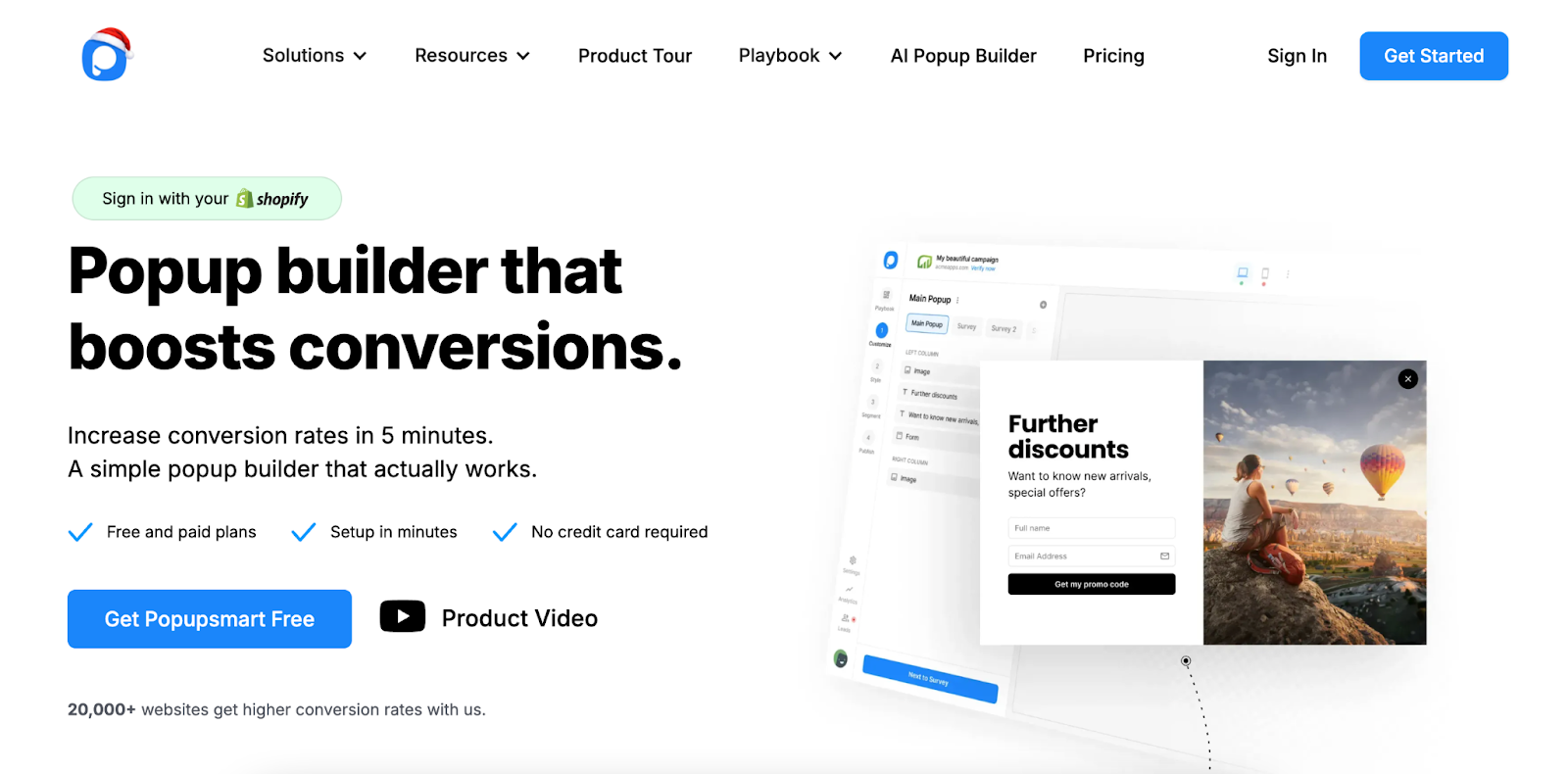
7) Popupsmart - AI-Powered Popup Creation from Text Prompts
Rating:4.5/5 (250+ reviews)
Popupsmart's AI-powered builder turns simple text prompts into fully designed, ready-to-publish popups—cutting the time and expertise normally needed to launch effective campaigns.
This approach offers a fresh alternative to manual review widget customization.
Key Features:
- Unlimited popups on all paid plans — Run unlimited popup campaigns without usage caps.
- A/B split testing — Compare campaign variations to see which performs better.
- Smart targeting rules — Decide when and where popups appear using visitor behavior and page rules.
- Mobile-responsive design — Popups scale properly across mobile and desktop devices.
- Priority support on paid plans — Access quicker support responses than those on the free plan.
- Team collaboration — Enable multiple users with role-based permissions on higher plans.
Popupsmart offers a free plan; pricing starts at $39/mo
Popupsmart pricing is visitor-based with pageview tiers and includes a money-back guarantee (7 days for monthly, 15 for annual). All paid plans remove branding.
Considerations before going with Popupsmart:
Popupsmart is designed around visitor-triggered popups, analytics, and lead capture workflows, with pageview limits tied to plan tiers.
Lower-tier plans fit smaller traffic volumes, while higher plans add team features and increased email quotas. Popupsmart does not provide built-in SMS capabilities.
More:
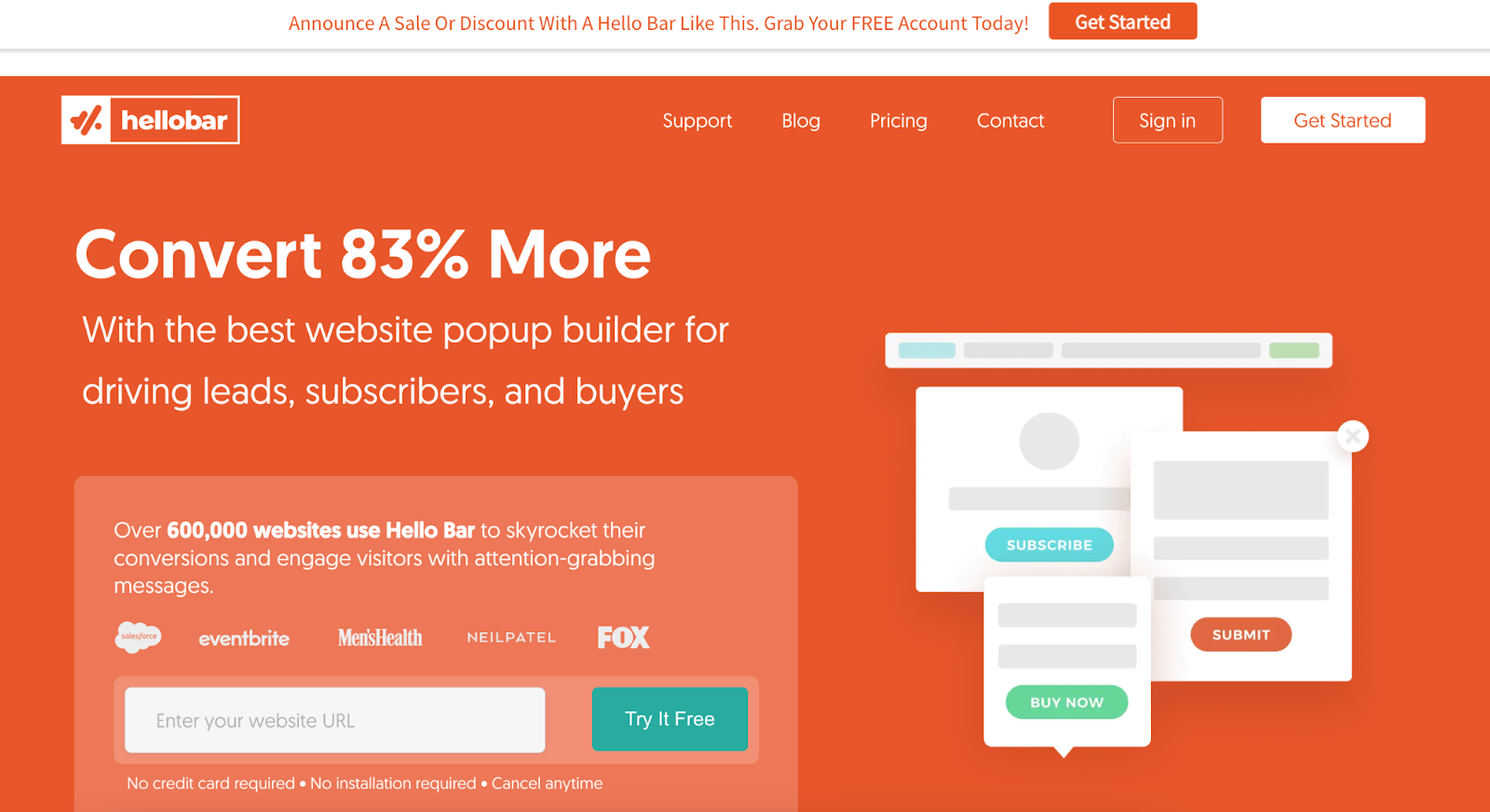
8) Hello Bar - Trusted Popup Solution for Quick Deployment
Rating: 4.6/5 (60+ reviews)
Hello Bar has earned trust from over 600,000 websites worldwide through its focus on quick setup, ease of use, and strong ROI.
The platform offers hundreds of customizable templates tailored to various industries and use cases.
Key Features:
- Trusted at scale — Powering over 600,000 websites across industries, indicating stability for high-traffic use cases.
- Template library — Large selection of customizable, responsive popup and bar templates for announcements, offers, and lead capture.
- Inline CTAs — Insert calls-to-action directly into page content to boost engagement without interrupting readers.
- Advanced targeting & testing — Use rule-based targeting with A/B testing on paid plans to optimize results over time.
- Integrations & automation — Integrates with common email and marketing tools, with Zapier support for broader automation needs.
- Privacy-ready setup — GDPR-focused configurations and documentation to support EU compliance.
Hello Bar offers a free plan for up to 5,000 views, pricing starts at $39/mo
Considerations before going with Hello Bar:
View limits tied to plan tiers can be restrictive for high-traffic sites and may lead to overage charges. Native SMS marketing and multichannel automation are not explicitly offered, and enterprise-level needs require direct contact.
9) Sleeknote - Multi-Goal Campaign Management Platform
Rating: 4.2/5 (20+ reviews)
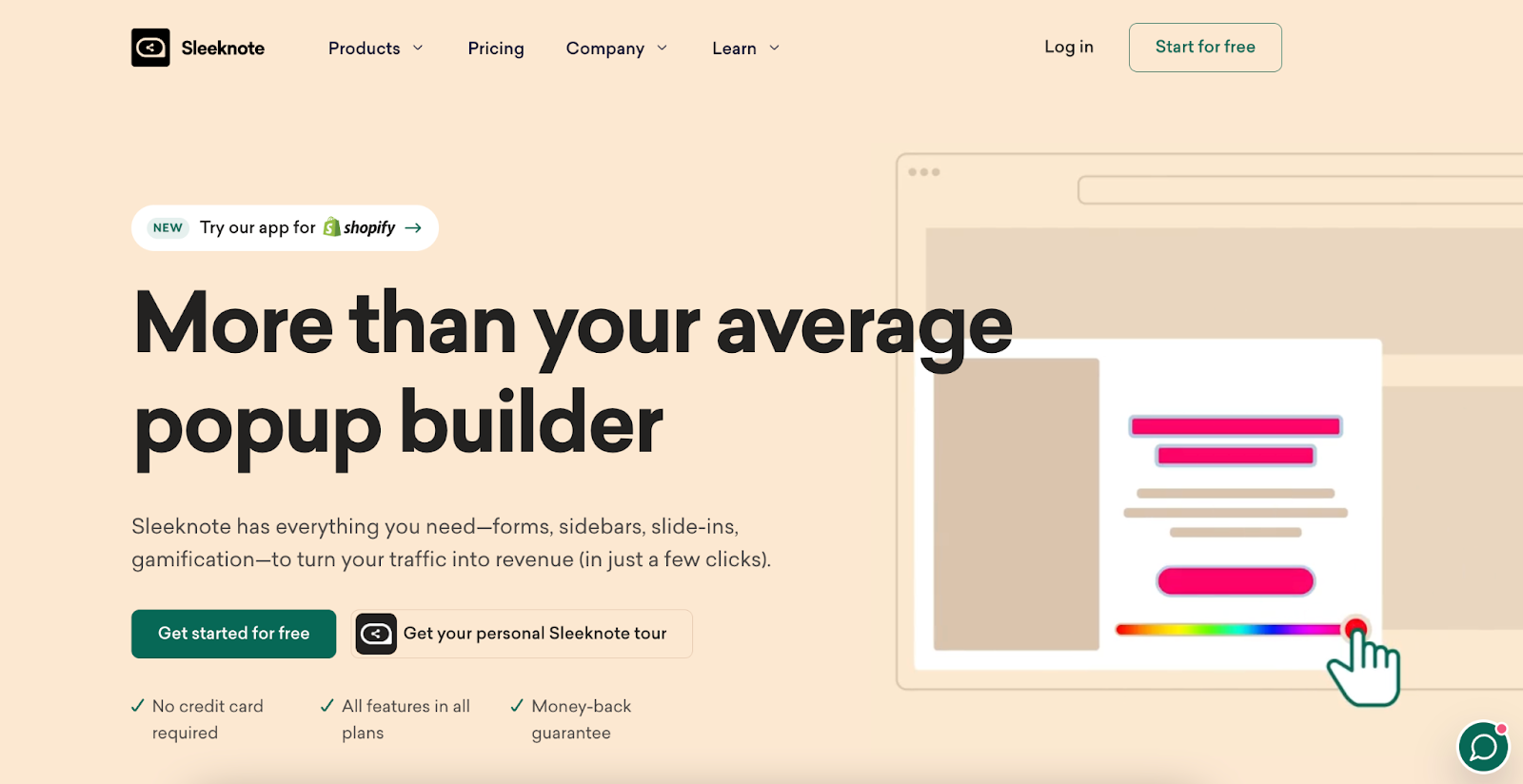
Sleeknote lets you run multiple personalized popup campaigns at once for different visitor segments and objectives.
The platform supports behavior-based targeting across unlimited domains for more sophisticated, tailored experiences.
Key Features:
- Multi-campaign personalization — Manage multiple campaigns simultaneously from a single dashboard, each aimed at different audiences and objectives.
- Extensive integrations — Integrates with 1,200+ tools across email, CRM, ecommerce, and marketing ecosystems.
- Built-in gamification (add-on) — Offers Spin-to-Win, Scratch-to-Win, Seasonal Calendar, Daily Offers, and Quiz formats to drive engagement.
- Device-specific editing — Design and fine-tune desktop and mobile experiences separately for better usability.
- Unlimited scale on paid plans — Unlimited campaigns and domains are included on Core plans.
Pricing starts at €69
Sleeknote pricing is based on monthly visitors, with a 14-day free trial and full access to all features (no credit card required).
Considerations before going with Sleeknote:
Pricing is charged in EUR, which may vary for non-EU customers. Each plan has visitor caps, and gamification requires a paid add-on, raising total costs for teams that need interactive features.
Read more: We Reviewed 12 Top Sleeknote Alternatives - Here's #1
10) Privy - Shopify-Focused Email and SMS Marketing Platform
Rating: 4.5/5 (4.4k+ reviews)
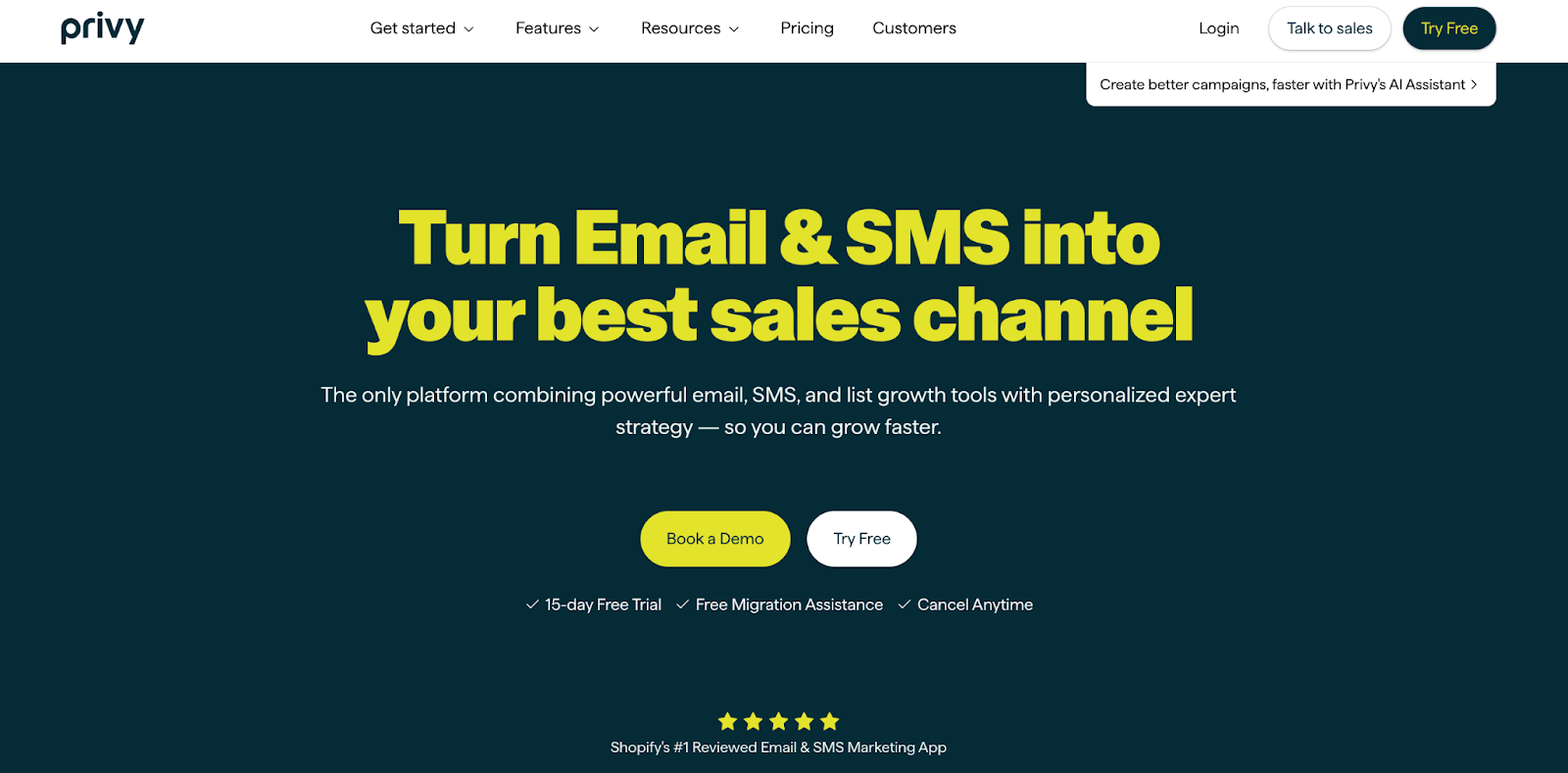
Privy specifically targets Shopify merchants with deep platform integration and dedicated coaching support.
The platform combines popup creation with comprehensive email and SMS marketing automation designed for ecommerce success.
Key Features:
- Popup-led list growth — Use advanced popups, banners, and displays including exit-intent, Spin-to-Win, cart savers, quizzes, and multi-step forms
- Email + SMS automation — Flow builder with ready-made templates for welcome flows, cart recovery, and post-purchase messaging
- Dual email & SMS capture — Capture both email and phone numbers within a single signup flow
- Deep ecommerce integrations — Built-in integrations with Shopify, BigCommerce, Wix, and platforms like Klaviyo
- Targeting & segmentation — Apply rule-based targeting powered by ecommerce events and customer data
Pricing starts at $30/mo
Privy pricing scales by mailable contacts and SMS usage, with a 15-day free trial and no credit card required.
Considerations before going with Privy:
Pricing is tied to contact list size and SMS volume, which means costs rise as your audience grows. SMS is primarily focused on US recipients, and Privy is best suited for Shopify-based ecommerce sites rather than non-commerce use cases.
More:
Soapbox doubled sign-ups with 135% email and 122% SMS increases
EMAIL OPT-IN RATE (UP FROM 6.5%)
INCREASE IN EMAIL SIGNUPS
INCREASE IN SMS SIGNUPS

"Sign-ups have effectively doubled with the same amount of traffic… More of the people who sign up are converting immediately."
“Switching to Alia not only doubled our sign-up rates but also transformed how we engage with our customers..
..The educational pop-ups allowed us to tell our story and build a community, driving immediate purchases and creating long-term value.”
Install Alia
Launch first popup in 5 minutes
10x your list
11) Picreel - Enterprise Popup Solution with 24/7 Support
Rating: 4.5/5 (120+ reviews)
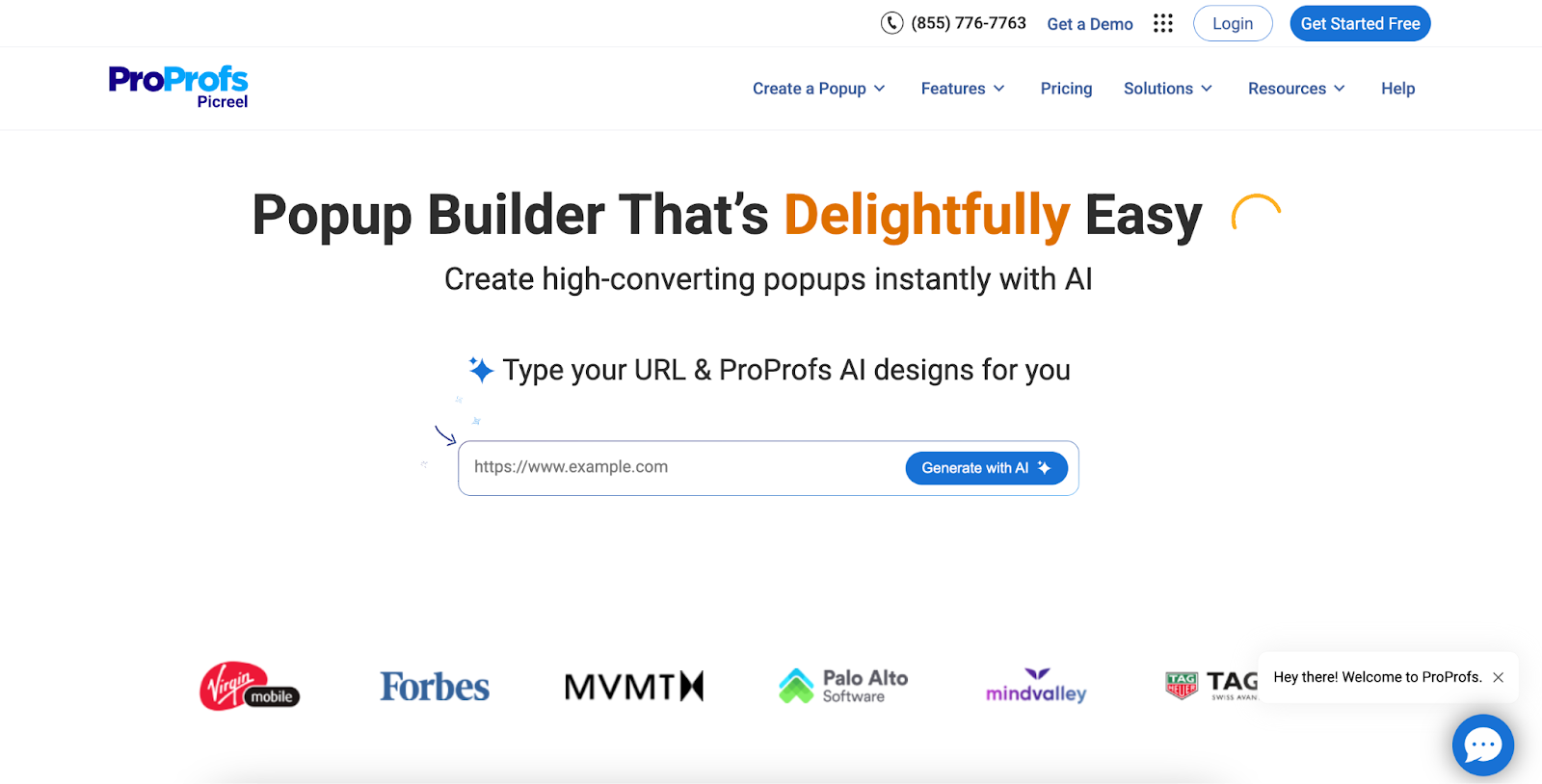
Picreel is an enterprise-grade popup platform used by brands such as Virgin, Forbes, and Tag Heuer.
The platform offers 700+ integrations and 24/7 support, giving you broad connectivity and round-the-clock help for complex stacks.
Key Features:
- Extensive integrations — Integrates with 700+ tools via native connections and Zapier, including CRMs, ESPs, and ecommerce platforms
- Advanced targeting & triggers — Offers exit-intent, geolocation, custom variables, referral source, device type, and time-based targeting rules
- Flexible popup formats — Supports lightbox, nanobar, sidebar, fullscreen, video, iframe, and multi-screen popup types
- A/B testing & analytics — Provides built-in testing, reporting, and campaign performance insights
- Enterprise readiness — Higher plans include APIs, webhooks, custom field mapping, enterprise-grade security, and dedicated account management
Picreel offers a free plan; pricing starts at $19.99/mo
Picreel pricing is based on monthly pageviews, with unlimited campaigns on all plans. White-label add-on available for $30/month.
Considerations before going with Picreel:
Pricing is tied to traffic levels, which can increase costs for larger sites. Advanced features like Spin-to-Win, API access, and dedicated account management are reserved for higher-tier or enterprise plans.
12) BDOW (formerly Sumo) - Multi-Site Management for Agencies
Rating: 4.2/5 (520 reviews)
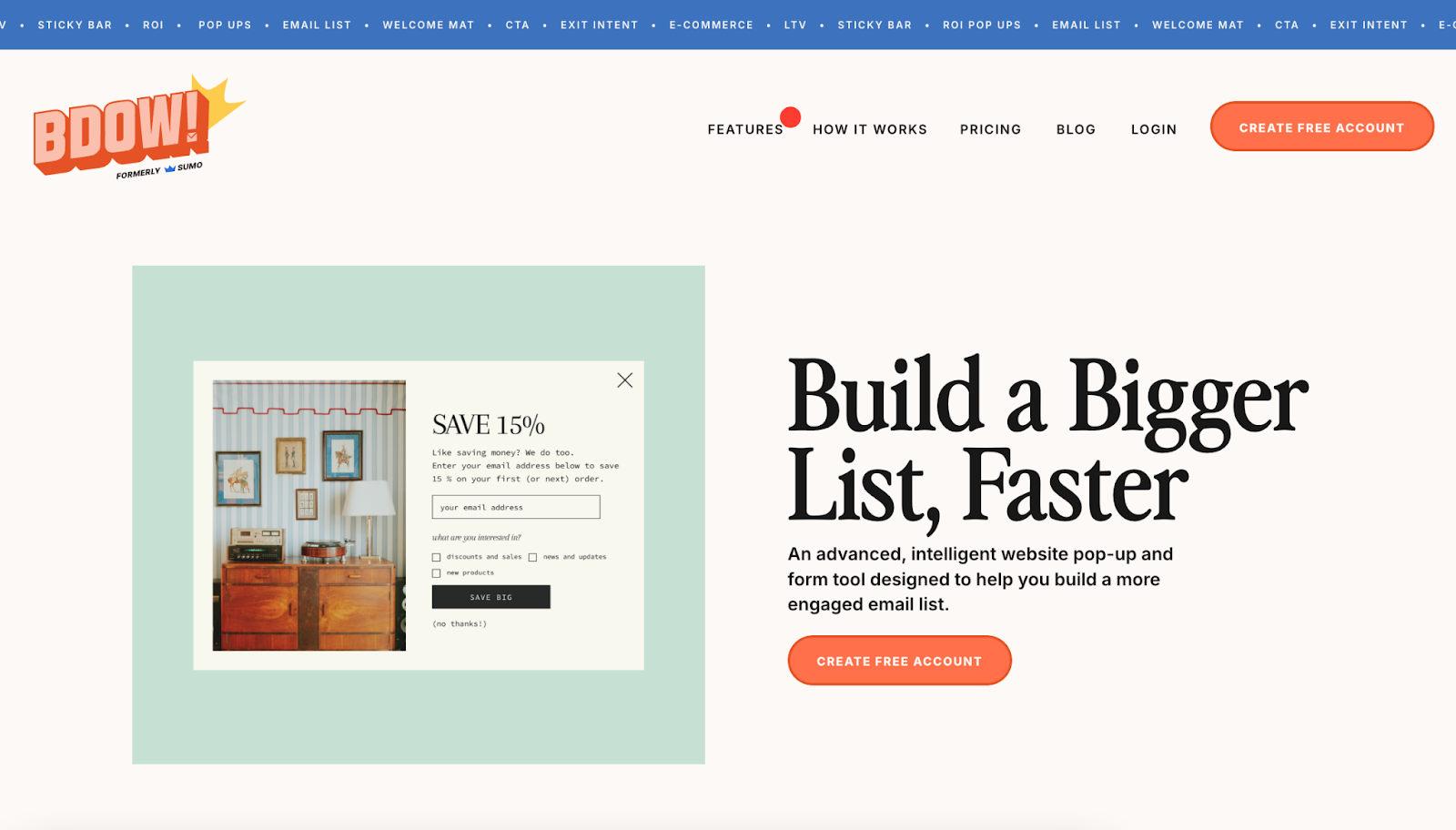
BDOW (formerly Sumo) serves over 30,000 active websites with a focus on multi-site management and agency needs.
The platform provides centralized dashboard management for multiple client accounts and websites.
Key Features:
- Multi-site management (paid plans) — Control one or several sites from a single dashboard, depending on the plan
- Built-in email marketing — Run email broadcasts, welcome emails, and campaigns natively without an external ESP
- Visitor targeting & A/B testing — Paid plans include rule-based targeting and split testing capabilities
- Ecommerce features (paid plans) — Supports store connections, discount creation, cart abandonment reduction, and AOV improvement
- Integrations & webhooks — Higher tiers provide access to email integrations and webhooks
- Analytics — Monitor form and email campaign performance, with up to two years of data on paid plans
BDOW offers a free plan; pricing starts at $25/mo
BDOW pricing is based on number of sites and monthly email volume, with 14-day free trials on paid plans.
Considerations before going with BDOW:
Email sending caps are tied to plan tiers, and multi-site management is only available on paid plans. Although BDOW includes built-in email features, it is primarily geared toward onsite forms and list growth rather than comprehensive multi-channel automation.
Read more: We Reviewed 15 Top BDOW Alternatives - Here's #1
13) Klaviyo - Email Marketing Platform with Popup Capabilities
Rating: 4.7/5 (1.2k+ reviews)
Klaviyo approaches popups from an email marketing perspective, offering web forms as part of a comprehensive customer data platform.
The platform integrates popup creation with deep ecommerce analytics and customer lifetime value tracking.
Key Features:
- Ecommerce data sync & segmentation — Shopify-native integration syncs customer profiles, events, and order data in near real time for accurate segmentation and personalized signup flows
- Built-in web forms — Build customizable onsite forms to capture leads and gather email and SMS consent
- AI-optimized form timing — Uses AI-based timing and behavior triggers, including scroll depth, time on site, and exit intent, to display forms when conversion likelihood is higher
- Revenue attribution for forms — Reporting connects form activity to downstream conversions and revenue to show how signups drive sales
- Shop Pay lead capture — Enables Shop Pay–powered lead capture on Shopify so returning shoppers can prefill details and reduce friction
- 350+ native integrations — Integrates with 350+ ecommerce, marketing, analytics, and data tools to centralize customer data and activate it across channels
Klaviyo offers a free plan, pricing starts at $45/mo
Klaviyo offers a free plan and scales based on active profiles and SMS credits.
Considerations before going with Klaviyo:
Klaviyo is not positioned as a dedicated popup tool—popups are included as part of its web forms inside a larger email and mobile marketing platform. Pricing complexity grows as active profile counts and mobile messaging credits scale.

14) Judge.me - Budget-Conscious Review Collection
Rating: 4.9/5 (37k+ reviews)
Judge.me offers essential review features with an unlimited free plan that includes photo and video reviews, automated email requests, Q&A on product pages, Google rich snippets, and integrations.
Its fast setup, lightweight script, and budget-friendly pricing make it ideal for most stores.
Key Features:
- Unlimited reviews on the Free plan — Includes unlimited product & store reviews plus unlimited photo & video reviews.
- SEO-rich snippets (Free plan) — Free plan includes SEO-optimized rich snippets.
- On-site display variety — Pricing/features list includes pop-up & floating sidebar and Questions & Answers as supported display options.
- Paid plan unlocks “All integrations” + deeper customization — The Awesome plan lists All integrations and Full customization (plus social media/Google Shopping, referrals & coupons).
Judge.me offers a free plan; pricing starts at $15/mo
Considerations before going with Judge.me:
Not a popup-first tool: the “popup/floating sidebar” is a review display widget, not a full CRO popup suite.
If you need advanced onsite journey logic (multi-step flows, triggers across many campaign types), you’ll likely pair Judge.me with a dedicated popup/CRO platform rather than treat it as the primary popup tool.
The Verdict: Which Trustoo Alternative Should You Choose? (Our Top 3 Picks)
- Alia — The clear winner for Shopify stores focused on performance. With AI-powered A/B testing, brand storytelling, and documented results like 35% opt-in rates and $5.8M in attributed sales, Alia directly addresses the limits that push teams beyond Trustoo. Its Shopify-first design and white-glove onboarding make it the strongest option for serious ecommerce brands.
- Judge.me — Best for budget-conscious merchants who want reliable review collection without monthly fees. The unlimited free plan, photo/video reviews, automated requests, and Google rich snippets deliver strong value with minimal performance overhead.
- Yotpo — Best for enterprise brands that want an all-in-one customer content platform. The combined reviews, UGC, loyalty, and SMS stack with managed onboarding suits teams prioritizing scale and consolidation.
The right choice depends on whether you value conversion performance, cost efficiency, or a unified enterprise stack.
For most Shopify brands looking to move beyond basic reviews, Alia is the most direct and impactful upgrade.