

The jewelry market is exploding, projected to reach around $578 billion by 2033. At the heart of this growth is Shopify, the platform powering the world’s most successful jewelry brands—from minimalist demi-fine studios to high-volume streetwear labels.
These leaders aren't just selling products; they are using Shopify’s ecosystem to scale globally and create personalized experiences that turn one-time browsers into lifelong fans.
We’ve curated the top Shopify jewelry stores of 2026 to see what makes them stand out in a crowded market.
Read on to explore these brand examples and find inspiration for your own.
TL;DR – Best Shopify Jewelry Stores at a Glance
1. Mejuri

Niche: Fine, everyday jewelry
Mejuri helped invent the "demi-fine" category — fine jewelry priced for everyday wear instead of milestone moments. Their Shopify store leans into a clean, gallery-like aesthetic with high-resolution product photography and lifestyle imagery that makes shopping feel like flipping through a magazine.
What separates Mejuri is the drop-style merchandising. They release new collections weekly (their "Monday drops") to keep their email list and Instagram following coming back. Combined with strong storytelling around the female founders behind each piece, it turns one-time buyers into a community.
What to learn: Treat each new collection as a "drop." Scarcity, rhythm, and storytelling can transform a category usually shopped for occasions into a habit-forming brand.
Pair drops with 8 limited time offer examples for messaging that actually moves shoppers.
2. Missoma
Niche: Layering pieces, gold vermeil
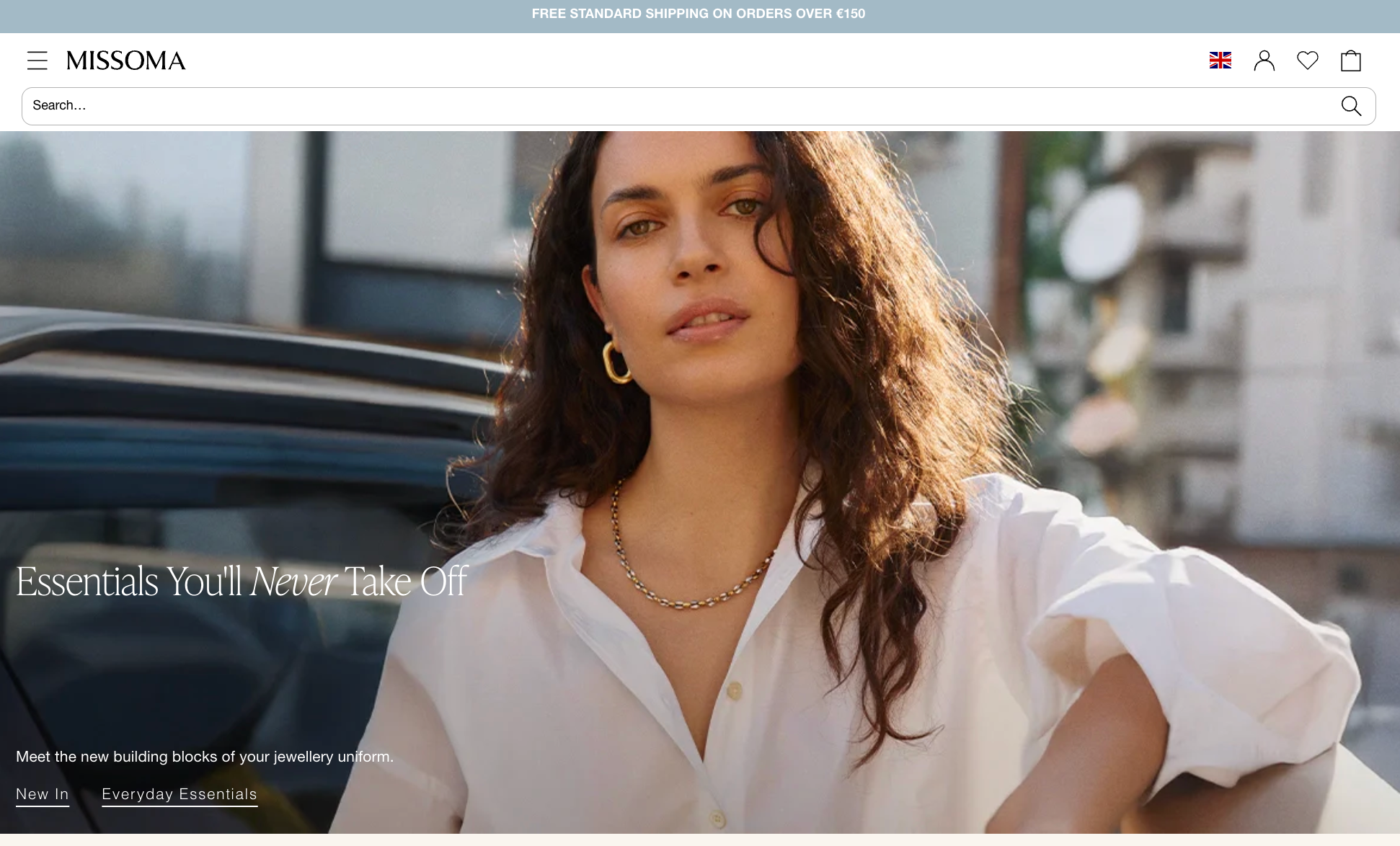
Missoma built a global business on one merchandising idea: jewelry should be layered, stacked, and styled. Their site reflects that philosophy — collections are organized around the idea of building a "look," with curated stack suggestions and "complete the set" recommendations on every product page.
The brand uses Shopify to support international expansion, with localized currency, sizing, and shipping for the UK, US, EU, and Australia. Their hero product photography typically shows multiple necklaces or rings layered together, training the eye to see jewelry as a system rather than individual pieces.
What to learn: Sell the outfit, not the item. Bundling, stacking suggestions, and complete-the-look modules raise AOV and give customers a reason to buy more than one piece per visit.
Read our guide on why AOV is so important for e-commerce growth to break down the math.
3. Heaven Mayhem
Niche: Los Angeles–based accessories and lifestyle jewelry
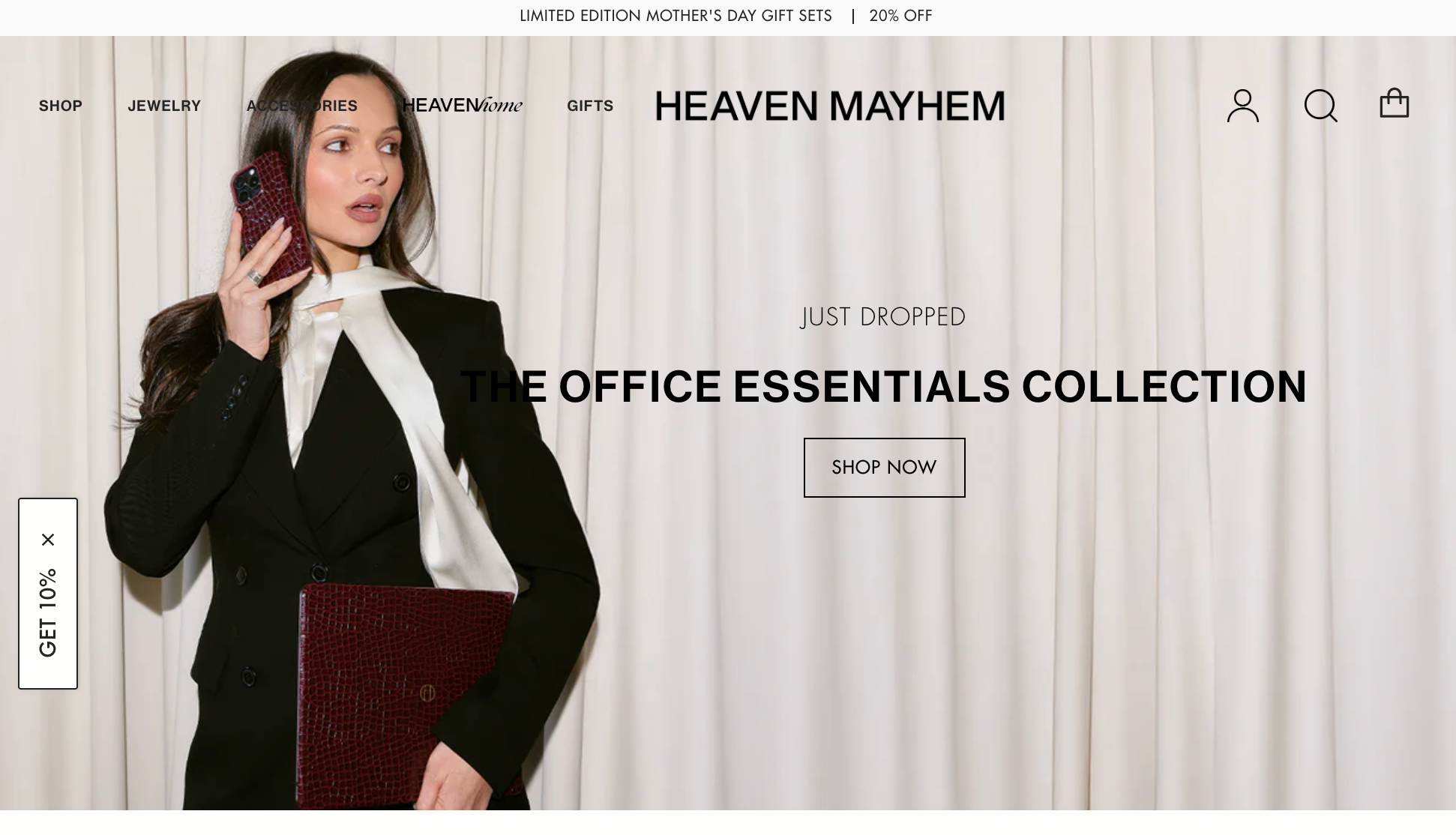
Heaven Mayhem has carved out a distinctive space in the LA accessories scene with bold, statement-driven jewelry and a tightly defined visual identity. But what makes them especially worth studying is their list-building engine.
The brand was previously running Klaviyo's native popup and watching opt-in rates languish below 1%. After switching to Alia Popups, they replaced their generic form with an interactive, quiz-style popup that asks visitors what they're shopping for in exchange for a discount — and feeds that zero-party data straight into Klaviyo for smarter segmentation.
The results were immediate:
- Opt-in rate: 0.85% → 11.4% (a 13× lift)
- Email subscribers: +52% in the first 30 days
- SMS subscribers: +78% in the first 30 days
- Conversion rate from Alia-attributed signups: 15.9%
Read the full Heaven Mayhem case study for the breakdown.
What to learn: A popup isn't just an email-grab — it's a chance to ask the right question. By trading a discount for shopping intent, Heaven Mayhem turned their popup into the first step of a personalized customer journey.
4. Catbird
Niche: Romantic, ethically sourced fine jewelry
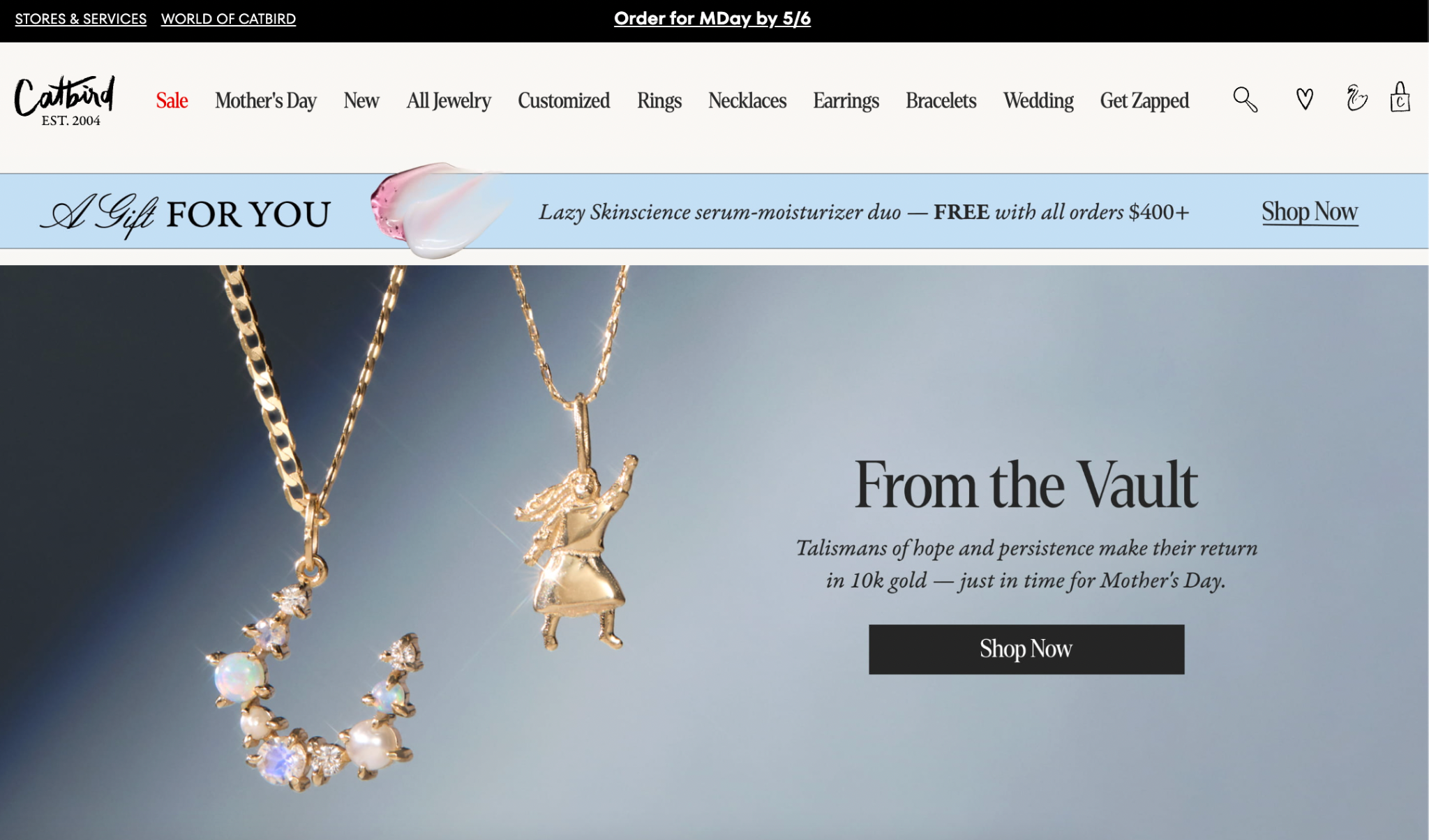
Catbird is a Brooklyn-born brand best known for delicate, romantic pieces and the original "wedding band of the moment" stacking ring. Every piece is made in their NYC studio using recycled gold and responsibly sourced stones — and they put that supply-chain transparency front and center on their PDPs.
Their site does a beautiful job of communicating craftsmanship without feeling overly precious. Editorial-style content, behind-the-scenes maker stories, and a love letter to New York City weave through the experience.
What to learn: Local manufacturing and ethical sourcing aren't just nice-to-haves anymore — they're conversion levers. Show your customers the people and processes behind the product.
The ultimate guide to customer education is a good starting point for brands with a story to tell.
5. Astrid & Miyu

Niche: Trendy fine jewelry, piercings, ear stacks
Astrid & Miyu is a London-based brand built around the "ear stack" — wearing multiple earrings together as a curated look. The brand's Shopify Plus store integrates seamlessly with their physical piercing studios, blurring the line between online discovery and in-person experience.
What stands out is their member loyalty program. Customers earn points on every purchase, see live point totals as they shop, and unlock exclusive perks like early access to drops and free piercings. It's one of the most engaging loyalty experiences in fine jewelry.
What to learn: A great loyalty program isn't about discounts — it's about experiences. For a deeper playbook, see how to launch an e-commerce loyalty program users love.
6. Ana Luisa

Niche: Affordable, sustainable, minimalist jewelry
Ana Luisa is a certified climate-neutral brand selling demi-fine jewelry at accessible prices. Their value proposition is built on transparency: every product page breaks down material composition, sourcing, and carbon impact, and the brand publishes annual sustainability reports.
The site is also a masterclass in price-anchoring. Many products show comparable retailer prices side-by-side, framing Ana Luisa as the smarter alternative to luxury brand markups.
What to learn: If your price is your wedge, don't be shy about it. Show customers why your pricing makes sense — the alternatives, the materials, the supply chain savings.
7. Baby Gold
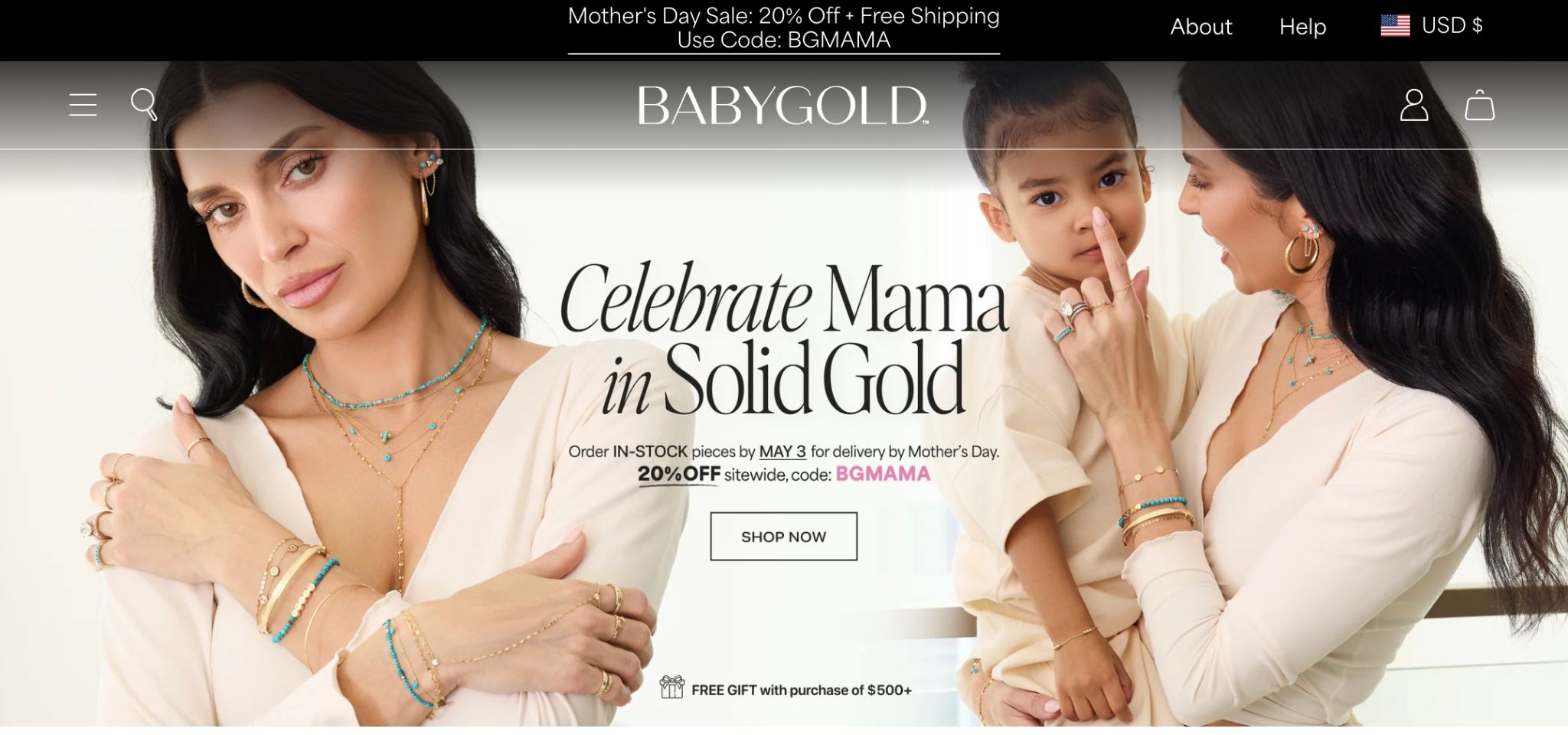
Niche: Personalized 14k gold for the whole family
Baby Gold was founded on a simple insight: most personalized jewelry is plated, but real 14k gold is what people actually want for keepsakes. Their Shopify store features a deep customization engine — initials, birthstones, family names, baby footprints — all on solid gold, all shipped fast.
What's clever is how they merchandise the customization. Instead of a generic "personalize" button, every category page shows real customer pieces with names already engraved, demonstrating exactly what's possible.
What to learn: Don't bury personalization behind a button. Show finished examples up front so customers can imagine their own version before they even click into a product.
The same principle applies to popups — see personalization techniques to enhance the shopper experience for more.
8. Pura Vida Bracelets

Niche: Cause-driven artisan bracelets
Pura Vida started as two friends bringing handmade bracelets back from Costa Rica and turned into a $50M+ Shopify brand. Their secret weapon is their "Charity Collection" — bracelets where a portion of every sale supports a specific cause, allowing customers to shop their values.
Pura Vida also runs one of the strongest subscription programs in jewelry. Their monthly "Pura Vida Club" sends a curated bundle of bracelets to subscribers, creating predictable recurring revenue and a built-in audience for future drops.
What to learn: A subscription doesn't have to be replenishment-based. Curated, surprise-and-delight subscriptions work especially well in jewelry, fashion, and accessories where novelty is the value.
For more on subscription management and retention popups, here's a deeper dive.
9. Kendra Scott

Niche: Colored gemstones, customization
Kendra Scott built a billion-dollar brand around a single product idea: customizable colored-stone jewelry. Their Shopify Plus site features a "Color Bar" — a customization tool that lets shoppers swap stones, metals, and chain lengths in real time with live previews.
The brand also leans into bricks-and-clicks integration. Customers can book in-store color bar appointments through the site, then have their custom piece shipped or picked up.
What to learn: Customization tools that update visually — not just textually — convert dramatically better. If shoppers can see their version in real time, they're far more likely to buy. This kind of interactive content is what separates winning Shopify brands from average ones.
10. BaubleBar

Niche: Trendy, personalized accessories
BaubleBar is the trend-driven cousin of fine jewelry brands — pumping out new styles weekly, riding cultural moments, and (most importantly) personalizing nearly everything. Their Custom Crew personalization engine lets customers monogram earrings, pendants, and even hair clips.
The brand also moves fast on cultural collaborations: NFL fan jewelry, Disney capsules, sports team partnerships, and celebrity collabs all keep the assortment fresh and the press cycle running.
What to learn: In trend-driven jewelry, speed beats perfection. Have a system to launch and iterate quickly, and lean into cultural moments while they're hot.
11. Brilliant Earth
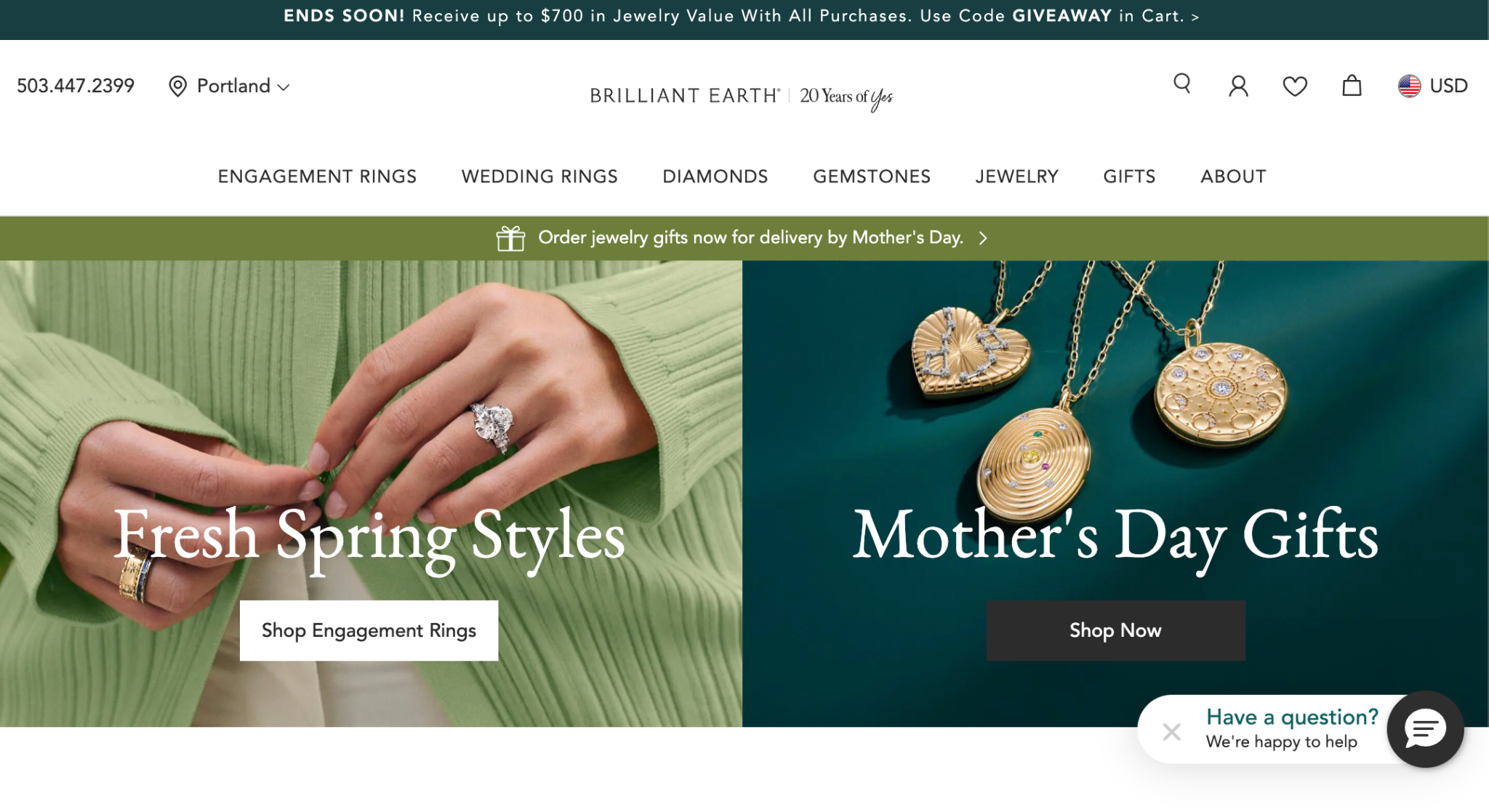
Niche: Ethical engagement rings and fine jewelry
Brilliant Earth is the leader in ethically sourced engagement rings — including a strong push into lab-grown diamonds. Their site is built around an enormous customizer where shoppers select a stone, then a setting, with detailed certifications and 360° spin views of every diamond.
Crucially, the site offers virtual appointments — customers can book a 1-on-1 video consultation with a jewelry expert, replicating the showroom experience online. For high-AOV purchases like engagement rings, this drastically lowers the buying anxiety.
What to learn: The higher your AOV, the more "sales-assist" matters. Live chat, video appointments, and concierge experiences pay back many times over for considered purchases.
12. Daisy London

Niche: Meaningful, symbolic jewelry (birthstones, zodiac, charms)
Daisy London leans hard into meaning — birthstones, zodiac signs, healing crystals, beaded bracelets with intention. Their site does a great job of helping shoppers discover the meaning behind every piece, often with editorial pages dedicated to a single stone or symbol.
They also use a classic-but-effective entry popup: 10% off in exchange for an email address and birthday — the birthday capture being especially valuable for triggering automated birthstone promotions.
What to learn: Capture the right kind of data, not just an email. A birthday or favorite stone unlocks future personalized campaigns that generic email-only popups can't. Popup surveys users will actually answer are how leading brands get this kind of intel without friction.
13. Edge of Ember

Niche: Sustainable demi-fine jewelry
Edge of Ember is a London-based demi-fine brand built entirely around sustainability — recycled metals, fairly sourced stones, and minimal-waste packaging. Their site features a dedicated "Sustainability" hub explaining their supply chain in plain English.
The brand has also built a strong content strategy around their values: blog posts on responsible sourcing, founder interviews, and customer stories all contribute to organic discovery and SEO.
What to learn: Sustainability claims need backup. Build out content that proves you're doing the work — it earns trust and drives organic traffic.
14. GLD Shop

Niche: Men's streetwear jewelry
GLD Shop dominates the men's iced-out, streetwear-influenced jewelry space. Their site looks more like a hype-drop sneaker brand than a traditional jeweler, with bold typography, music-driven video content, and frequent creator partnerships.
What's interesting from a Shopify perspective is how heavily they rely on video on PDPs — close-ups, motion shots showing how chains catch the light, and try-on footage all live on the product page itself.
What to learn: For men's jewelry, video is non-negotiable. Static photography doesn't sell shine — motion does.
15. Vincero Watches

Niche: Affordable luxury watches
Vincero cracked the affordable-luxury watch category by skipping the traditional retail markup and selling direct. Their Shopify site uses lifestyle-heavy imagery — guys in suits at airports, on yachts, at weddings — to position the watches as part of an aspirational identity rather than a spec sheet.
The brand backs it up with strong social proof: thousands of reviews, press features, and a generous warranty all on the homepage.
What to learn: For aspirational categories, identity beats specs. Show shoppers the version of themselves they're buying into, not the millimeters of the case.
16. Gorjana
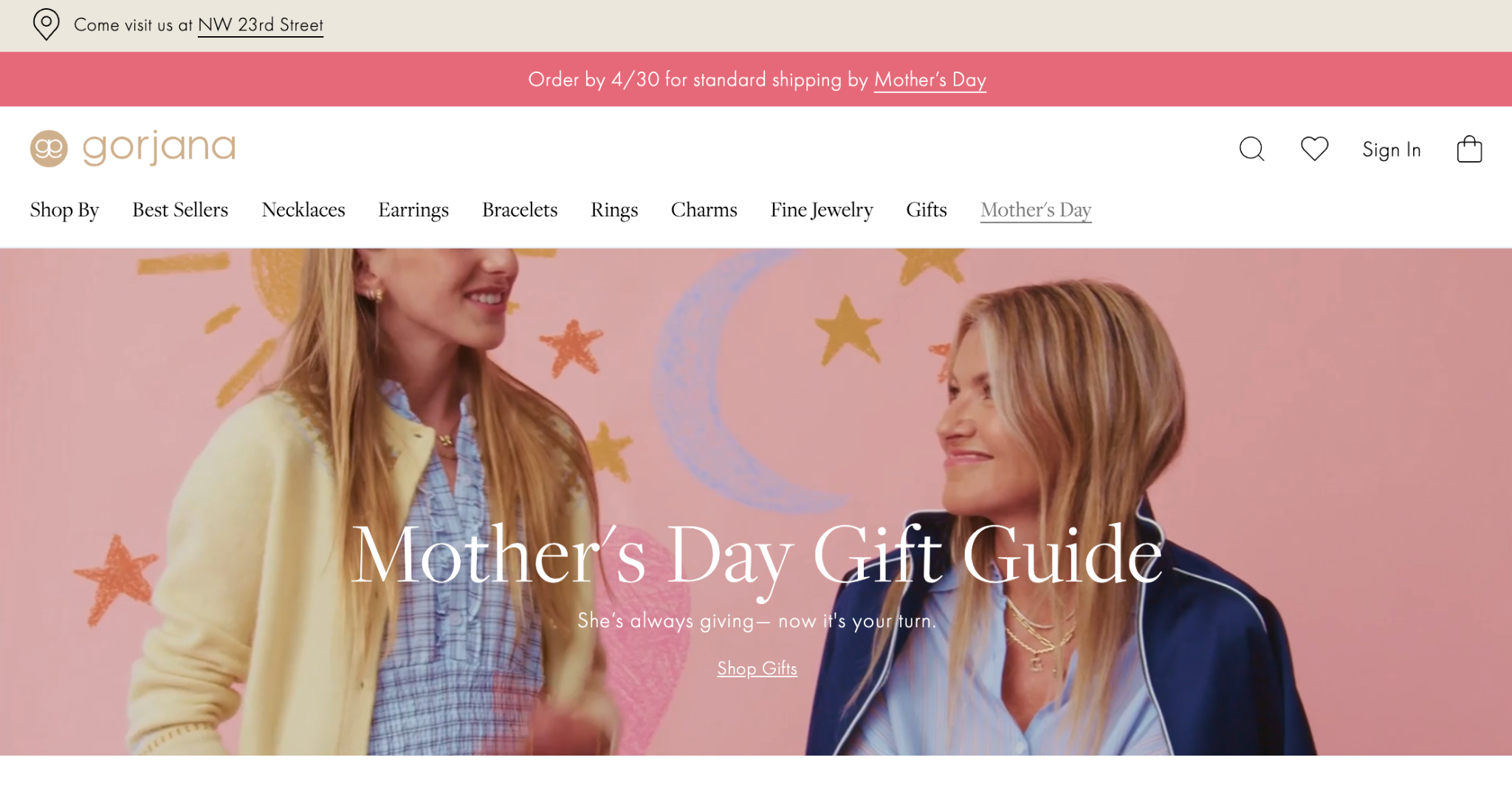
Niche: California-cool layering jewelry
Gorjana is a California demi-fine brand that's built a unique dual model: strong DTC presence on their Shopify site combined with wholesale distribution to specialty boutiques and major retailers like Nordstrom. Their site reflects the "California easy" aesthetic — sun-drenched lifestyle imagery, bestseller-driven category pages, and seasonal drops aligned to gifting moments.
What to learn: Wholesale and DTC don't have to compete — they can amplify each other. Use boutique placement to seed awareness, then use your Shopify site to capture and retain.
17. Aurate
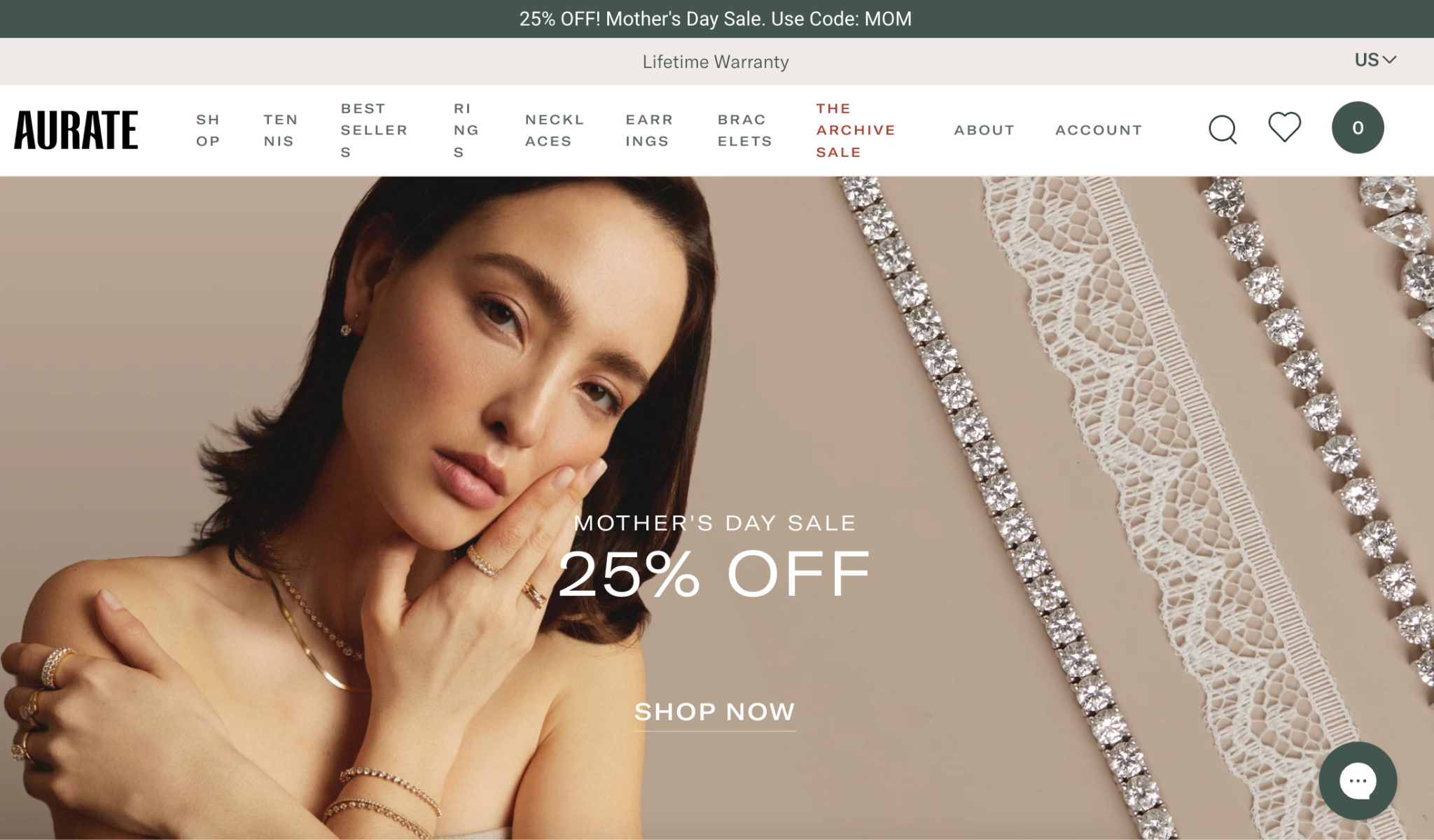
Niche: Sustainable fine jewelry at fair prices
Aurate is built around two principles: recycled gold and lab-grown diamonds at "honest" pricing. Their site walks customers through the difference between mined and lab-grown stones, explains why their prices are lower than legacy brands, and reframes "fine jewelry" as something that doesn't require luxury markups.
What to learn: Educate before you sell. Categories like fine jewelry are full of misconceptions — brands that explain why often win against brands that just market.
What Makes a Successful Shopify Jewelry Store
Looking across the 17 brands above, a handful of patterns emerge. The most successful Shopify jewelry stores share these traits:
1. High-quality visuals are non-negotiable. Hi-res photography, 360° spin views, and motion video all reduce the perceived risk of buying jewelry sight-unseen. Brands like GLD and Brilliant Earth lean especially hard into video.
2. Personalization isn't optional. Whether it's Kendra Scott's Color Bar, Baby Gold's engraving engine, or BaubleBar's Custom Crew, the winning brands treat customization as a core feature — not a checkout afterthought.
3. Storytelling drives premium pricing. Catbird, Edge of Ember, and Aurate all command higher prices because their customers believe in the story behind every piece. Sustainability, craftsmanship, and ethical sourcing all become conversion levers.
4. Mobile-first design is the default. A huge share of jewelry browsing happens on phones — often during commutes, lunch breaks, or late-night scrolling. Sites optimized for thumb-driven navigation, fast image loading, and quick checkout convert dramatically better. Don't skip mobile popup best practices when you build your list-capture flow.
5. Email and SMS lists are the engine. Almost every brand on this list runs aggressive list-building strategies, because the cost of paid acquisition keeps climbing while owned channels (email, SMS) stay efficient.
How Top Jewelry Brands Capture and Convert Visitors
If you study the conversion stack of the brands above, the same playbook keeps showing up:
- A welcome popup captures email and SMS on the first visit, usually in exchange for a discount or early access
- Quiz-style popups ask visitors what they're shopping for, then segment them into the right email flow
- Exit-intent popups recover abandoning visitors with a stronger offer
- Personalization carries through from popup to email to product recommendations
This is exactly where a tool like Alia Popups earns its place in a jewelry brand's stack. Built exclusively for Shopify, Alia replaces basic native popups (like the ones built into Klaviyo or Shopify Forms) with interactive, AI-powered popups that use Smart Testing and Smart Triggering to maximize opt-in rates.
The Heaven Mayhem case study earlier in this article shows what's possible: opt-in rates jumped from 0.85% to 11.4%, and email and SMS lists grew double-digit percentages in a single month. For jewelry brands competing in an aesthetic-driven, considered-purchase category, capturing intent at the moment of discovery — and feeding that intent into Klaviyo, Attentive, or Postscript flows — can be the single biggest growth lever.
Other brands across the Alia success stories library (in apparel, beauty, home, and lifestyle) show similar patterns: the brands that treat the popup as a conversation rather than a form consistently outperform.
Comparing your popup options?
Common Mistakes Shopify Jewelry Stores Make
Even with all the tools available, plenty of jewelry brands leave money on the table. The most common mistakes:
1. Using stock photography or low-res product shots. Jewelry is a visual category. If your photos can't show shine, weight, or scale, customers won't trust the price.
2. Hiding sizing and material details. Shoppers need to know exactly what they're buying — chain length in inches, stone size in millimeters, metal composition, and care instructions. Burying this info kills conversions.
3. Generic, branded popups. A popup that just says "10% off your first order" is leaving data on the table. Quiz-style popups that ask about preferences, occasion, or recipient (like the ones Heaven Mayhem uses with Alia) capture both the email and the segmentation data needed to personalize follow-ups.
4. No social proof on PDPs. Reviews, UGC, and "as seen in" press logos all reduce the perceived risk of a higher-AOV purchase. Brands that bury or skip social proof lose conversions to brands that surface it.
5. Ignoring SMS. Jewelry has strong gifting moments (birthdays, anniversaries, Valentine's, Mother's Day, holidays) where SMS outperforms email. Brands that only collect emails are missing out on a high-revenue channel — here are 11 ways to grow your SMS list for jewelry brands ready to add this channel.
6. No abandoned-cart recovery. Jewelry buyers often browse multiple times before purchasing. Without a strong abandoned-cart flow — triggered by both email and SMS — you're letting high-intent shoppers slip through.
How to Start (or Scale) Your Own Shopify Jewelry Store
If this list inspired you to start your own brand — or rethink an existing one — here's the rough order of operations:
1. Nail your niche. Are you fine, demi-fine, fashion, men's, sustainable, personalized, gifting? Pick one and own it before expanding.
2. Invest in product photography and video. This is the single biggest determinant of conversion in jewelry. Budget for a professional shoot — or at minimum, a great lightbox setup and a phone with a good camera.
3. Set up your Shopify store with a jewelry-friendly theme. Themes built for fashion or luxury (Prestige, Pipeline, Impulse) tend to work better than generic ones.
4. Build your list from day one. Install a popup on launch day. Don't wait for traffic to "build up" — every visitor without a capture mechanism is wasted. Here's how to add pop-ups on Shopify in under 10 minutes to get going.
5. Layer in personalization. Whether it's a quiz, a customizer, or birthstone-driven product recommendations, give shoppers a reason to share preferences.
6. Invest in email + SMS. Klaviyo, Attentive, Postscript, and Omnisend are all popular choices. Whatever you pick, make sure your popup feeds directly into segmented flows. The best email capture Shopify apps comparison breaks down what to look for.
7. Test, test, test. The brands on this list didn't get there by guessing. Every popup variant, every product page layout, every email subject line is a hypothesis to validate.
Building the Next Iconic Jewelry Brand
The best Shopify jewelry stores in 2026 aren't winning because they have the prettiest products — they're winning because they've built systems around discovery, personalization, and retention.
Whether it’s Mejuri’s famous product drops or Astrid & Miyu’s rewards program, every brand on this list found a specific strategy and stuck to it.
If you’re building your own jewelry brand, use these stores as a blueprint. Take what works and leave what doesn't. But keep in mind: even the most beautiful jewelry needs a solid way to turn random visitors into loyal fans.
Stop Watching Traffic Bounce
When you're ready to start growing your list for real, give Alia a look. It's the popup app trusted by 2,500+ Shopify brands to push opt-in rates way past the usual 2% and into the 15–35% range.
Your jewelry is too good to be ignored. Make sure your traffic actually converts so you can keep building.
Book a demo with Alia to see how interactive popups can help your brand scale. Your jewelry deserves to be seen. Your traffic deserves to convert.
FAQ on Shopify Jewelry Stores
Is selling jewelry on Shopify profitable?
Yes — jewelry tends to have high margins (often 50–70% gross), and Shopify provides the infrastructure to reach customers globally without building a custom platform. The key is differentiating from the thousands of other jewelry brands online through niche, brand, and customer experience.
What Shopify theme is best for a jewelry store?
Themes designed for fashion or luxury — like Prestige, Pipeline, Impulse, and Empire — tend to handle large product imagery and minimal layouts well. The best theme is the one that matches your brand aesthetic and loads quickly on mobile.
How do top jewelry stores grow their email and SMS lists?
Most use a combination of welcome popups, quiz-style popups, and exit-intent popups — capturing zero-party data along with the email or phone number. Heaven Mayhem, for example, grew their list 52% in 30 days by replacing Klaviyo's native popup with an interactive popup powered by Alia.
What's the average conversion rate for a Shopify jewelry store?
Industry benchmarks for jewelry stores typically fall between 1.5% and 3%, with high-performing stores reaching 5%+. AOV varies wildly — $40 for trendy fashion jewelry, $5,000+ for engagement rings — and conversion rate scales inversely with AOV. For more on Shopify store conversions and how to lift this metric, this guide breaks it down.
How important is mobile design for a jewelry store?
Critical. The majority of jewelry shopping happens on mobile — often during downtime, commutes, or social media browsing. If your site doesn't load fast and look great on a phone, you're losing conversions you'll never see.