

You've seen it before. A countdown timer ticking toward zero. A popup warning that only two items remain. A popup reminding you that 47 other people are looking at the same product right now.
And even though you know it's a marketing tactic, something inside you tenses up. You don't want to miss it. That reaction has a name — FOMO, or the Fear of Missing Out — and it's one of the most powerful psychological triggers available to e-commerce marketers.
When used well, FOMO marketing bridges the gap between a shopper who's "just browsing" and one who's adding to cart. When used poorly, it erodes trust and sends people running.
This guide explores the psychology of urgency and provides real-world examples to help your e-commerce store drive conversions without losing your soul.
Read on to master the art of the nudge.
What Is FOMO Marketing?
FOMO marketing taps into a shopper’s natural anxiety about missing a deal, shifting them from "just browsing" to taking immediate action. By replacing long-term deliberation with a compelling reason to act now, you bridge the gap between a lead and a sale.
Most high-impact campaigns combine at least two core mechanisms:
- Scarcity: Limited quantity.
- Urgency: Limited time.
- Exclusivity: Limited access.
- Social Proof: Peer validation.
The critical distinction between effective FOMO and aggressive selling is honesty. While manufactured pressure might offer a short-term spike, savvy shoppers quickly sniff out fake urgency.
To maintain long-term trust, your triggers—like a midnight deadline or a genuine waitlist—must be rooted in real-world constraints.
The Psychology Behind FOMO: Why It Works
FOMO taps into deep evolutionary wiring. For millennia, social exclusion meant a survival threat. Today, that ancient anxiety translates into a powerful response to flash sales and limited-edition drops.
The Data Behind the Urgency
- The Definition: Research in Computers in Human Behavior (2013) defines FOMO as a pervasive apprehension that others are having rewarding experiences from which you are absent.
- The Reaction: Studies from Strategy Online and ResearchGate (2025) indicate that roughly 60% of Millennials make reactive purchases within 24 hours, while Gen Z shoppers increasingly prioritize social validation over functional value.
Core Principles for E-commerce
- Scarcity Increases Value: When availability drops, perceived worth rises. "Only 3 left" reframes a product from abundant to precious.
- Social Proof Validates: Seeing others buy reduces the cognitive effort of deciding. It shifts the internal dialogue from "Should I buy this?" to "Why haven't I?"
- Time Pressure Compresses Cycles: Without a deadline, shoppers default to "I'll think about it." A genuine constraint forces a decision within a single session.
- Loss Aversion Rules: Nobel Prize-winning research proves the pain of losing is twice as powerful as the joy of gaining. FOMO works because it highlights what the shopper will lose by waiting.
14 FOMO Marketing Examples That Actually Work
To move from theory to execution, look at how top-tier brands use these psychological triggers to turn a casual browse into a confirmed order.
1. Countdown Timers on Limited-Time Offers
The countdown timer remains a staple in e-commerce because it works. A visible, ticking clock transforms a vague sale into a concrete deadline, with research suggesting these timers can boost conversion rates by up to 30% on promotional pages.
Effective implementation requires genuine deadlines. A timer that resets upon every page load quickly erodes credibility. Instead, tie the clock to legitimate events like seasonal sales, product launch windows, or expiring bundles.Not sure when to fire these? Popup timing and triggers is worth a read before you build your first countdown flow.
How to apply it:
- Use timers during Black Friday, monthly flash sales, or new arrivals.
- Pair the clock with a specific incentive—such as 15% off ends in 4:22:17—rather than a generic call to hurry.
Example:
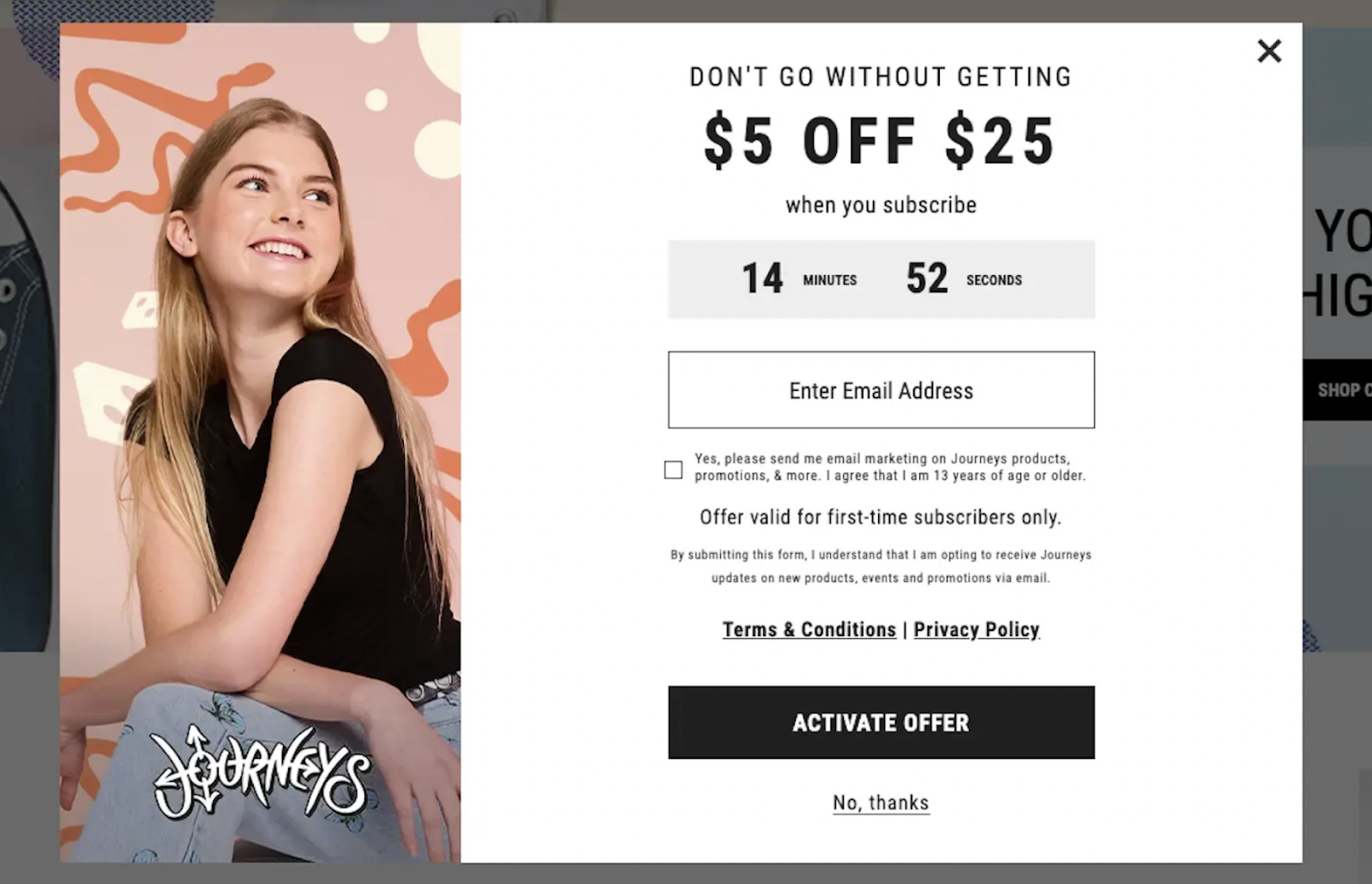
Journeys uses a high-impact popup that pairs a specific discount with a short-term countdown timer. By offering $5 off a $25 purchase for first-time subscribers, they combine a clear financial incentive with an immediate deadline. This approach forces a quick decision, preventing shoppers from closing the window to deliberate later.
2. Low-Stock Alerts on Product Pages
Displaying specific inventory counts is a direct application of scarcity. When a shopper sees that only a handful of items remain, the fear of losing the opportunity often outweighs the friction of the purchase.
Low-stock alerts work best for products that genuinely have limited inventory — handmade goods, seasonal items, or special-edition runs. When a customer sees that a product is almost gone, the fear of losing the opportunity outweighs the friction of completing the purchase.
How to apply it:
- Display real inventory counts on product pages when stock drops below a threshold (e.g., fewer than 10 units).
- Combine with "X people are viewing this" data for a double dose of urgency.
Example:
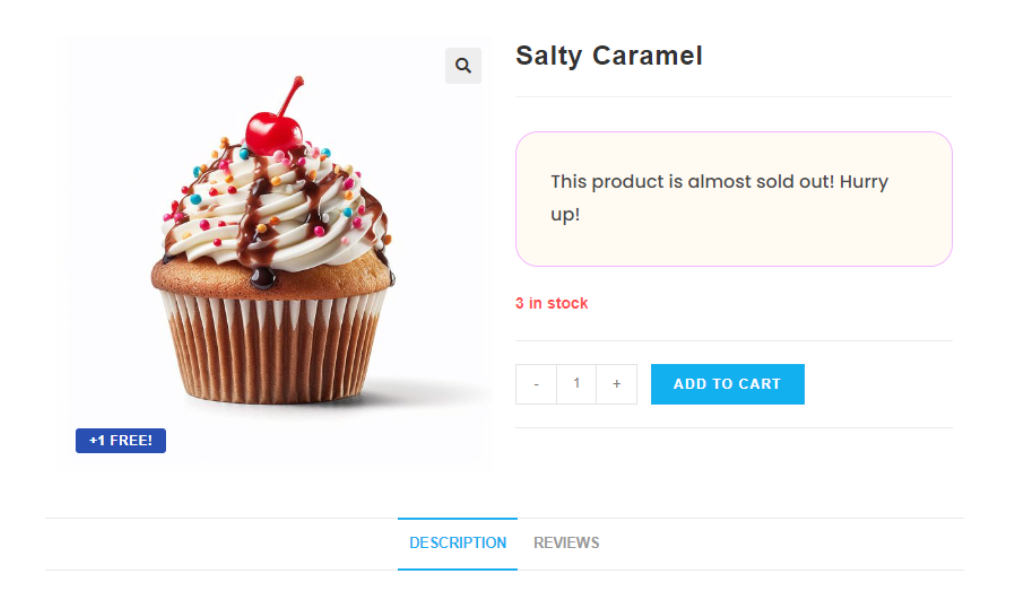
This example uses a clear, high-contrast alert to signal that the Salty Caramel product is almost gone. By showing exactly how many are left—3 in stock—the brand moves beyond a vague warning to provide a concrete reason for immediate action.
3. Mystery Discount Popups
Rather than offering a flat discount upfront, some brands create FOMO by making the offer itself a surprise. Mystery discounts — where the shopper has to engage with a popup to reveal their unique offer — tap into curiosity and the fear that they might miss a really good deal.
If you want inspiration before building yours, check out these discount popup examples and discount code ideas that other Shopify brands are using.
How to apply it:
- Use a popup that teases a range ("Get between 10% and 30% off — reveal your discount")
- Then require an email or SMS signup before the offer is shown. This captures the lead and activates FOMO in a single interaction.
Example:
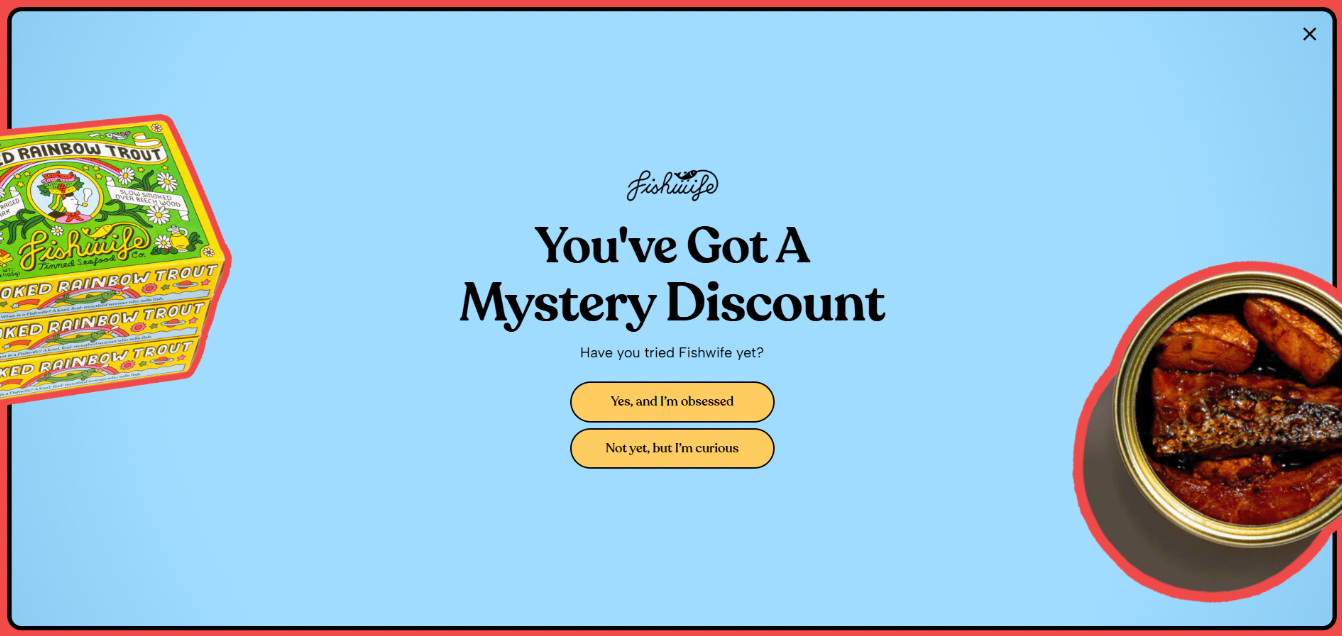
Fishwife, a premium tinned seafood brand, adopted full-screen, on-brand popup designs featuring mystery discounts as part of their lead capture strategy.
The approach worked: in six months, they saw a 5x increase in total opt-ins, a 6x increase in SMS list size, and coupon redemptions rose by over 200%. The mystery element gave shoppers a reason to engage with the popup rather than instinctively closing it.
Read the full Fishwife case study →
4. Exit-Intent Popups With Urgency Messaging
Most shoppers leave a site without buying, and many never return. Exit-intent popups—triggered when a cursor moves toward the close button—act as a final intervention to salvage the visit.
The most effective campaigns pair this trigger with a clear FOMO element. Rather than a generic plea to stay, they present a time-sensitive offer that makes leaving feel like a real loss. Messaging that suggests a discount expires upon exiting converts a bounce into a missed opportunity.
How to apply it:
- Deploy on high-value areas like product detail or cart pages.
- Use a specific, expiring offer to make leaving feel like a tangible cost.
Example:
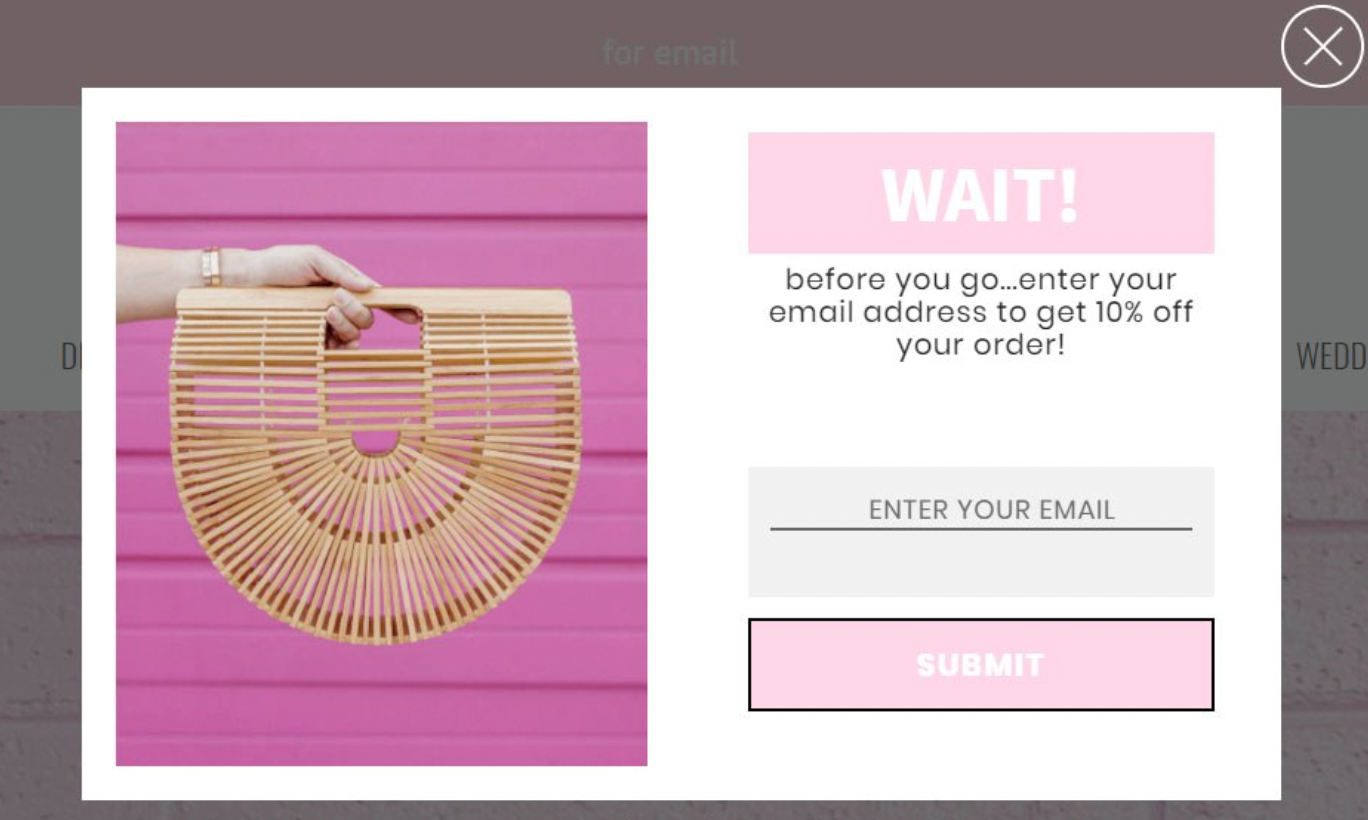
The image illustrates a classic exit-intent layout designed to stop a bounce. It uses a high-contrast WAIT! headline to grab attention and pairs it with a 10% discount. By appearing exactly as the user intends to leave, the popup forces the shopper to weigh the value of the deal against the cost of walking away.
Looking for the right tool to power these? Here's a breakdown of the 10 best exit popup software tools worth considering.
5. Black Friday / BFCM Urgency Campaigns
Black Friday and Cyber Monday are FOMO marketing at its most concentrated. The entire cultural event is built on the premise that deals this good won't come again for another year — which, for most brands, is true.
How to apply it:
- Start planning your BFCM popup and email strategy weeks in advance.
- Design campaign-specific popups with seasonal urgency messaging
- Ensure your lead capture is optimized before traffic surges.
Example:
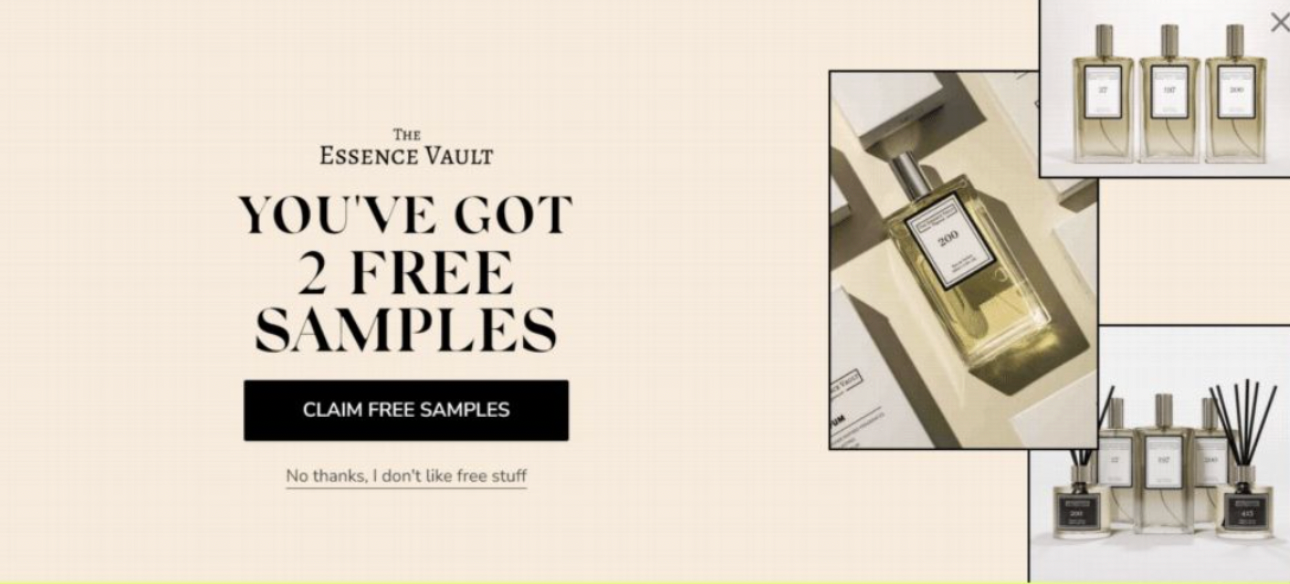
Essence Vault, a UK-based fragrance brand, illustrates what happens when you prepare properly for BFCM. Prior to switching their popup strategy, their email sign-up rate sat at 11% and SMS at 4.2%.
After implementing optimized popups with visually engaging designs and zero-party data collection, they collected 200,000 emails and 160,000 phone numbers in just nine days during BFCM, with sign-up rates reaching 33% for email and 26% for SMS.
Read the full Essence Vault case study →
The FOMO was layered: the BFCM deadline created time pressure, the high-converting popup created engagement, and the massive influx of visitors created social proof ("everyone's signing up").
6. VIP and Early-Access Offers
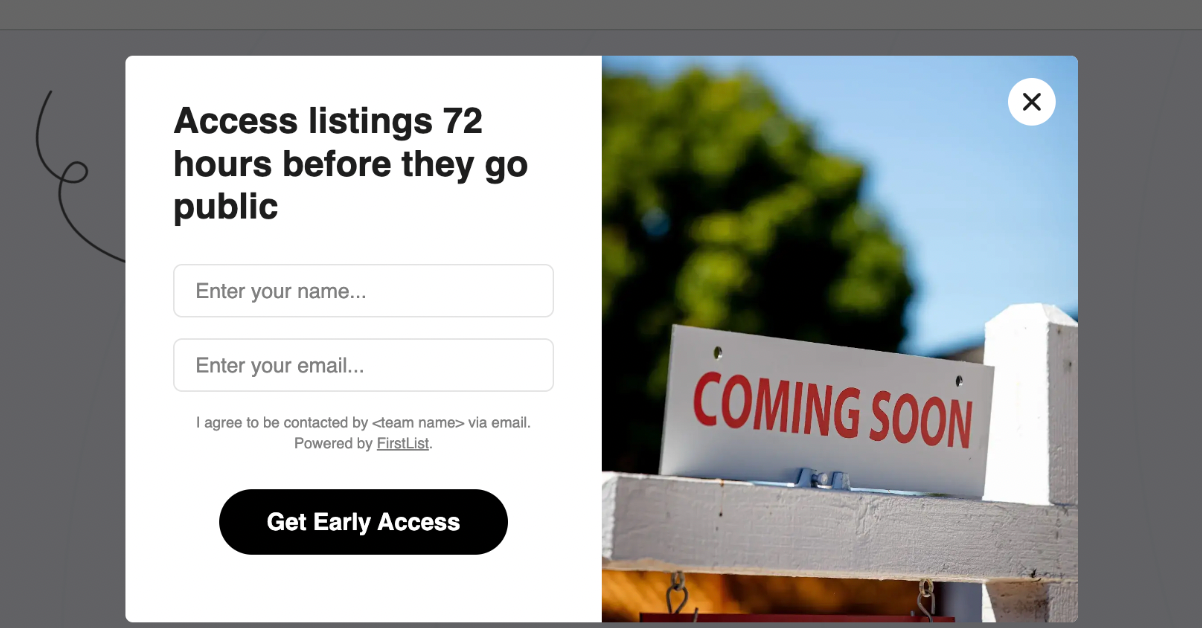
Exclusivity is FOMO's quieter cousin. Instead of screaming "hurry!" it whispers "this isn't for everyone." VIP early access — giving loyal customers or email subscribers a head start on new products or sales — creates a two-sided FOMO engine. Insiders feel valued and act quickly to maintain their privileged position; outsiders feel compelled to join the list so they don't get left behind next time.
How to apply it: Segment your email and SMS lists into tiers. Offer your most engaged subscribers 24- or 48-hour early access to new collections, restocks, or promotions. Promote the VIP program in your popups to incentivize signups with the promise of future exclusive access.
Need a framework for building that loyalty loop? This guide on launching an e-commerce loyalty program walks through it step by step.
Example:
7. Interactive Quiz-Based Popups
Traditional popups ask for an email address in exchange for a discount. That's a transaction. Quiz-based popups turn it into an experience — and inject FOMO by implying that the shopper will receive a personalized recommendation they can't get any other way.
How to apply it:
- Use multi-step popups that ask 2–3 quick questions about the visitor's preferences before presenting a tailored offer.
- Send the quiz responses to your ESP for segmented follow-up — this doubles as zero-party data collection.
Example:
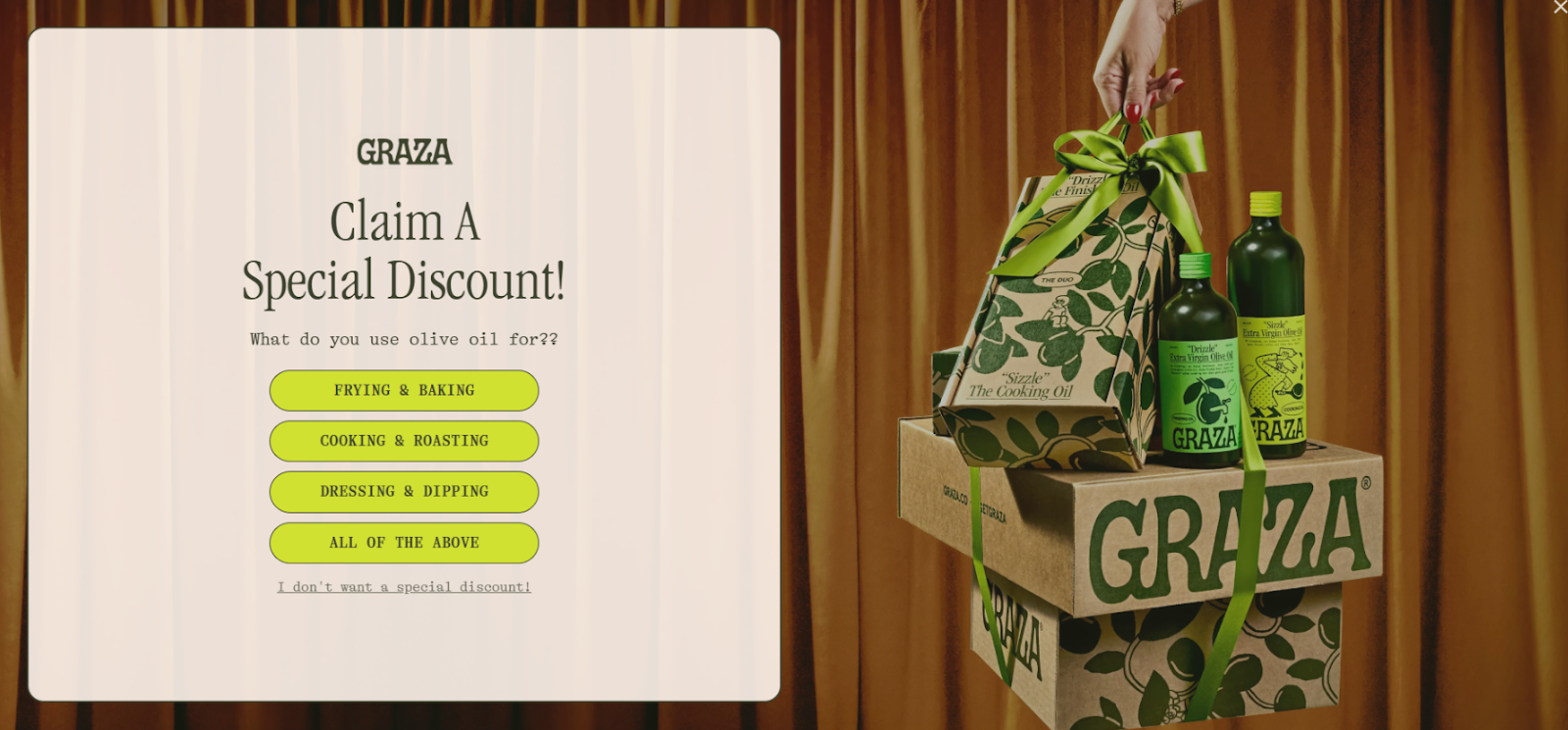
Graza, the single-origin olive oil brand, switched from static Klaviyo forms to interactive, quiz-based popups that matched their playful brand voice. The result was dramatic: email signup rates went from 4.5% to 13.8%, and they achieved a 377% increase in net new SMS opt-ins.
The interactive format made shoppers feel like they were getting something unique — not just a coupon, but a tailored experience. And once they'd invested the time to answer questions, abandoning the signup felt like leaving value on the table.
Read the full Graza case study →
8. Founder Story and Brand Education Popups
This is a less obvious form of FOMO, but a powerful one. When a popup tells the brand's origin story, highlights what makes the product different, or features the founder's personal mission, it creates an emotional connection that makes walking away feel like missing something meaningful — not just a discount.
This is especially effective for products that require customer education — supplements, skincare, wellness, and specialty food brands.
How to apply it: Reserve a step in your popup flow for a brief brand story, a "why we're different" statement, or a founder video thumbnail.
Example:
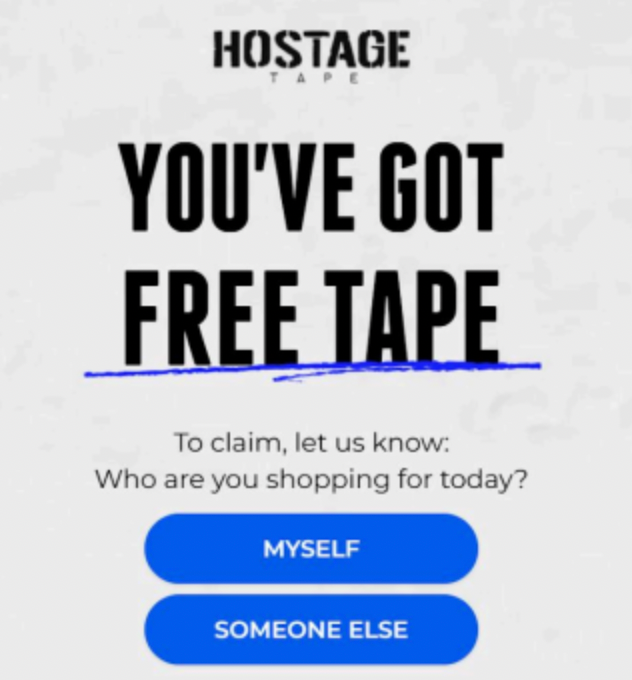
Hostage Tape, the sleep and breathing optimization brand, integrated the founder's story directly into their full-screen popup experience.
The educational approach helped them achieve a 25% email opt-in rate and a 245% increase in welcome flow revenue. Shoppers weren't just signing up for a discount — they were buying into a narrative.
Read the full Hostage Tape case study →
9. Limited-Edition Product Drops
Few things create FOMO like a product that literally won't exist tomorrow. Limited-edition releases — whether it's a seasonal flavor, a collaboration, or a numbered run — generate urgency through genuine scarcity, not manufactured pressure.
The model relies on firm quantity limits, defined launch windows, and advance communication that builds anticipation. When the drop goes live, the combination of "this is rare" and "everyone wants it" is irresistible.
How to apply it:
- Announce limited drops via email and SMS at least a week in advance.
- Use popups on your homepage leading up to the launch, featuring countdown timers.
- Post-drop, share sellout stats to build FOMO for future releases.
Example:
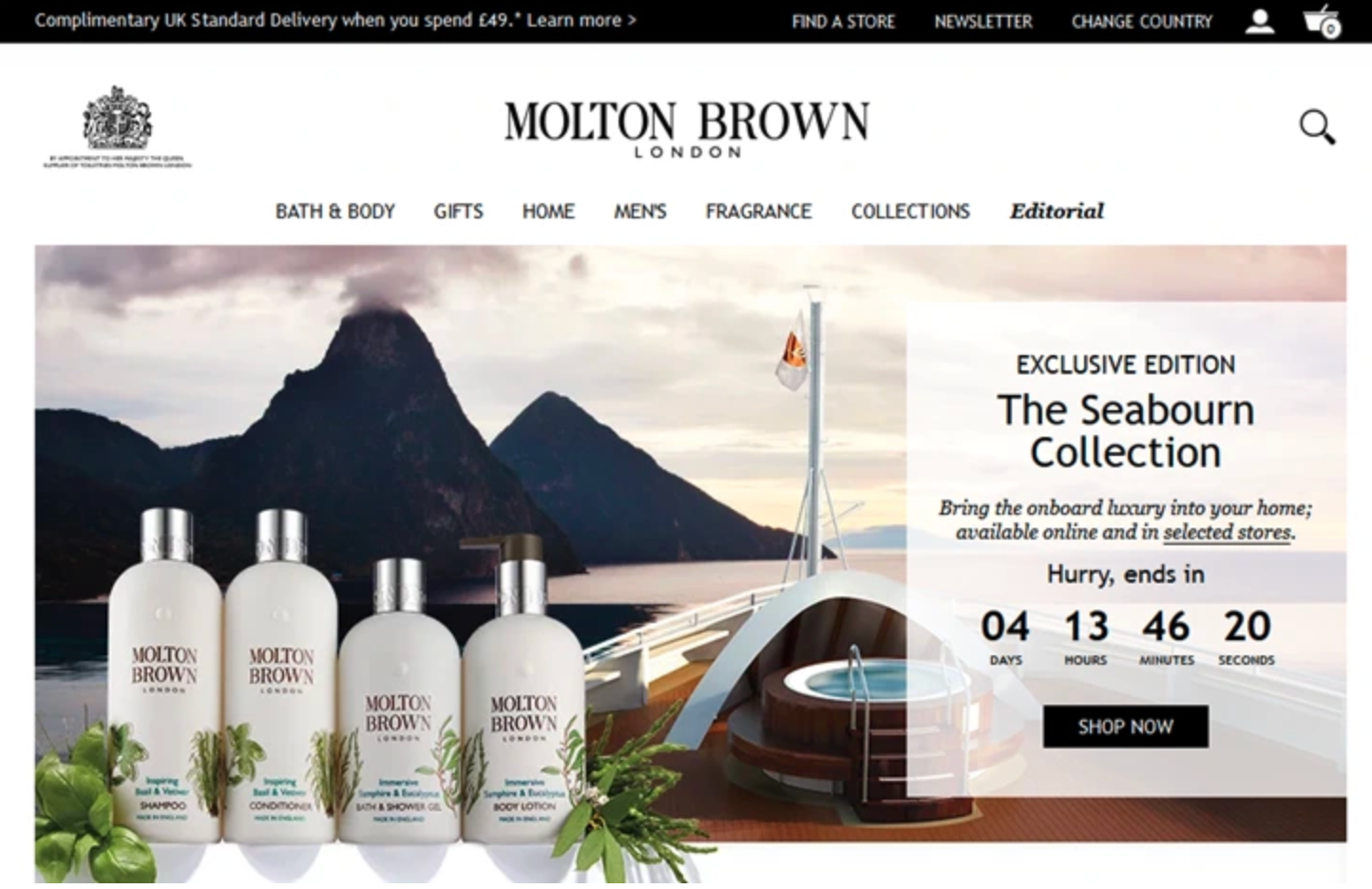
This example showcases Molton Brown’s Exclusive Edition Seabourn Collection. It works because it combines a large-scale hero image with a prominent, ticking countdown timer to drive an immediate sense of urgency. The "Shop Now" call to action, positioned directly next to the collapsing time frame, simplifies the path from FOMO to purchase.
E-commerce gamification follows a similar psychology — it's worth exploring if you want to build anticipation across your broader site experience.
10. Free Shipping Thresholds With a Time Limit
Free shipping is a classic e-commerce incentive, but adding a time component makes it dramatically more effective. Shifting from a static offer to a time-limited one compresses the decision window.
The threshold encourages higher cart values, while the deadline creates immediate urgency — and if you're not already tracking how this affects your numbers, here's why AOV matters more than most brands realize.
How to apply it:
- Use a sticky announcement bar at the top of your site for a time-limited free shipping offer.
- Show the shopper how close they are to the threshold: You're $18 away from free shipping — offer expires tonight.
Example:
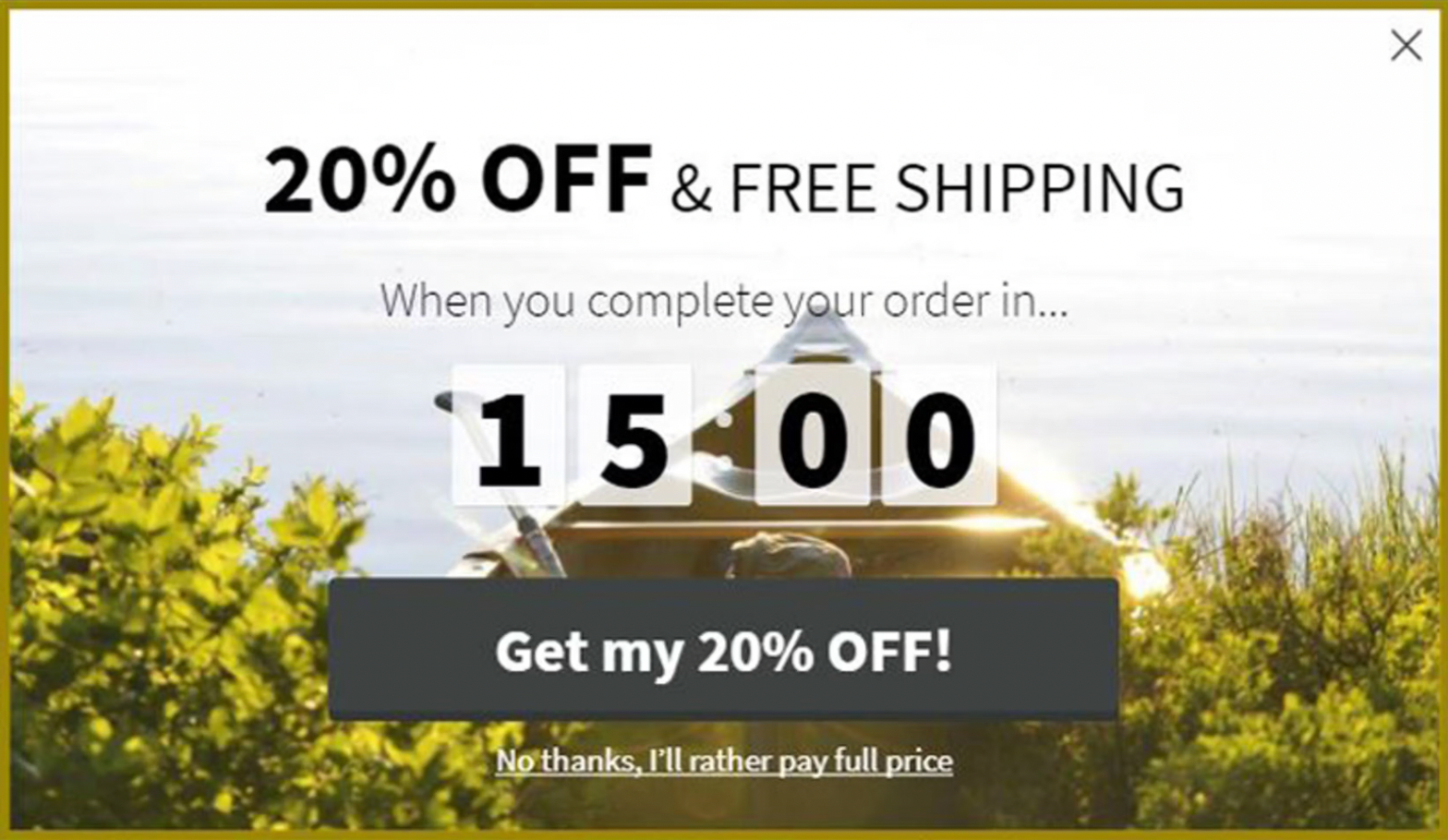
This popup pairs two major incentives—20% off and free shipping—with a short-term countdown timer. By offering these rewards only when the order is completed within a few minutes, it creates intense time pressure and forces a rapid checkout to secure the double savings. The massive timer leaves no doubt about the deadline.
11. Customer Testimonial Popups and Reviews
Testimonials and reviews are the most enduring forms of social proof. They act as a FOMO trigger by showcasing real people enjoying benefits the visitor has not yet experienced. This sends a subtle but clear message: others are already gaining from this product—why are you missing out?
Star ratings, review counts, and testimonial popups all reinforce this effect. Since the vast majority of consumers consult reviews before buying, a high volume of positive feedback makes a product appear popular, which triggers FOMO naturally.
See how brands pair this with email popup examples to add social proof directly into the signup flow.
How to apply it:
- Feature customer quotes and star ratings prominently on product pages and within email flows.
- Use popups to highlight recent 5-star reviews to build immediate trust.
- Incorporate user-generated content, as photos of real customers make the benefits feel tangible and relatable.
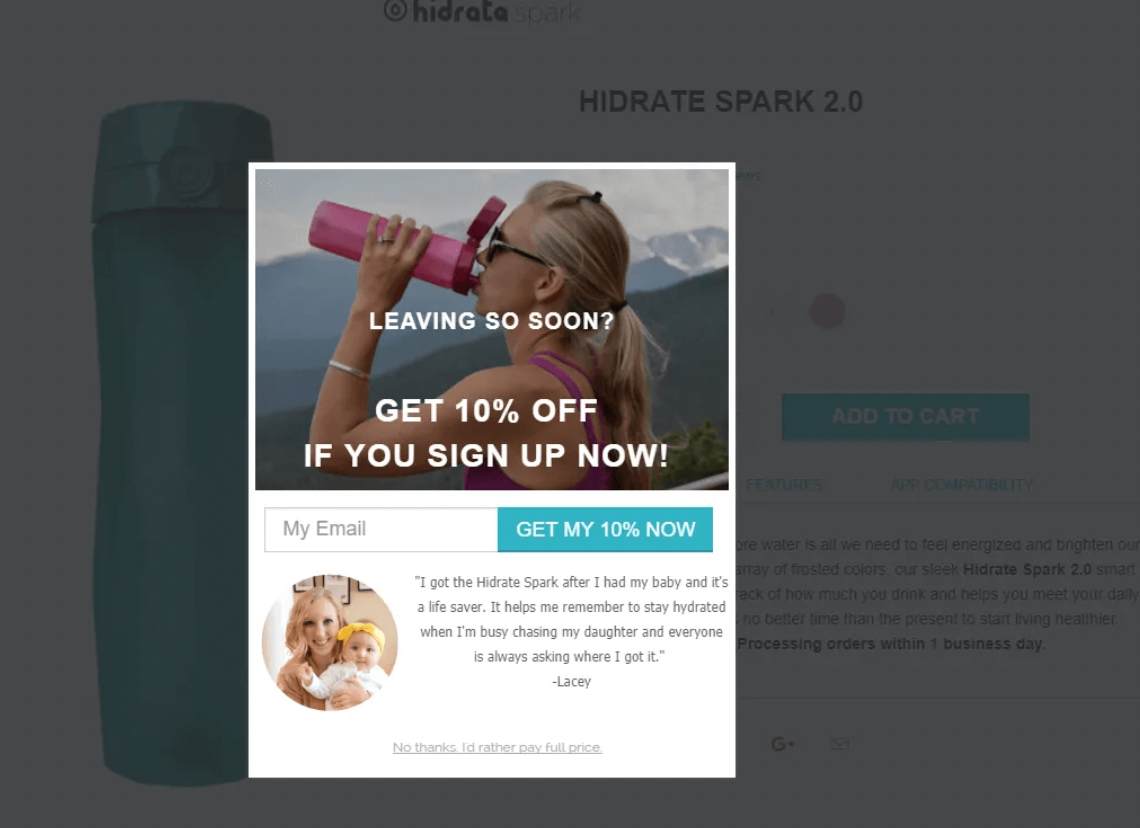
This example from Hidrate Spark embeds a customer portrait and authentic quote—Lacey's testimonial about how the product is a life saver after having her baby.
By highlighting a real human story right when the user engages with the popup, they validate the decision to sign up and reduce the cognitive effort needed to trust the brand.
12. Personalized Retargeting Based on Browsing Behavior
Generic popups are easy to ignore. Personalized ones, less so. When a shopper returns to your site and sees a message like "Still thinking about the Navy Leather Tote? Only 4 left," the FOMO becomes personal. It's no longer about a generic product — it's about their product, the one they already showed interest in.
Personalization techniques like these are one of the highest-leverage moves you can make for returning visitors.
How to apply it: Use behavior-based popup targeting to show returning visitors offers related to products they've previously viewed or added to cart. Combine with low-stock messaging for maximum urgency.
Example:
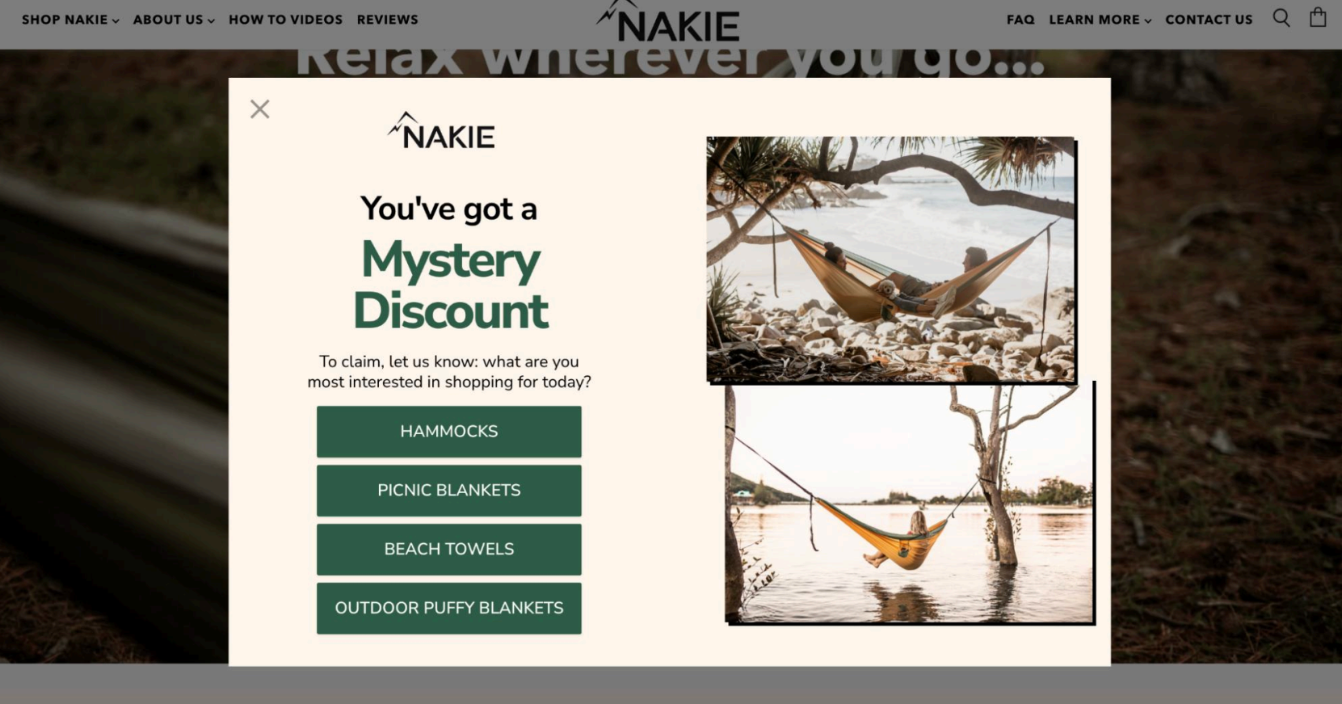
Nakie, an Australian outdoor brand, used interactive popups that let visitors select their interests (e.g., beach hammock, picnic blanket) and then delivered personalized offers based on those preferences.
The brand went from a 5% signup rate to a peak of 35% and attributed $5.8 million in sales to the approach. The personalization made the offer feel relevant, which made the risk of missing it feel real.
Read the full Nakie case study →
13. "Last Chance" Email and SMS Campaigns
Not all FOMO happens on your website. Email and SMS are powerful channels because they reach shoppers directly in their personal spaces with urgent, time-sensitive messages.
The "last chance" template works because it signals a definitive end to an opportunity. Subject lines that mention a discount disappearing at midnight consistently outperform generic promotions. Effectiveness peaks when messages reference specific products the customer previously viewed or abandoned.
How to apply it:
- Build automated "last chance" emails into every time-sensitive campaign.
- Segment sends so the messaging references specific browse or cart history.
- For SMS, keep it direct: Your discount code expires in 3 hours. Don't miss it: [link].
Example:
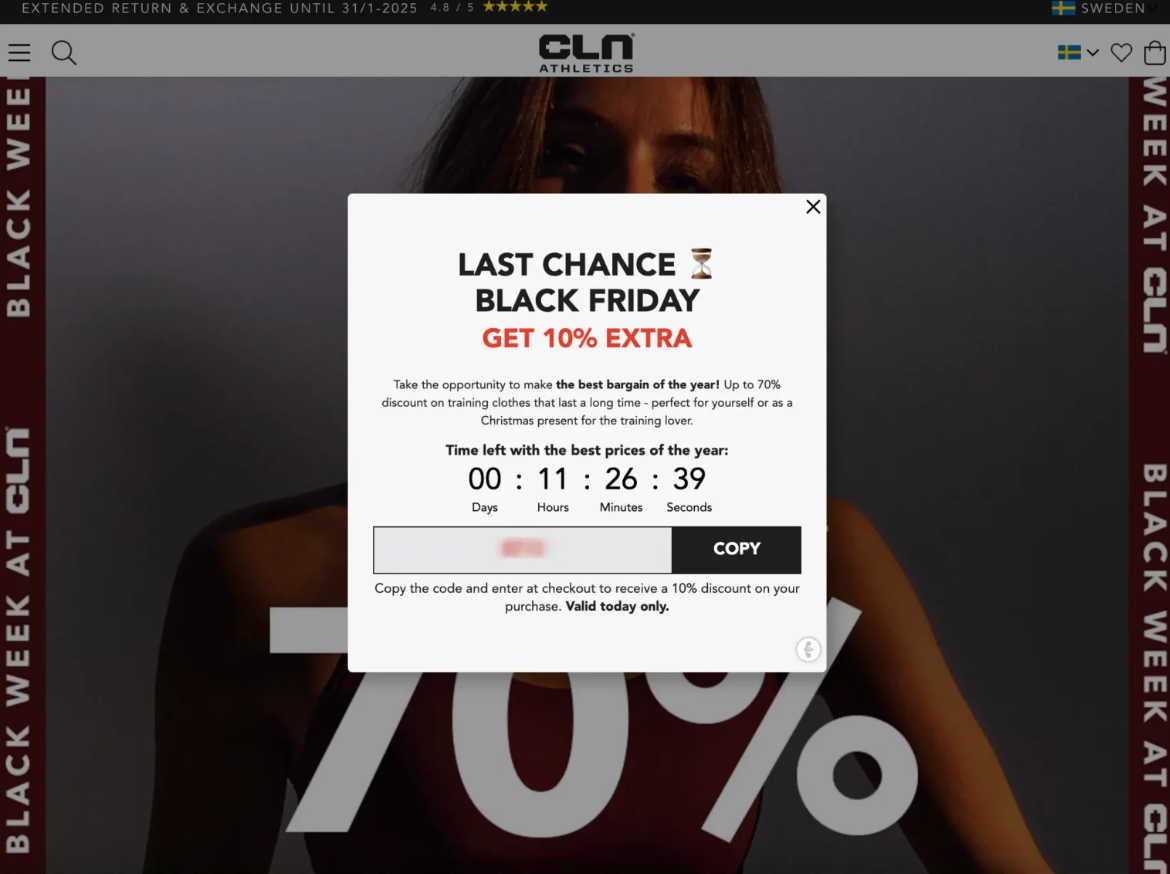
These popups from Journeys and CLN Athletics exemplify the "last chance" strategy. Journeys uses a strict 15-minute countdown for an exclusive signup offer, while CLN applies intense time pressure during Black Friday
Both work because they combine a clear discount with a visible, collapsing deadline, leaving the shopper with an immediate "now or never" choice.
If you want to grow the SMS list that receives these messages, here are 11 ways to grow your SMS list worth bookmarking alongside this guide.
14. Post-Purchase FOMO for Referrals
FOMO doesn’t have to stop at the buy button. Right after a purchase, customers are in a heightened emotional state—they're excited about what they just bought and more open to sharing that energy. Post-purchase FOMO turns that momentum into referrals by framing the offer as something their friends will miss out on if they don't act fast.
By positioning a referral incentive on the order confirmation page or in a follow-up email, you transform a satisfied buyer into a brand advocate. The goal is to make the reward feel like a limited-time privilege rather than a generic spam request.
This dovetails naturally with subscription management and popup strategy — worth reading if retention is part of your growth model.
How to apply it:
- Add a referral incentive to your order confirmation page and post-purchase email sequence.
- Frame the offer with urgency: Give your friends 15% off before this offer expires.
- Use 48-hour time limits to ensure the referral feels special and worth sharing immediately.
Example:
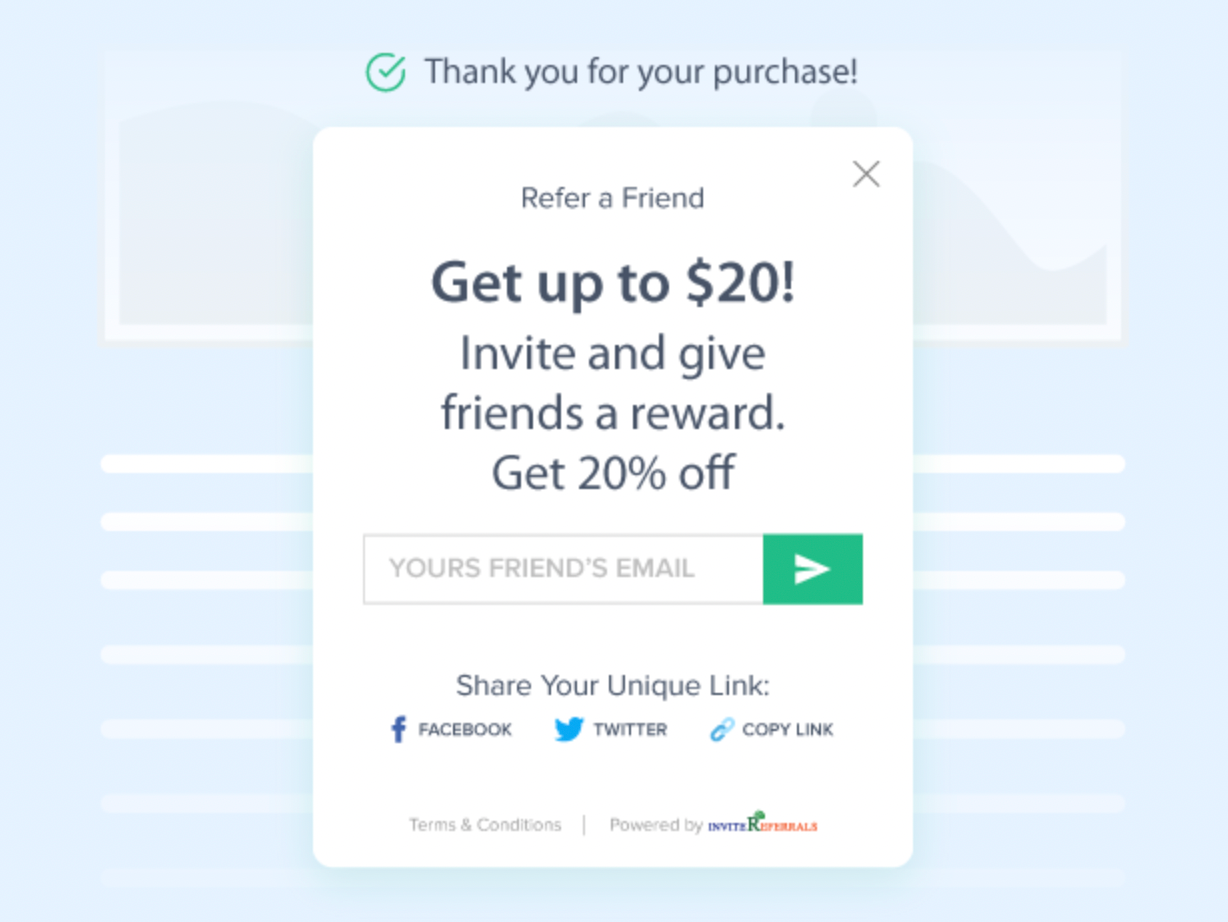
This popup leverages the immediate "thank you" moment to present a high-value referral offer. By promising up to $20 and a 20% discount for friends, it makes the act of sharing feel like a win-win.
The inclusion of a unique, copyable link and social buttons simplifies the process, ensuring the customer can act on their excitement before it fades.
How to Use FOMO Marketing Without Losing Trust
FOMO marketing's biggest risk is also its biggest weakness: if customers catch you faking it, the backlash can undo months of brand building. Here are the principles that separate effective FOMO from manipulative pressure tactics.
Only create urgency around real constraints. If a sale ends Friday, it ends Friday. If stock is low, the count should be accurate. Countdown timers that reset, perpetual "limited time" offers, and inflated "X people viewing" stats are the fastest route to customer distrust.
Match the intensity to the context. A Black Friday flash sale warrants aggressive countdown timers and bold messaging. A standard Tuesday product page does not. Reserve your most intense FOMO tactics for moments where the urgency is genuine and the payoff for the customer is real.
Respect the customer's intelligence. Modern shoppers are marketing-literate. They know when they're being played. The brands that win long-term are the ones that use FOMO as a helpful nudge — "this deal actually won't last" — rather than a psychological club.
Test, measure, and iterate. FOMO tactics that work for one audience may not work for another. A/B test your popup messaging, countdown timer placement, urgency copy, and social proof notifications
Look beyond opt-in rates to downstream metrics like purchase rate, AOV, and customer lifetime value to understand whether your FOMO strategy is driving real business results, not just clicks.
Alia's Smart Testing does exactly this automatically — running tests 24/7 and stacking winning variants without manual intervention.
Beyond Basic Popups: The Alia Advantage
While FOMO is a universal psychological trigger, the delivery of that trigger determines whether a customer buys or bounces. Most generic apps rely on "shouting"—loud colors, intrusive timers, and fake data—which can quickly erode a premium brand’s reputation.
Alia is built differently. Here is why it's the preferred engine for high-growth Shopify stores:
1. The Shift Toward "Elegant Urgency"
High-end e-commerce is moving away from aggressive, anxiety-inducing tactics. Today’s shoppers value transparency and a clean aesthetic. Alia allows you to implement Elegant Urgency—subtle, on-brand cues that nudge the customer without disrupting their browsing experience.
- The Difference: Instead of a flashing red banner, Alia uses minimalist slide-ins and integrated product-page badges that feel like a native part of your store’s design.
2. Smart Display vs. Tactic Blindness
Most shoppers have "tactic blindness" to popups that fire the second a page loads. Alia's Smart Triggering uses AI to identify the "Micro-Moments" of high intent.
Precision Timing: Alia triggers FOMO messaging based on scroll depth, time on page, or exit-intent. This ensures your message acts as a helpful reminder exactly when the shopper is most likely to act, rather than an annoying interruption.
3. Turning FOMO into Zero-Party Data
Generic apps treat a conversion as the end of the road. Alia treats it as a data opportunity. By using interactive elements—like mystery discounts or preference quizzes—you aren't just creating urgency; you are collecting Zero-Party Data.
- Personalization at Scale: When a customer engages with a FOMO trigger, Alia captures their preferences (e.g., skin type, style interests, or gift intent). This allows you to follow up with hyper-personalized emails and SMS that keep the FOMO relevant long after they’ve left your site.
Already using Klaviyo or Attentive alongside your popup strategy? Here's how to get the most out of both: Integrating Alia with Klaviyo · Integrating Alia with Attentive
Strategy Template: How to Execute Every Pillar
To make these examples actionable, use the following framework for every FOMO tactic you implement:
- The Strategy: The specific psychological trigger (e.g., Low Stock).
- The Placement: Where on the site it lives (e.g., Product Page).
- The Alia Nudge: How to use Alia’s specific features to make it "Elegant" rather than "Aggressive."
Capturing FOMO-Driven Leads: Why Your Popup Strategy Matters
All the urgency messaging in the world doesn't matter if you can't capture the shopper's attention and contact information before they leave. That's where your popup strategy comes in — and for Shopify brands in particular, the gap between a generic popup and an optimized one is enormous.
The most effective FOMO-driven popups share a few characteristics: they trigger at the right moment (not immediately on page load), they deliver a clear and specific offer, they match the brand's visual identity, and they collect data that enables smarter follow-up.
Brands like Portland Leather have seen what happens when these elements align. After switching to an AI-powered popup platform and activating smart testing and smart triggering, they experienced a 123% growth in email signups and a 112% growth in SMS signups within 90 days.
Read the full Portland Leather case study →
Critically, the AOV for new customers also increased by 3.6% — evidence that the FOMO-driven leads were high quality, not just high quantity.
The lesson is clear: your popup isn't just a lead capture form. It's the mechanism through which FOMO becomes action. If it fires at the wrong time, shows the wrong offer, or looks out of place, you've wasted the urgency you worked so hard to create.
Turn Urgency Into Action With Alia
FOMO marketing is most effective when it acts as a helpful nudge, helping shoppers make confident decisions before a genuine opportunity passes. The strongest results come from layering multiple elements—like combining real-time social proof with personalized scarcity.
Your popup strategy is the mechanism through which FOMO becomes revenue. If it fires at the wrong time or looks out of place, you've wasted the urgency you worked to create.
Alia helps Shopify brands automate on-brand, high-converting popups that feel like a natural part of the customer journey. By using AI to determine the right message for the right visitor, you turn fleeting interest into a permanent growth engine.
Key Takeaways:
- Authenticity is Non-Negotiable: Use real stock counts and firm deadlines; fake urgency is the fastest way to kill long-term brand trust.
- Precision Timing: Triggering the right message at high-intent moments—like exit-intent or cart view—is the difference between a lead and a bounce.
- Test and Iterate: Treat your popup and email strategies as living systems that evolve based on real customer data.
To execute this at scale, use Alia to automate on-brand, high-converting popups that turn fleeting interest into a permanent growth engine.
Ready to turn your browsers into buyers? [Get started with Alia today].